Our titles on this subject
Further reading: accounts and works on the same theme
Accounts and works around this subject, in date order, to place our titles in context. Each links to a free online edition when one exists, or to our own page when the work is in our catalogue.
-
Tomé Pires, Suma Oriental (1512-1515)
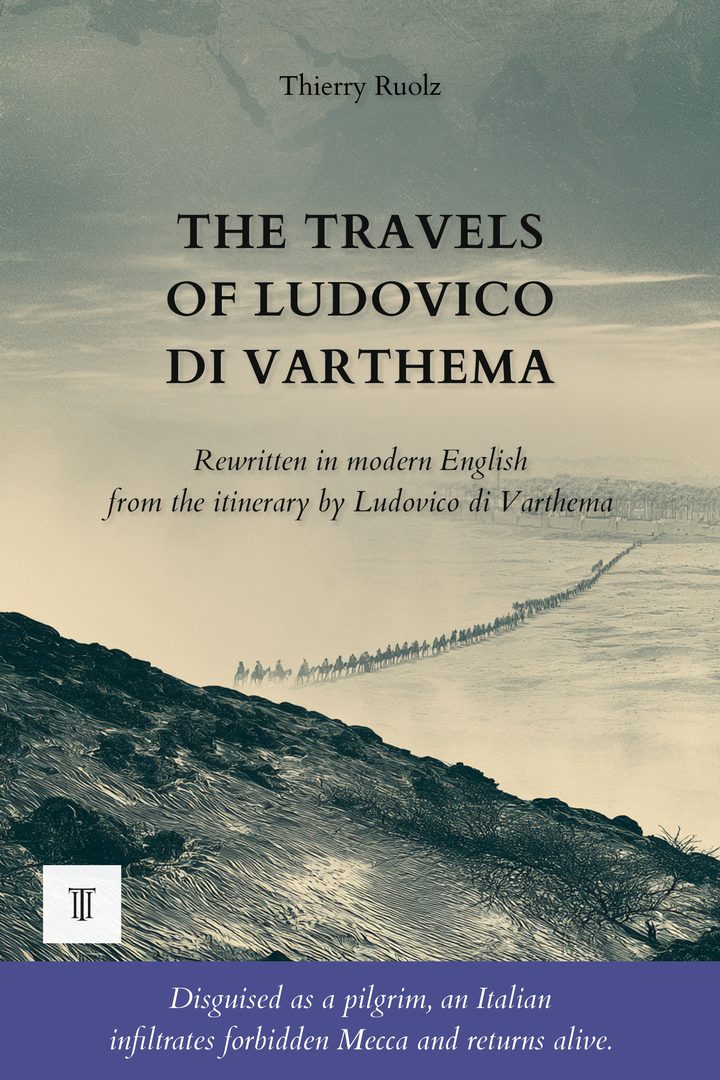
An apothecary sent to the Indies by King Manuel, Tomé Pires wrote in Malacca and in India, between 1512 and 1515, a compendium of everything he learned about the trading East, from the Red Sea to China. He describes ports, goods, weights, rulers, above all Malacca, which the Portuguese had just conquered, a few years after Varthema's visit. Pires then left on an embassy to China, where he died without being able to return. His manuscript, long thought lost, was found in Paris only in 1944. The Suma Oriental lets us measure, on the same shores, what Portuguese conquest changed in the world Varthema had seen.
-
Ogier Ghiselin de Busbecq, Lettres turques (1581)
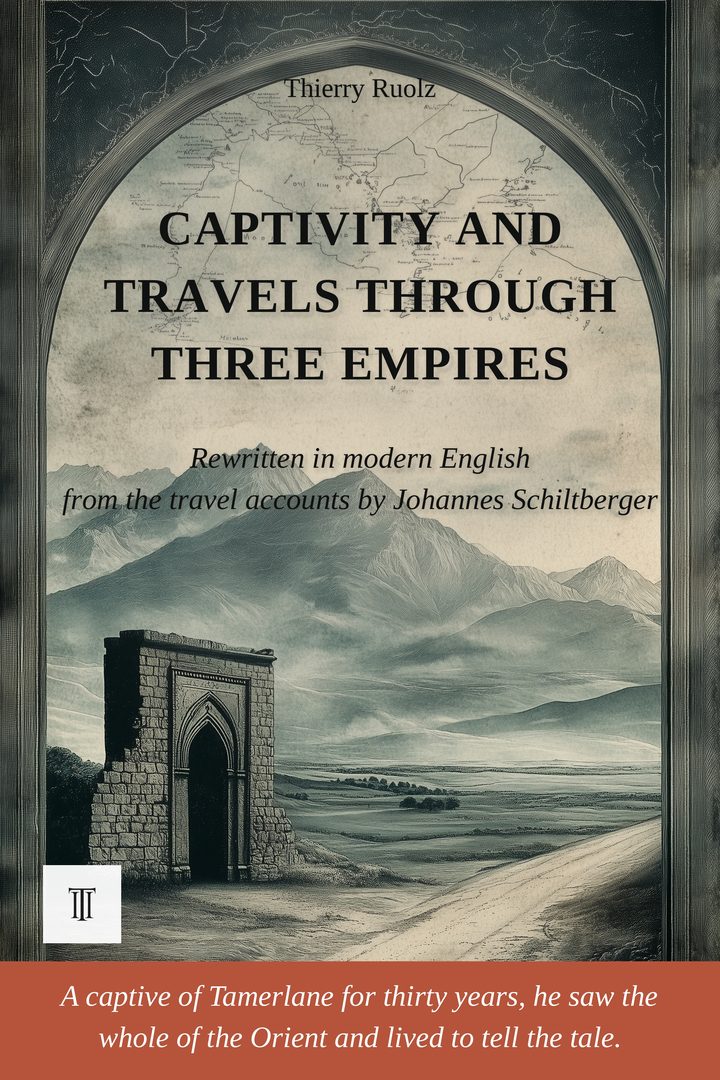
The imperial ambassador to Istanbul publishes his four Latin letters from the court of Suleiman the Magnificent in 1581. A hundred and eighty years after Schiltberger, the same Ottoman empire, more powerful than ever, receives another Westerner, this time an ambassador. Busbecq describes the Sublime Porte at its height, in the very years when the Frankfurt printer republishes the Bavarian's account for his contemporaries as a cautionary tale. Reading Busbecq right after Schiltberger means following the Ottoman Empire from its childhood to its zenith.
-
François Pyrard de Laval, Voyage de François Pyrard de Laval aux Indes orientales (1601-1611)
Leaving Saint-Malo in 1601, Pyrard of Laval was shipwrecked in the Maldives on 2 July 1602 and remained a captive there for five years, learning the islanders' language and customs. Escaping in 1607, he passed through India and knew Goa, Portuguese India at its height, before returning to France in 1611 and publishing his account. A century after Varthema, he finds again the ports of India's western coast and the merchants of the Indian Ocean, but seen from inside the empire that the Bolognese saw being born at Cannanore. His pages on the Maldives remain among the most precise ever written by a European of his time. The book is The Voyage of François Pyrard of Laval to the East Indies.
Read a free edition → -
Adam Olearius, Voyage en Moscovie, Tartarie et Perse (1647)
The diplomat from Holstein publishes in 1647 his account of the 1633-1639 journey through Moscow, the Volga, the Caspian Sea, Isfahan, and back by way of Baku. Two hundred years after Schiltberger, the same Siberian, Caucasian, and Persian geography, but under different rulers: the Romanovs in Russia, the Safavids in Persia, the Ottomans in the Caucasus. Schiltberger had seen these roads amid the disorder of Tatar successions; Olearius sees them consolidated into modern empires.
-
Engelbert Kaempfer, Amœnitates exoticæ (1712)
The physician and naturalist from Westphalia crosses Russia, Safavid Persia, and the Caspian Sea in 1683-1685. His scientific Latin from the close of the seventeenth century offers the first complete European portrait of modern Persia. Where Schiltberger bore first-person witness to Timurid destruction, Kaempfer describes Iran rebuilt under Shah Abbas, with its gardens, its mosques, its caravanserais.
-
Joseph Pitton de Tournefort, Relation d'un voyage du Levant (1717)
The Sun King's French botanist publishes in 1717 his account of the 1700-1702 mission to Anatolia, Georgia, Armenia, and Constantinople. The same places as Schiltberger, exactly three hundred years later, seen through the eyes of a scholar of the nascent Enlightenment. The Caucasus and Anatolia have changed Ottoman rulers, but the names of the cities, the peoples, the religions are much as the Bavarian had seen them.
-
Carsten Niebuhr, Description de l'Arabie (1762-1763)
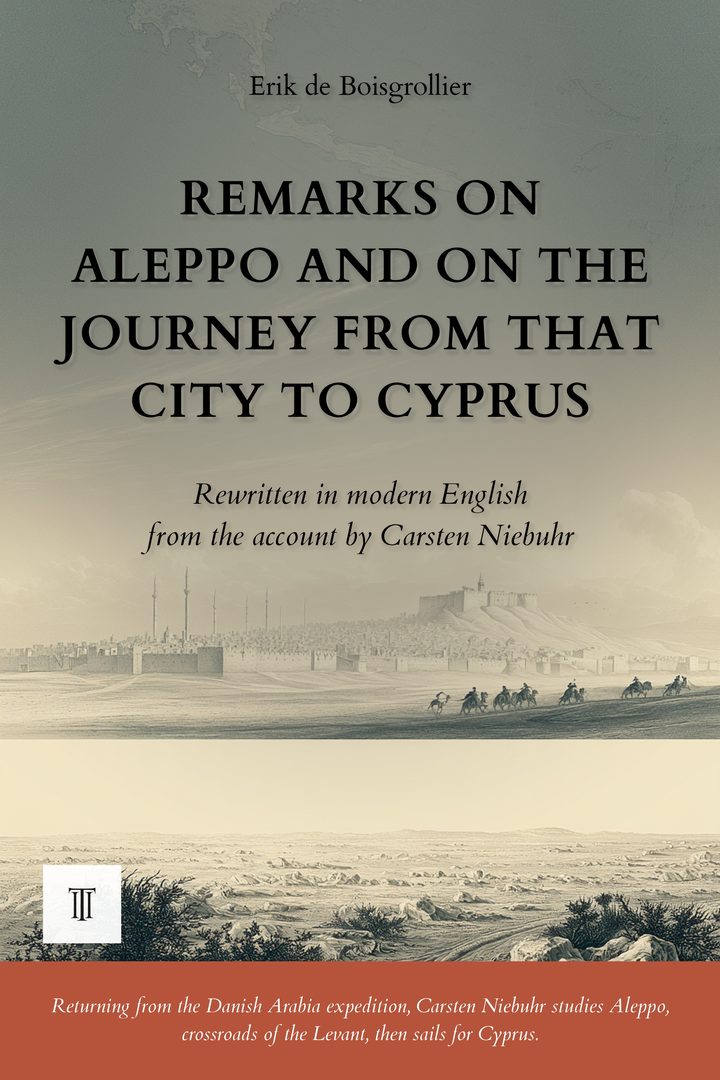
In 1761 the King of Denmark sent five scholars to explore Arabia Felix. After Cairo, Sinai and Jeddah, the expedition reached Yemen and was received at Sanaa by the imam, but fever decimated it: Niebuhr, the surveyor, was the only one to return. From Mocha to Sanaa he travelled the mountains and cities that Varthema had crossed as a prisoner of the Sultan of Aden, two and a half centuries earlier. His Description of Arabia, published in 1772 and translated into French the following year, brings maps, measurements and precise observations where the Bolognese told stories. It remains a reference for the history of Yemen.
-
Constantin-François Volney, Voyage en Syrie et en Égypte (1783-1785)
Less than twenty years after Niebuhr, the young Volney travels through Egypt and Syria and publishes, in 1787, the very year of the Remarks on Aleppo, a picture that would become authoritative. His pashalik of Aleppo overlaps Niebuhr's line for line: villages abandoned at the edge of the desert, the road to Alexandretta infested with thieves, fallen Antioch, the fevered air of Alexandretta and the refuge of Beilan in the mountains. He adds the carrier pigeons and the famous Aleppo button. But Volney generalizes and judges Ottoman despotism as a philosopher of the Enlightenment, whereas Niebuhr, more modest, tells what he has seen and lets the reader conclude.
Read a free edition → -
Ali Bey el-Abbassi, Voyages d'Ali Bey el Abbassi en Afrique et en Asie (1803-1807)
Under an assumed name and in the costume of a Muslim prince, the Catalan Domingo Badía crosses Morocco, Egypt, Mecca, Syria and Anatolia. In the spring of 1806, a storm nearly swallows his ship before he lands at Larnaca. From there he makes his way to Nicosia through hills he finds worthy of the island's goddess, notes the richness of the soils and observes a Cyprus still squeezed by its governors. His Travels, published in Paris in 1814, offer a striking counterpoint to Niebuhr's pages: forty years later, the same island seen by a false Muslim who served Napoleon's policy.
-
Jean Louis Burckhardt, Travels in Syria and the Holy Land (1810-1812)
Sent by the African Association of London to prepare for crossing the Sahara, the Swiss Burckhardt chooses Aleppo as his school: he learns Arabic there, lives under the name of Sheikh Ibrahim and radiates from it across all of Syria. Lebanon, the Orontes valley, the Hauran, then in 1812 the road to Cairo, during which he becomes the first modern European to describe Petra. His journals, published in 1822 after his death, extend Niebuhr's gaze exactly: the same patience, the same taste for measured itineraries, the same attention to the sects and tribes that hurried travelers ignore.
Read a free edition → -
Johann Ludwig Burckhardt, Travels in Arabia (1814-1815)
Under the name Sheikh Ibrahim, the Swiss Burckhardt spent several months in the Hejaz in 1814 and 1815, performed the pilgrimage and stayed in Mecca and Medina. His notes, published in London after his death, describe the Kaaba, the rites, the population and the trade of the holy cities with an exactness later travellers have scarcely surpassed. Three centuries after Varthema, also disguised to enter the sanctuary forbidden to non-Muslims, Burckhardt follows the same roads from Jeddah and the caravan. Reading the two accounts side by side lets us sort what the Bolognese saw from what he embellished. His book is Travels in Arabia.
Read a free edition → -
Gérard de Nerval, Voyage en Orient (1843)
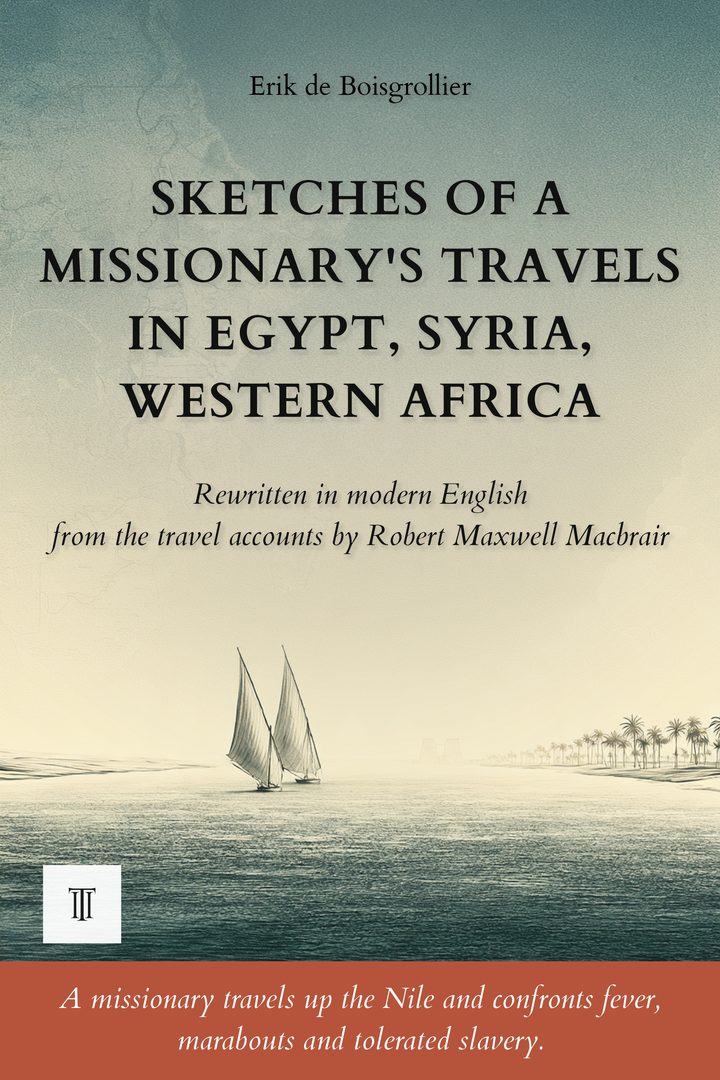
Nine years after Macbrair, Gérard de Nerval lands at Alexandria early in 1843 and settles in Cairo, where he rents a house, buys a Javanese slave girl and has the legend of the caliph Hakim told to him. He then travels on to Beirut and Mount Lebanon, at the heart of the rivalries between Druze and Maronites that Macbrair had already seen fermenting under Ibrahim Pasha. His Voyage en Orient, published in 1851, blends reportage, reverie and embedded tales. The contrast is complete: the poet seeks in the East a mystery to love, the missionary a people to save, yet both describe the same teeming city, its cafés, its markets and its alleys.
Read a free edition → -
Harriet Martineau, Eastern Life, Present and Past (1848)
Four years after Ida Pfeiffer, the Englishwoman Harriet Martineau, already famous for her writings on political economy, set out in turn for the East at the end of 1846. She goes up the Nile into Nubia, crosses Sinai, visits Petra, then Jerusalem, Galilee and Damascus. Like the Viennese woman, she travels as a mature woman, not letting the fatigues of the saddle and the tent stop her. But where Pfeiffer prays, Martineau reasons: her Eastern Life, Present and Past turns Egyptian temples and holy places into stages in a history of religions, to the point of scandalising some of her readers. Two women before the same stones, two ways of believing.
Read a free edition → -
Gustave Flaubert, Voyage en Orient (1849-1851)
In November 1849, Gustave Flaubert, aged twenty-seven, sails from Marseille with Maxime Du Camp, who has been entrusted with a photographic mission. They ascend the Nile in a cangia as far as the Second Cataract, stop at Philae, Thebes and Esna, then go on to Beirut, Jerusalem, Damascus and Baalbek. The notes and letters from this journey, published after the writer's death, are raw, funny, sensual, with a painter's precision. Fifteen years after Macbrair, Flaubert follows almost the same route, from Cairo to the ruins of Baalbek, but with the eye of an artist who wants to see everything and judge nothing: the reader can set two views side by side, one pious, the other profane, of the same riverbanks.
Read a free edition → -
Thomas Eyre Poole, Life, Scenery, and Customs in Sierra Leone and the Gambia (1850)
Colonial and garrison chaplain at Freetown, the Reverend Thomas Eyre Poole published in London, in 1850, two volumes on Britain's West African colonies. From Sierra Leone he moves on to the Gambia, visits the settlements on the river and travels a long way up it. He depicts the life of the colonists, of the liberated Africans and of the riverside peoples, and dwells on the neglected churches, the cemeteries overrun by grass and the fevers that cut down Europeans, which he himself survives several times. The reader rediscovers the fragile colony, with its trading posts and missions, that Macbrair had known, seen this time by an Anglican clergyman rather than a Methodist.
Read a free edition → -
Richard Francis Burton, Personal Narrative of a Pilgrimage to Al-Madinah and Meccah (1853)
In 1853 the British officer Richard Burton passed himself off as an Afghan physician and joined the pilgrims on the road to Medina and then Mecca. His account, published soon after, became one of the great classics of Oriental travel: a meticulous description of the rites, the caravans, the Bedouins, the constant danger of being unmasked. Burton knew Varthema, whose account he quotes at length in an appendix, and knew himself the heir to a line of disguised travellers that begins with the Bolognese enlisted among the Mamluks. Three and a half centuries lie between them, but the same question remains: how to see, and tell, what one has no right to see. The book is Personal Narrative of a Pilgrimage to Al-Madinah and Meccah.
Read a free edition → -
Herman Melville, Journal of a Visit to Europe and the Levant (1856-1857)
In December 1856, Herman Melville, exhausted by the failure of his last novels, arrives in the Levant. He sees Constantinople, the pyramids of Giza, then Jaffa and Jerusalem in January 1857, before returning by Beirut, Greece, Naples and Rome. His Journal of a Visit to Europe and the Levant, kept in rapid notes, is dark: Judea seems to him a landscape of stones and desolation, far from the Promised Land. The reader of Pfeiffer finds the same stages here, from the Bosphorus to Vesuvius, but seen by a man who seeks faith instead of bringing it with him. These pages would feed his long poem Clarel, published in 1876.
-
Lucie Duff Gordon, Letters from Egypt (1862-1869)
Suffering from tuberculosis, Lucie Duff Gordon went to Egypt in 1862 in search of drier air and spent the last years of her life there. She settles in Luxor in the "French House" built on the roofs of the temple, learns Arabic, treats the peasants, receives notables and Copts, and writes to her family letters of rare freedom, published as early as 1865. In them she describes the corvée, the taxes and the levies of men that crush the fellahin, as Macbrair had done thirty years earlier under Muhammad Ali. But where the missionary saw souls to be won, she sees neighbours and friends, and reading her one measures all that European arrogance let slip.
Read a free edition → -
Mark Twain, The Innocents Abroad (1869)
In 1867, Mark Twain embarks on the Quaker City with a group of American pilgrims, for one of the first organised cruises to the Holy Land. Naples and Vesuvius, Rome, Constantinople, Smyrna, Beirut, Baalbek, Damascus, Galilee, Jerusalem, the Dead Sea, then the pyramids: the list of stops almost matches Ida Pfeiffer's. But where the Viennese woman travelled alone and on a budget, Twain in The Innocents Abroad describes nascent tourism, its guides, its souvenirs and its passengers who chip off pieces of monuments. His irony about doubtful relics and disputed holy places sometimes joins, with more bite, the good sense of Pfeiffer.
Read a free edition → -
Vasily Vereshchagin, Tableaux et croquis de l'Asie centrale (1870)
The great Russian painter, who follows Konstantin von Kaufman's military expedition to Turkestan in the 1860s and 1870s, paints Samarkand, Khiva, and Bukhara before they are absorbed into Russia. His descriptions accompanying the paintings depict a Central Asia still recognizable from Schiltberger's: local emirs, religious fanaticism, Circassian slaves, processions of horsemen. The last years when the steppe still looked like the steppe.
-
Amelia B. Edwards, A Thousand Miles up the Nile (1873-1874)
A novelist and journalist, Amelia Edwards arrives in Egypt almost by chance, in November 1873, to escape the rain of Europe. She hires a dahabeah and sails up the Nile beyond Abu Simbel to the Second Cataract, sketching everything she sees. Her book, published in 1877, combines humour, erudition and indignation at monuments mutilated by treasure hunters and visitors. In 1882 she would found the Egypt Exploration Fund, to excavate and protect this heritage. Macbrair had seen the same temples at Thebes, Edfu and Philae; forty years later, Edwards shows what nascent tourism had made of this Nile of missionaries and pashas.
Read a free edition → -
Samuel White Baker, Cyprus as I Saw It in 1879 (1879)
A year after the Ottoman Empire ceded the administration of Cyprus to Great Britain, the Nile explorer Samuel Baker lands at Larnaca and travels the island for several months with his wife Florence, by cart and under canvas. He describes the roads, the devastated forests, the peasants, the taxes, the towns of Nicosia, Kyrenia and Famagusta, and judges the new administration as harshly as the old. More than a century after Niebuhr, the question remains the same: why is so fertile an island so poor? Baker's answer, that of a pragmatic colonist, echoes the anger of the Cypriots of 1766.
Read a free edition → -
Lord Curzon, Russia in Central Asia (1889)
The future Viceroy of India publishes in 1889 his account of a journey through the newly conquered Russian Turkestan. Schiltberger had seen Sarai on the Volga in its splendor; Curzon crosses its ruins of sand. A thousand roads the Bavarian had traveled as a captive, the Englishman retraces by trans-Caspian railway. Industrial modernity has replaced the nomadic steppe.
-
Pierre Loti, Jérusalem (1895)
In the spring of 1894, Pierre Loti crosses the Sinai desert on camelback, then reaches Jerusalem, where he spends several weeks. The book he draws from it, Jerusalem, published in 1895, is that of a believer without faith who still hopes for some emotion before the tomb of Christ and finds a city already changed by hotels, crowds of pilgrims and new buildings. Half a century separates the two journeys: the Via Dolorosa, the Mount of Olives and the Valley of Jehoshaphat are the same, but Pfeiffer's Jerusalem, a small Ottoman town whose gates were closed at night, has begun to spread beyond its walls.
Read a free edition → -
Gertrude Bell, Syria: The Desert & the Sown (1905)
In early 1905, Gertrude Bell leaves Jerusalem on horseback, crosses the Hauran and the Druze country, reaches Damascus, Homs and Hama, then lingers at Aleppo before descending by Antioch to Alexandretta, where her book, published in 1907, ends. It is almost Niebuhr's itinerary, in the opposite direction and a hundred and forty years later: the same Bedouins masters of the desert, the same Nusayris, the same ruins of Antioch. Bell, an archaeologist and future player in British policy in Iraq, writes with a sense of dialogue and portrait that makes this account one of the classics of travel in the Levant.
Read a free edition →