 Region and period
Explorers of the Far North in the 18th Century
In the eighteenth century the Far North stopped being merely the edge of the world and became a frontier that states wanted to own and to measure. Every summer, Dutch, Basque and German whalers sent hundreds of ships into the ice off Spitsbergen and Greenland, and Pomor hunters from the White Sea went there after walrus. In 1743 four of them, stranded on an island of the archipelago, survived for six years with one musket, a few bullets and driftwood; their story, published in 1766, went round Europe.
Russia under Peter the Great and his successors carried out the largest venture of all. From 1733 to 1743 the Great Northern Expedition sent detachments along the entire Siberian coast. Vasily Pronchishchev died on the Taymyr Peninsula in 1736, and his wife Tatiana, who had come with him, a few days later; in 1742 Semyon Chelyuskin reached the northernmost cape of Asia. Johann Georg Gmelin brought back from ten years on the road an account of travels through Siberia, and Stepan Krasheninnikov a description of Kamchatka (1755). Aleksei Chirikov sighted the coast of Alaska in 1741, and fur hunters followed the Aleutian chain island by island until Grigory Shelikhov settled on Kodiak in 1784.
In the North Atlantic, the view also came from within. Denmark regained a foothold in Greenland in 1721; the Moravian Brethren settled there in 1733, then in Labrador in 1771, and in 1765 David Crantz published a history of Greenland drawn from their conversations with the Inuit. In Iceland two native scholars, Eggert Ólafsson and Bjarni Pálsson, crossed the island from 1752 to 1757 and made a meticulous survey of it. Joseph Banks climbed Hekla in 1772, eleven years before the Laki eruption brought famine to the whole island.
In America the Northwest Passage remained an obsession. Christopher Middleton searched for it in vain in 1741-1742. Samuel Hearne went overland instead: guided by the Dene leader Matonabbee, he reached the mouth of the Coppermine and the Arctic Ocean in 1771, and witnessed his companions massacre an Inuit camp. In 1789 Alexander Mackenzie followed to the sea the river that now bears his name. The narratives of this century combine surveys, logbooks and a daily dependence on those who knew how to live in the cold.
This collection brings together our editions and a directory of related texts.
Our titles on this subject
Further reading: accounts and works on the same theme
Accounts and works around this subject, in date order, to place our titles in context. Each links to a free online edition when one exists, or to our own page when the work is in our catalogue.
-
Réginald Outhier, Journal d'un voyage au Nord, en 1736 et 1737 (1744)
The same journey, seen through other eyes. Abbé Réginald Outhier, a priest of the diocese of Besançon and correspondent of the Academy, in charge of the expedition's signals and maps, keeps his journal day by day during the two years spent in the North. Published in 1744, it shows what Maupertuis's Discours leaves in shadow: life in the hamlets along the river, the customs and beliefs of the Lapps, the view of a Catholic priest on a Lutheran country. Outhier draws the plates himself, including plans of Tornio and Stockholm and a view of Falun. To read the two texts side by side is to hear both the leader of the expedition and the man who carried the signals up the summits.
Read a free edition → -
David Cranz, The History of Greenland (1761-1762)
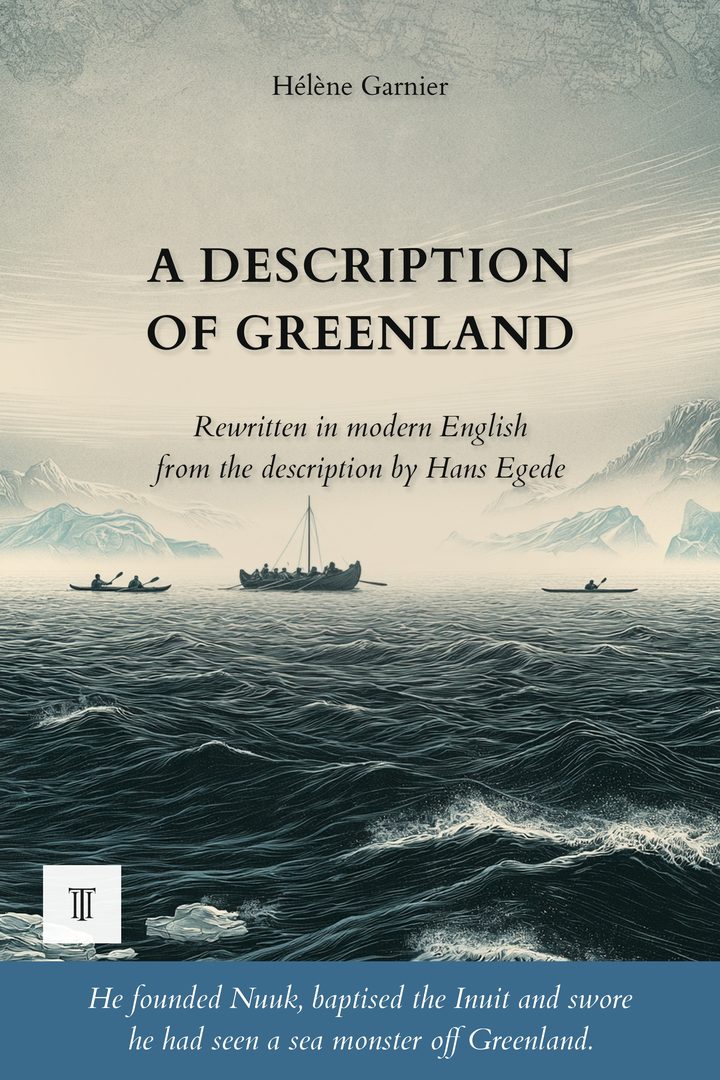
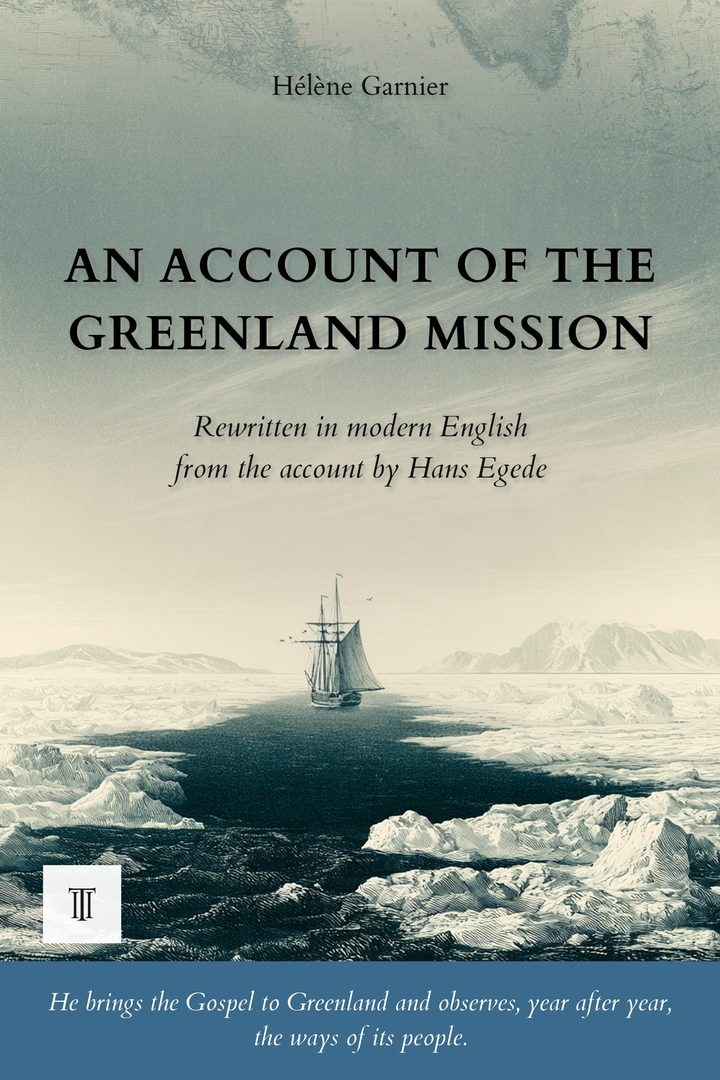
In 1733, in Egede's lifetime, Moravian Brethren from Herrnhut settle next to his colony and found New Herrnhut; relations between Lutherans and Moravians are not always peaceful. Thirty years later, David Cranz is sent by his Church to write the history of this mission. He stays in Greenland in 1761 and 1762, then publishes in 1765 a comprehensive work on the country, its inhabitants and the work of the Brethren, translated into English as early as 1767. Cranz draws heavily on Egede, completes him, debates him, and adds what thirty years of presence have taught. Reading the two books one after the other means seeing the same coast described by two rival missions.
Read a free edition → -
Peter Simon Pallas, Reise durch verschiedene Provinzen des Russischen Reiches (1771-1776)
Published between 1771 and 1776, the immense journey of the German naturalist Pallas across the Russian Empire, from the Volga to the Altai and eastern Siberia, unfolded in the years just before and after Phipps's voyage. Pallas described the steppes, the mammoths, the Turkic and Mongol peoples. Readers curious about the Far North will find here, on the Russian side, the continental counterpart to what Phipps sought at sea.
-
James Cook et James King, A Voyage to the Pacific Ocean (1776-1780)
In the spring of 1778, thirty-seven years after Bering, James Cook in his turn follows the coast of Alaska in search of a passage to the Atlantic. He passes the island where Steller had gathered plants for ten hours and names it Kaye's Island; his men leave a bottle and silver coins there. Cook goes up to the Bering Strait, meets Russian traders at Unalaska, then dies in Hawaii. In 1779 his ships anchor in Avacha Bay, from which the St. Peter had set out. The official account, completed by James King and published in 1784, retraces Steller's route with surer instruments and at last measures what the Russians had discovered.
Our edition → -
Martin Sauer, An Account of a Geographical and Astronomical Expedition to the Northern Parts of Russia (1785-1794)
Secretary of Joseph Billings's expedition, commissioned by Catherine II to survey the coasts between Asia and America, the Englishman Martin Sauer spends nearly ten years in eastern Siberia. He winters in Kamchatka, sails from Petropavlovsk in 1790 and visits the Aleutian Islands, Unalaska and Kodiak. His account, published in London in 1802, dwells on the Aleuts, their kayaks, their parkas, their villages, and plainly denounces the brutality of the Russian fur hunters toward them. Half a century after the meeting at the Shumagin Islands told by Steller, Sauer describes the price these islanders paid for the sea otter that Bering's expedition had made known.
Read a free edition → -
Jean-Baptiste Barthélemy de Lesseps, Journal historique du voyage de M. de Lesseps (1787-1788)
In September 1787, La Pérouse calls at Avacha Bay and lands his young interpreter, Jean-Baptiste Barthélemy de Lesseps, charged with carrying the expedition's journals to France. A year-long crossing begins: by dog sled across Kamchatka, through Bolsheretsk, then among the Koryaks, along the Sea of Okhotsk and across the whole of Siberia, to Saint Petersburg and Paris, where he arrives in October 1788. His Journal historique, published in 1790, describes the Kamchadals, the Koryaks, the Cossack outposts and the rigors of winter. Steller's reader finds Avacha and Bolsheretsk again half a century later, on the very road of his return on foot.
Our edition → -
Paul Egede, Efterretninger om Grønland, uddragne af en Journal holden fra 1721 til 1788 (1788)
Paul Egede is twelve when he lands with his parents in 1721, and the Account follows him from journey to journey until he returns, ordained, in 1734, to help found Christianshåb on Disko Bay. He stays in Greenland until 1740, then becomes the author of the first Greenlandic dictionary and grammar, translates the New Testament and ends his life as Bishop of Greenland. Shortly before his death, he publishes in Copenhagen extracts from his own journal, kept from 1721 to 1788. The son takes up where the father leaves off: the same fjords, the same families, but with the language at last mastered and the hindsight of a whole lifetime.
Read a free edition → -
Samuel Hearne, A Journey from Prince of Wales's Fort in Hudson's Bay to the Northern Ocean (1795)
An employee of the Hudson's Bay Company, Hearne made on foot, between 1769 and 1772, the crossing that took him from Prince of Wales's Fort to the Arctic Ocean by way of the Coppermine River. Published in 1795, his account is the overland counterpart to that of Phipps: the same years, the same Arctic, but on the American side, in the company of Dene hunters. There, the ice takes other forms, and hunger stands in for the pole.
-
Giuseppe Acerbi, Travels through Sweden, Finland, and Lapland, to the North Cape (1802)
The young Italian Giuseppe Acerbi left Stockholm in 1798 on a journey that would take him to the North Cape. In the depths of winter he crossed the ice-bound Sea of Åland by sledge, reached Finland and followed the coast of the Gulf of Bothnia up to Oulu and Torneå, in the opposite direction to Linné's return. When summer 1799 came, he went up the Torne and the Muonio by boat, from rapid to rapid, to the Lapp encampments and the Arctic Ocean. His Travels, published in London in 1802 with many engravings, offer a lively picture of the Finns, the Lapps and their reindeer, two generations after the journal of 1732.
Read a free edition → -
Giuseppe Acerbi, Travels through Sweden, Finland, and Lapland, to the North Cape, in the Years 1798 and 1799 (1802)
More than sixty years after Maupertuis, the young Italian Giuseppe Acerbi takes the road to Tornio again with a new ambition: to reach the North Cape by land. In spring 1799, his small party passes through Oulu and Kemi, reaches Tornio, goes up the Torne by boat and then the Muonio with its rapids, crosses the marshes of Enontekiö on foot to Kautokeino, and reaches the North Cape by sea on 19 July, under the midnight sun. Published in London in 1802, his two volumes describe the nature, inhabitants and customs of Finland and Lapland. The academicians' river becomes the gateway to a great adventure journey.
Read a free edition →