 Far North
Travel narratives of the Far North and the Arctic
Around 325 BC the Greek Pytheas of Massalia sailed beyond Britain and reported a land called Thule, where the sun did not set in summer and the sea seemed to congeal. No one believed him, and for centuries the Far North remained an edge of the world full of rumour: griffins, fabulous peoples, whirlpools that swallowed ships. The first precise testimonies came from those who lived there. Around 890 the Norwegian Ohthere told Alfred the Great of his voyage round the North Cape to the White Sea and described the Sami, hunters and reindeer herders.
Scandinavian sailors went further. Setting out from Norway, they settled Iceland in the late ninth century; Erik the Red made his home in Greenland around 985, and his son Leif reached lands further west around the year 1000, which Icelandic tradition calls Helluland, Markland and Vinland. The site of L'Anse aux Meadows in Newfoundland has confirmed their presence. In the sixteenth century the exiled Swedish archbishop Olaus Magnus published in Venice a great map of the Nordic lands, the Carta marina (1539), then in Rome a history of the northern peoples (1555) in which observation still sits beside sea monsters.
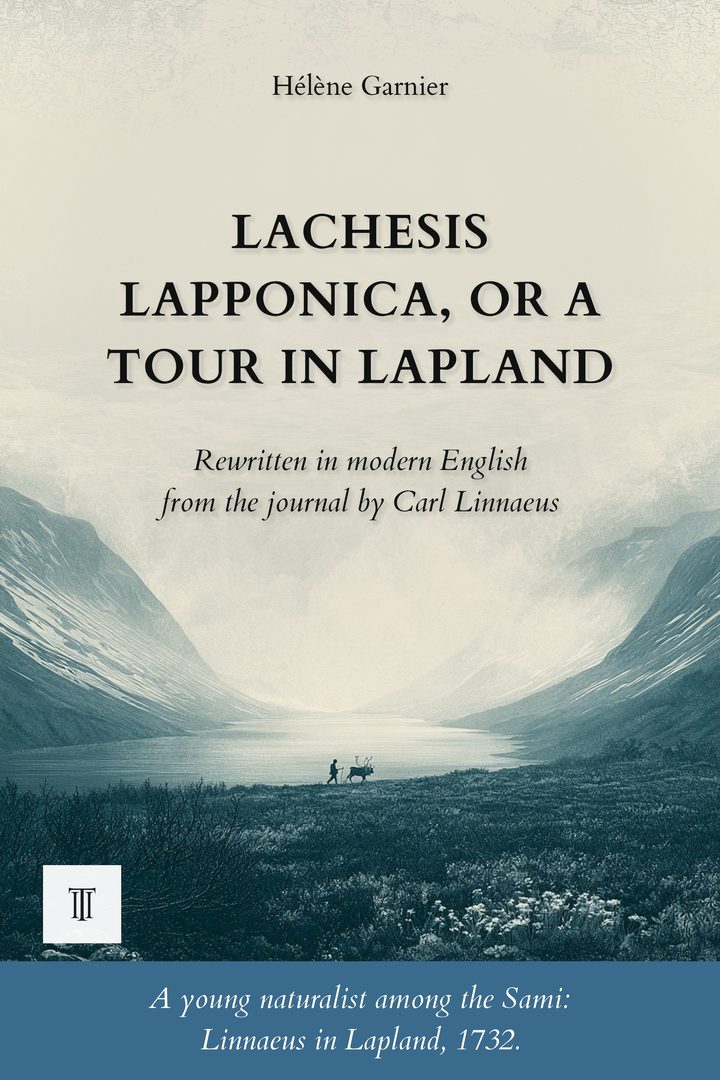
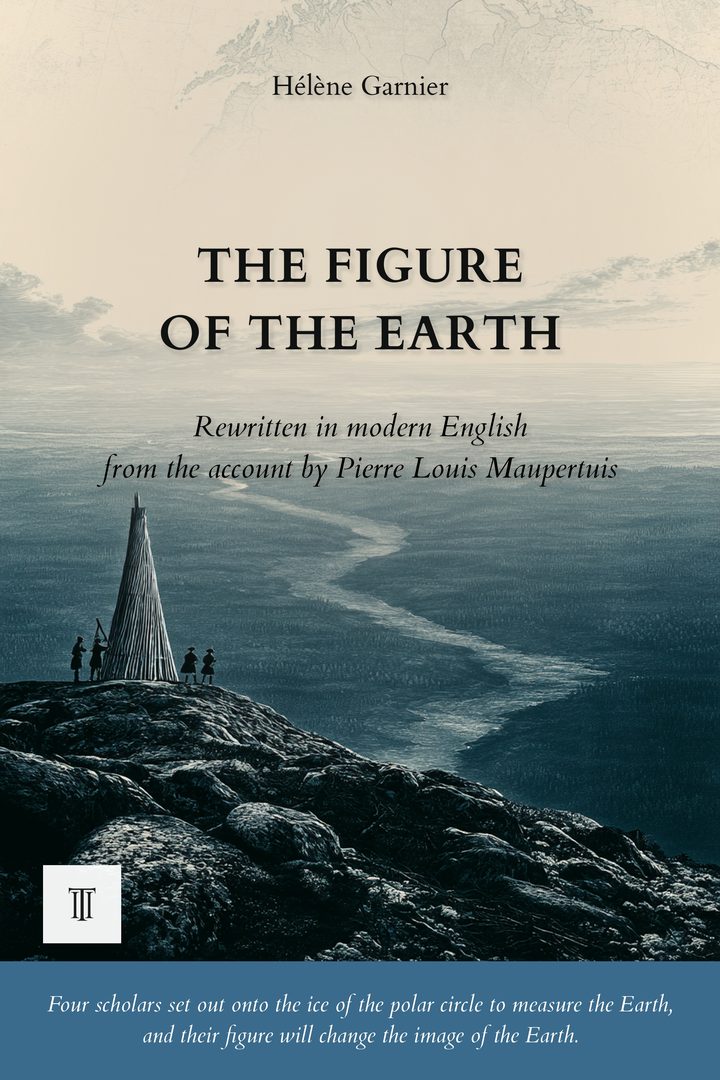
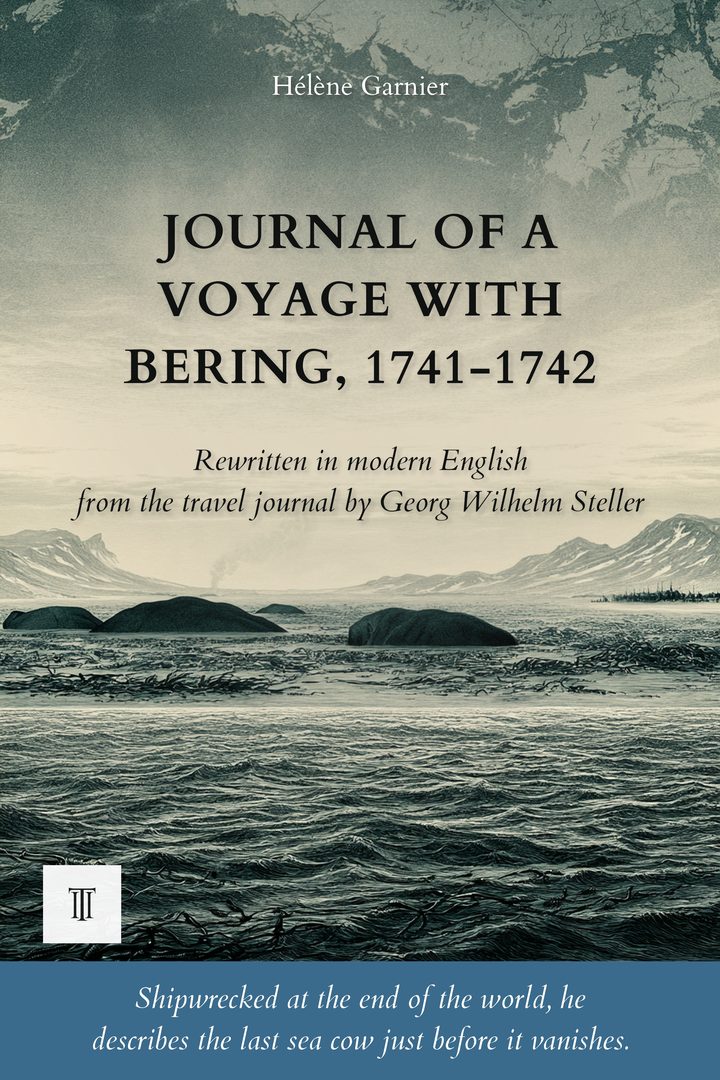
The early modern age made the North both a route and a laboratory. The English and the Dutch looked there for a passage to China: Willem Barents wintered on Novaya Zemlya in 1596-1597 in a wooden house, and one of his companions kept a day-by-day chronicle; Martin Frobisher, Henry Hudson and many others battled with the Northwest Passage. Scientists followed. Linnaeus botanised in Lapland in 1732, and Maupertuis measured the flattening of the Earth there in 1736-1737. For Russia, Vitus Bering's Great Northern Expedition mapped Siberia and reached Alaska in 1741, where the naturalist Georg Wilhelm Steller described animals no European had seen.
In the nineteenth century the Far North became the stage for national rivalry and for epic. John Franklin's expedition vanished with all hands after 1845, and the searches launched to find it drew the map of the Canadian Arctic archipelago. Adolf Erik Nordenskiöld finally sailed the Northeast Passage in 1878-1879; Fridtjof Nansen let his ship, the Fram, drift with the pack ice from 1893 to 1896. From ancient marvel to scientific log, these Arctic narratives also tell of an apprenticeship: how to survive, dress and eat, and how much travellers had to learn from Arctic peoples.
By country: Canada · Finland · Greenland · Russia · Sweden · United States
Our titles on this subject
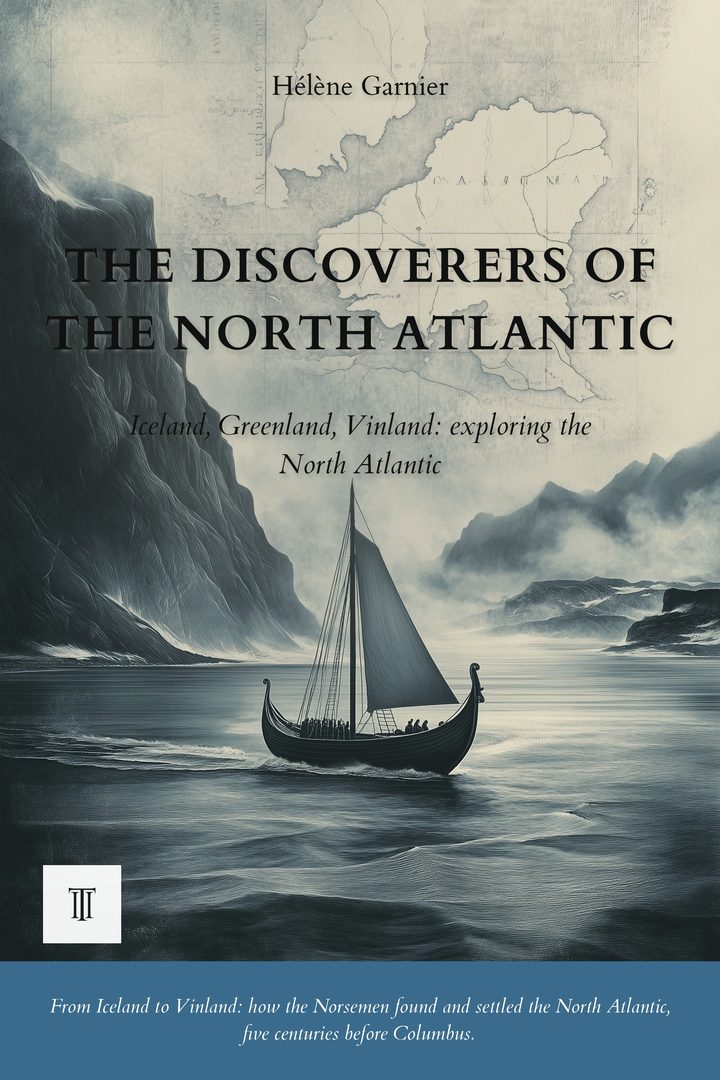
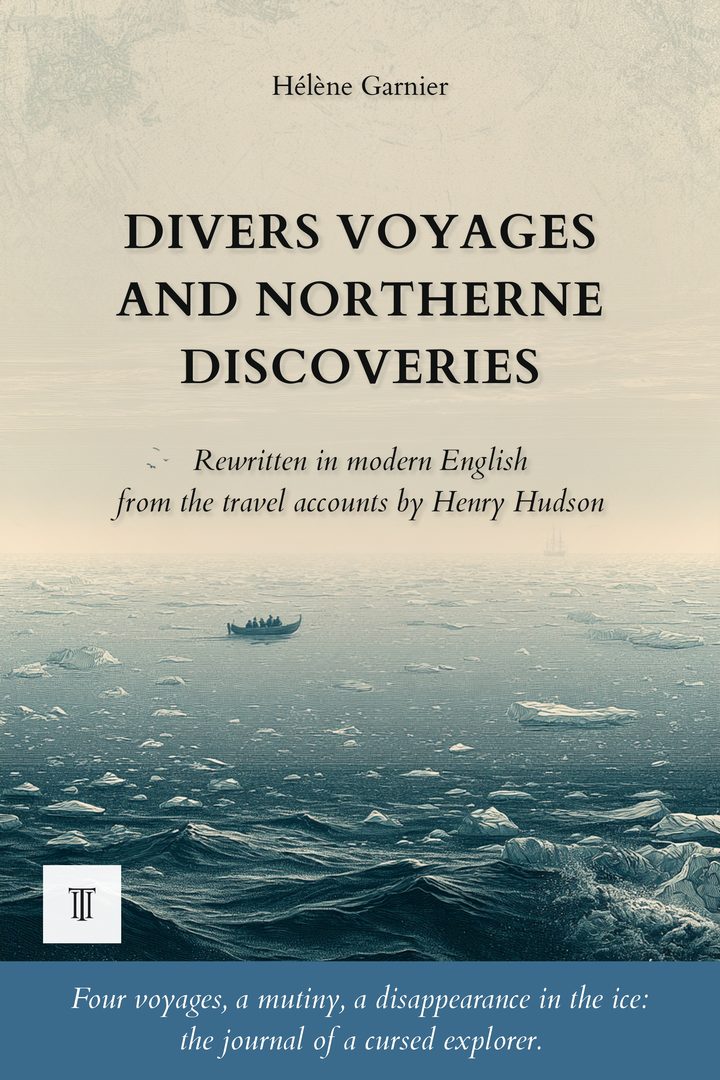
Further reading: accounts and works on the same theme
Accounts and works around this subject, in date order, to place our titles in context. Each links to a free online edition when one exists, or to our own page when the work is in our catalogue.
-
Ahmad ibn Fadlan, Risala (921)
In 921, a century and a half before Adam took up his pen, an envoy of the Caliph of Baghdad travelled north and came upon Norse merchants on the banks of the Volga. These were the Rus, eastern cousins of Adam's Northmen. Ibn Fadlan describes their tattoos, their slave trade, and the harrowing funeral rite of a chieftain burned aboard his ship. Where Adam questions sailors from afar, the Arab traveller saw everything with his own eyes. The two texts answer one another like two faces of the same Nordic world, one seen from Bremen, the other from the Orient.
-
Adam de Brême, Histoire des archevêques de Hambourg (c. 1075)
Around 1075, a German clergyman writes the first mention of Vinland outside Iceland. Adam de Brême, informed by the king of Denmark, notes that beyond Greenland there exists an island where wild vines and wheat grow. The coincidence is striking: at a time when the sagas still held these voyages only in oral memory, a scholar on the continent was already gathering their echo. His testimony, brief but crucial, confirms from outside what the Icelanders were passing on by word of mouth about the land of the vines.
-
Snorri Sturluson, Heimskringla (c. 1230)
A century after Adam, the Icelander Snorri recounts from within the kings the canon knew only by hearsay. Harald Bluetooth, the two Olafs, and Cnut the Great reappear here, but seen by the Norsemen themselves, with their sagas, their skalds, and their own memory. To read Snorri after Adam is to hear the other version of the same history, that of the conquered finally given voice.
-
Saxo Grammaticus, Gesta Danorum (c. 1200)
Around 1200, this Danish clerk composed in Latin the great chronicle of his people. He knew Adam's work and carried it forward, giving the Danish kings their national epic. Here one meets the heroes and legends that Bremen had barely glimpsed, in an ample language that seeks to rival the Ancients.
-
Olaus Magnus, Histoire des peuples du Nord (1555)
More than a century before Scheffer, the Swedish archbishop exiled in Rome had drawn up, in 1555, the great picture of the Septentrion: storms, ice, hunting peoples, sea monsters and the customs of the cold. Scheffer reads him page after page, admires him and corrects him constantly. Here the learned Europe first discovered, in a profusion of engraved images, what life at the edge of the world might be like. Read it to gauge what the Lapponia owes its predecessor and what it takes from it: credulity.
-
Thomas James, The Strange and Dangerous Voyage of Captaine Thomas James (1633)
In May 1631, Thomas James left Bristol aboard the Henrietta Maria to take up the quest where Hudson had left it. In the bay he met another seeker of the passage, Luke Foxe, who had sailed from London the same season, then headed south, into the bottom of the bay where Hudson had wintered and which today bears the name of James. He spent the winter on Charlton Island, deliberately sank his ship to save it from the ice, refloated it in the spring and returned to Bristol in October 1632. His Strange and Dangerous Voyage, published in 1633, tells of hunger, cold and prayer, and reaches the same conclusion as Hudson's journals: that way, no passage opens toward Asia.
Read a free edition → -
Luke Foxe, North-West Fox, or Fox from the North-West Passage (1635)
Twelve years after Munk, in 1631, Luke Foxe leaves London in the Charles, a small pinnace, passes by Orkney and enters Hudson Strait in June. He follows the west coast of the bay, finds at Port Nelson the traces of Thomas Button's wintering, meets his rival Thomas James by chance, then heads north into the basin that now bears his name. He returns in October having neither wintered nor lost a man. His book, published in 1635, mixes ship's journal with a history of earlier voyages: ideal reading for measuring what Munk had paid so dearly.
Read a free edition → -
Friedrich Martens, Spitzbergische oder Groenlandische Reise-Beschreibung (1675)
In the spring of 1671, the Hamburg barber-surgeon Friedrich Martens shipped aboard a whaler, the Jonas im Walfisch, bound for Spitsbergen. Sixty years earlier, the whales reported by Hudson in 1607 had drawn English and Dutch fleets into these bays; Martens found an established industry there, with its boats, its harpoons and its try-works. While the crew hunted, he observed: the ice breaking away from the glaciers, the polar bear, the walrus, the seabirds, and the scurvy grass, the same plant the survivors of the mutiny gathered on the islands of the bay. His Reise-Beschreibung, printed in Hamburg in 1675, was translated into Italian, Dutch and English.
Read a free edition → -
Nicolas Jérémie, Relation du détroit et de la baie d'Hudson (1694-1714)
Born near Quebec, Nicolas Jérémie arrives at Hudson Bay in 1694 with Iberville as interpreter and clerk at Fort Bourbon, on the west coast. Taken prisoner by the English, he comes back, serves again, then commands the post from 1708 to 1714, before handing it over to the English after the Treaty of Utrecht. His Relation, published in Amsterdam in 1720, describes the rivers, animals and peoples of the bay. In it one reads the name "Danish River," given to the Churchill in memory of Munk's expedition: a century later, the Danish wintering was still written into the geography of the place.
Read a free edition → -
Réginald Outhier, Journal d'un voyage au Nord, en 1736 et 1737 (1744)
The same journey, seen through other eyes. Abbé Réginald Outhier, a priest of the diocese of Besançon and correspondent of the Academy, in charge of the expedition's signals and maps, keeps his journal day by day during the two years spent in the North. Published in 1744, it shows what Maupertuis's Discours leaves in shadow: life in the hamlets along the river, the customs and beliefs of the Lapps, the view of a Catholic priest on a Lutheran country. Outhier draws the plates himself, including plans of Tornio and Stockholm and a view of Falun. To read the two texts side by side is to hear both the leader of the expedition and the man who carried the signals up the summits.
Read a free edition → -
Henry Ellis, A Voyage to Hudson's-Bay, by the Dobbs Galley and California (1748)
In 1746 and 1747, two ships fitted out on the initiative of Arthur Dobbs, the Dobbs Galley and the California, resume the quest for the Northwest Passage along the western coast of Hudson Bay. Henry Ellis, hired as a scientific observer, measures the tides, notes the winds and whales, explores Wager Bay and describes the Inuit, their fires and their seal-hunting gear. His book, which appeared in 1748, also retraces the history of earlier searches and concludes that no navigable passage opens from the bay. In a way it closes the chapter that Munk had opened for Denmark more than a century before.
-
David Cranz, The History of Greenland (1761-1762)
In 1733, in Egede's lifetime, Moravian Brethren from Herrnhut settle next to his colony and found New Herrnhut; relations between Lutherans and Moravians are not always peaceful. Thirty years later, David Cranz is sent by his Church to write the history of this mission. He stays in Greenland in 1761 and 1762, then publishes in 1765 a comprehensive work on the country, its inhabitants and the work of the Brethren, translated into English as early as 1767. Cranz draws heavily on Egede, completes him, debates him, and adds what thirty years of presence have taught. Reading the two books one after the other means seeing the same coast described by two rival missions.
Read a free edition → -
Peter Simon Pallas, Reise durch verschiedene Provinzen des Russischen Reiches (1771-1776)
Published between 1771 and 1776, the immense journey of the German naturalist Pallas across the Russian Empire, from the Volga to the Altai and eastern Siberia, unfolded in the years just before and after Phipps's voyage. Pallas described the steppes, the mammoths, the Turkic and Mongol peoples. Readers curious about the Far North will find here, on the Russian side, the continental counterpart to what Phipps sought at sea.
-
James Cook et James King, A Voyage to the Pacific Ocean (1776-1780)
In the spring of 1778, thirty-seven years after Bering, James Cook in his turn follows the coast of Alaska in search of a passage to the Atlantic. He passes the island where Steller had gathered plants for ten hours and names it Kaye's Island; his men leave a bottle and silver coins there. Cook goes up to the Bering Strait, meets Russian traders at Unalaska, then dies in Hawaii. In 1779 his ships anchor in Avacha Bay, from which the St. Peter had set out. The official account, completed by James King and published in 1784, retraces Steller's route with surer instruments and at last measures what the Russians had discovered.
Our edition → -
Martin Sauer, An Account of a Geographical and Astronomical Expedition to the Northern Parts of Russia (1785-1794)
Secretary of Joseph Billings's expedition, commissioned by Catherine II to survey the coasts between Asia and America, the Englishman Martin Sauer spends nearly ten years in eastern Siberia. He winters in Kamchatka, sails from Petropavlovsk in 1790 and visits the Aleutian Islands, Unalaska and Kodiak. His account, published in London in 1802, dwells on the Aleuts, their kayaks, their parkas, their villages, and plainly denounces the brutality of the Russian fur hunters toward them. Half a century after the meeting at the Shumagin Islands told by Steller, Sauer describes the price these islanders paid for the sea otter that Bering's expedition had made known.
Read a free edition → -
Jean-Baptiste Barthélemy de Lesseps, Journal historique du voyage de M. de Lesseps (1787-1788)
In September 1787, La Pérouse calls at Avacha Bay and lands his young interpreter, Jean-Baptiste Barthélemy de Lesseps, charged with carrying the expedition's journals to France. A year-long crossing begins: by dog sled across Kamchatka, through Bolsheretsk, then among the Koryaks, along the Sea of Okhotsk and across the whole of Siberia, to Saint Petersburg and Paris, where he arrives in October 1788. His Journal historique, published in 1790, describes the Kamchadals, the Koryaks, the Cossack outposts and the rigors of winter. Steller's reader finds Avacha and Bolsheretsk again half a century later, on the very road of his return on foot.
Our edition → -
Paul Egede, Efterretninger om Grønland, uddragne af en Journal holden fra 1721 til 1788 (1788)
Paul Egede is twelve when he lands with his parents in 1721, and the Account follows him from journey to journey until he returns, ordained, in 1734, to help found Christianshåb on Disko Bay. He stays in Greenland until 1740, then becomes the author of the first Greenlandic dictionary and grammar, translates the New Testament and ends his life as Bishop of Greenland. Shortly before his death, he publishes in Copenhagen extracts from his own journal, kept from 1721 to 1788. The son takes up where the father leaves off: the same fjords, the same families, but with the language at last mastered and the hindsight of a whole lifetime.
Read a free edition → -
Samuel Hearne, A Journey from Prince of Wales's Fort in Hudson's Bay to the Northern Ocean (1795)
Fort Prince of Wales stood at the mouth of the Churchill River, where, a century and a half earlier, Munk had watched his crew die. From there Samuel Hearne, an employee of the Hudson's Bay Company, sets out on foot between 1769 and 1772, guided by the Dene chief Matonabbee, to the mouth of the Coppermine River and the Arctic Ocean. He finds that the continent offers no passage by land, and lives to the rhythm of the northern peoples, their hunts and their famines. Published in 1795, his account shows what Munk could not have learned: how to survive the winter of the bay.
Read a free edition → -
Giuseppe Acerbi, Voyage au cap Nord (1802)
At the turn of the nineteenth century, an Italian travels up Scandinavia to the extreme tip of the continent, where Scheffer placed the limits of the known world. Acerbi notes the songs, dances, instruments and daily life of the Sámi with the curiosity of an enlightened amateur. Here we find, alive and changed, the customs that the Lapponia had fixed a century and a half earlier.
-
Giuseppe Acerbi, Travels through Sweden, Finland, and Lapland, to the North Cape (1802)
The young Italian Giuseppe Acerbi left Stockholm in 1798 on a journey that would take him to the North Cape. In the depths of winter he crossed the ice-bound Sea of Åland by sledge, reached Finland and followed the coast of the Gulf of Bothnia up to Oulu and Torneå, in the opposite direction to Linné's return. When summer 1799 came, he went up the Torne and the Muonio by boat, from rapid to rapid, to the Lapp encampments and the Arctic Ocean. His Travels, published in London in 1802 with many engravings, offer a lively picture of the Finns, the Lapps and their reindeer, two generations after the journal of 1732.
Read a free edition → -
Giuseppe Acerbi, Travels through Sweden, Finland, and Lapland, to the North Cape, in the Years 1798 and 1799 (1802)
More than sixty years after Maupertuis, the young Italian Giuseppe Acerbi takes the road to Tornio again with a new ambition: to reach the North Cape by land. In spring 1799, his small party passes through Oulu and Kemi, reaches Tornio, goes up the Torne by boat and then the Muonio with its rapids, crosses the marshes of Enontekiö on foot to Kautokeino, and reaches the North Cape by sea on 19 July, under the midnight sun. Published in London in 1802, his two volumes describe the nature, inhabitants and customs of Finland and Lapland. The academicians' river becomes the gateway to a great adventure journey.
Read a free edition → -
Georg Heinrich von Langsdorff, Bemerkungen auf einer Reise um die Welt in den Jahren 1803 bis 1807 (1803-1807)
A German physician and naturalist, Georg Heinrich von Langsdorff sails on Krusenstern's Nadezhda for the first Russian circumnavigation. In 1804 he stays in Kamchatka; in 1805 he follows the chamberlain Rezanov to the trading posts of the Russian-American Company, at Unalaska, at Kodiak, then at Sitka where famine rages, before pushing on to California. Returning across Siberia, he publishes his Bemerkungen in 1812. Langsdorff is a direct heir of Steller: the same trade of physician and naturalist, the same curiosity for plants, sea animals and island peoples, and the same critical eye on the otter hunters, sixty years after the shipwreck on Bering Island.
Read a free edition → -
Leopold von Buch, Reise durch Norwegen und Lappland (1810)
The Prussian geologist Leopold von Buch travels through Norway and Lapland from 1806 to 1808. Coming from Alta Fjord, he descends toward the Gulf of Bothnia by the Torne valley, passing Pello and Korpikylä, hamlets Maupertuis had known, before reaching Tornio. Where the academician measured the shape of the globe, Buch questions its subsoil and climate: he observes how plants are distributed by latitude and establishes that Sweden is slowly rising above the sea. Published in Berlin in 1810 and translated into English as early as 1813, his account shows Lapland entering the age of geology, a generation after that of geodesy.
Read a free edition → -
Adelbert von Chamisso, Reise um die Welt mit der Romanzoffischen Entdeckungs-Expedition (1815-1818)
A poet already known for Peter Schlemihl, the man who sold his shadow, Adelbert von Chamisso sails as naturalist on Otto von Kotzebue's Rurik, fitted out by Count Rumyantsev to seek a passage north of America. In 1816 and 1817 the brig calls at Petropavlovsk, cruises in the Bering Strait and puts in at Unalaska, whose Aleuts Chamisso observes with a sympathy rare among the travelers of his time. His account, published in 1836, mixes a voyage journal with learned remarks. Chamisso sails in Bering's wake, and his naturalist's gaze, attentive to plants as much as to people, extends Steller's on the same shores.
Read a free edition → -
William Scoresby, An Account of the Arctic Regions (1820)
A whaler from Whitby, like the ice pilots who sailed with Phipps, Scoresby published in 1820 the first modern scientific synthesis on Spitsbergen and the northern seas. He revisited and corrected Phipps's observations, and described the formation of ice, the animal life, and the handling of whaling ships. It is the great book that follows the 1773 voyage onto the same waters half a century later, and that inaugurates polar oceanography.
-
William Scoresby, Journal of a Voyage to the Northern Whale-Fishery (1822)
A Whitby whaler and a recognised man of science, William Scoresby sails in 1822 along the east coast of Greenland, the coast Egede dreamed of reaching in small boats and where the lost Eastern Settlement of the Norse was still placed. Between two whaling campaigns, he charts the capes and fjords over some four hundred miles, between the sixty-ninth and the seventy-third degree, and measures the ice, the currents and the depths. His journal, published in 1823, provides a map of a precision then unprecedented for this coastline. A century after Egede, the forbidden coast begins to emerge from the fog, not thanks to royal expeditions, but thanks to the whalers the missionary already saw cruising off Disko.
Read a free edition → -
Xavier Marmier, Lettres sur le Nord (1840)
A romantic and learned traveller, Marmier journeyed through Scandinavia around 1840 and brought back from Lapland pages where emotion competes with observation. He visits the parishes, listens to the pastors, collects traditions and wonders about the future of a people that modernity is beginning to press closely. The book extends, in French, Scheffer's gesture: making the North known to those of the South.
-
Hinrich Rink, Danish Greenland, its People and its Products (1848-1868)
The geologist Hinrich Rink arrives in Greenland in 1848 and returns again and again over twenty years. As Royal Inspector of South Greenland, he lives at Godthaab, the colony founded by Egede, where he sets up a printing press and in 1861 launches Atuagagdliutit, the first newspaper in the Greenlandic language. He also collects hundreds of traditional tales from storytellers. His great portrait of Danish Greenland, published in English in 1877, describes hunting, trade, administration and the effects of a century and a half of colonial rule. It shows what had become, a hundred and fifty years later, of the small settlement on Hope Island.
Read a free edition → -
Léonie d'Aunet, Voyage d'une femme au Spitzberg (1854)
In 1839, the very young Léonie d'Aunet accompanied the painter Biard on the expedition of the corvette La Recherche to Spitsbergen. For the return, she chose Lapland: Kautokeino, with its little wooden houses and welcoming parsonage, then Karesuando and the descent of the Muonio and the Torne to Torneå and Haparanda. She observes the encampments, the reindeer by the hundred, the dress and customs of the Lapps, and compares what she sees with the learned authorities: on the antlers of gelded reindeer, she notes with mischief, "Linné says yes, and Buffon says no." Her lively, personal account appeared in 1854 and remains one of the most endearing of the Romantic North.
Read a free edition → -
Bayard Taylor, Northern Travel: Summer and Winter Pictures of Sweden, Denmark and Lapland (1858)
The American writer Bayard Taylor chooses the harshest season for Lapland. Leaving Lübeck in December 1856, he sees in the New Year on the road to the Gulf of Bothnia, stops at Haparanda, then goes up the Torne valley by sleigh in deep winter. He watches for Avasaxa mountain, "one of the stations of Celsius, Maupertuis and the French academicians", and cries out with joy on crossing the polar circle, his beard frozen. He then reaches Muonio, where the English naturalist John Wolley welcomes him, and observes the life of the Lapps. Published in 1858, Northern Travel: Summer and Winter Pictures of Sweden, Denmark and Lapland offers the wintry counterpoint to Maupertuis's book: the same polar night, this time sought for its own sake.
Read a free edition → -
Julius Payer, Die österreichisch-ungarische Nordpolexpedition (1876)
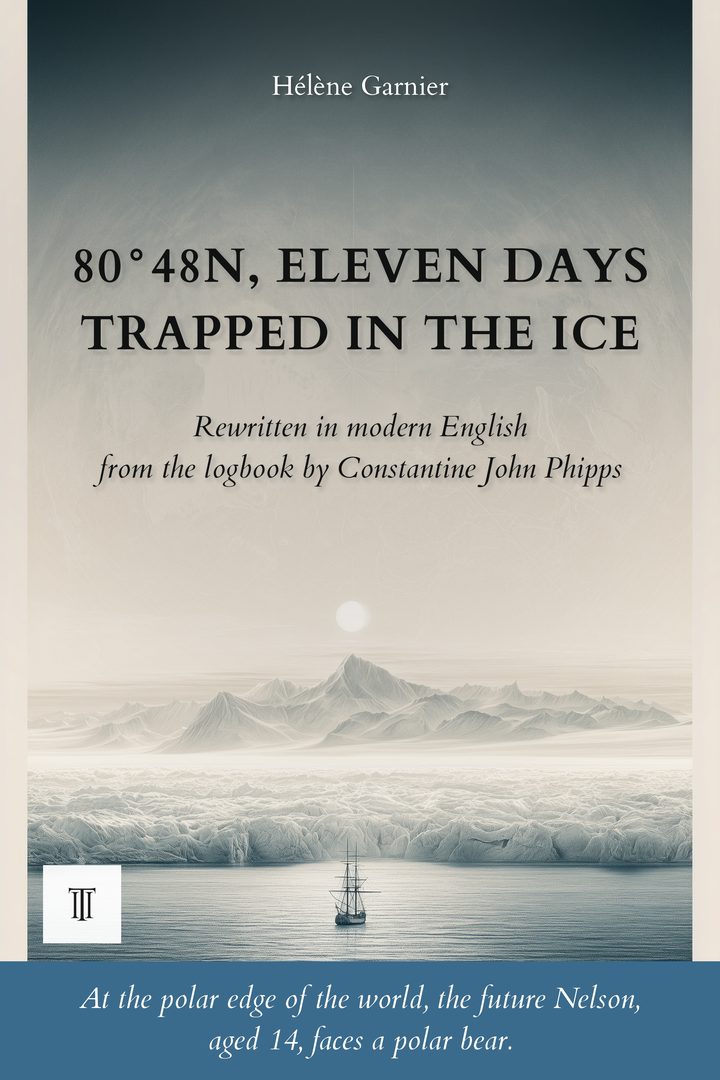
In 1873, Payer and Weyprecht discovered Franz Josef Land while drifting on the pack ice aboard the Tegetthoff, trapped in the floes. Payer's account, published in Vienna in 1876, extends exactly the wall of pack ice before which Phipps had been forced to turn back. A century later, the ice still held, but this time it was crossed on foot, the ship left behind.
-
Paul Du Chaillu, The Land of the Midnight Sun (1881)
Made famous by his gorillas of Gabon, Paul Du Chaillu changed latitude in the 1870s: he spent several summers and winters in Sweden, Norway, Lapland and northern Finland. He took the post road that leads from Uppsala to Haparanda by seventy-one stages, the very one Linné had travelled northward on horseback, then journeyed by boat and reindeer sledge, lodging with peasants, pastors and Lapps. Festivals, meals, costumes, the work of each season: The Land of the Midnight Sun, published in 1881, offers a teeming portrait of these northern countrysides a century and a half after the young naturalist.
Read a free edition → -
Pierre Loti, An Iceland Fisherman (1886)
At the end of the nineteenth century, the French novelist follows Breton sailors on their campaigns across the icy fishing banks of Iceland. Adam's Thule, a land where the ice burns, has become a place of toil and mourning. The novel gives flesh, eight centuries on, to the dread the canon felt before these seas at the edge of the world.
-
Fridtjof Nansen, The First Crossing of Greenland (1888)
In 1888, the young Norwegian Fridtjof Nansen and five companions land on the east coast of Greenland and cross the ice sheet on skis, from one shore to the other, for the first time. They come down by Ameralik Fjord to Godthaab, the colony founded by Egede. The last ship of the season has gone: Nansen spends the winter among the Greenlanders, learns the kayak, observes the hunting and the life of the houses, material for a second book on the Inuit. This Norwegian who reaches Nuuk across the ice, nearly a hundred and seventy years after the Norwegian pastor who came by sea, closes a circle that Egede's reader will appreciate.
Read a free edition → -
Fridtjof Nansen, The First Crossing of Greenland (1888-1889)
In 1888, the Norwegian Fridtjof Nansen and five companions land on the east coast of Greenland, the one Egede had searched for in vain, and cross the ice sheet on skis from one shore to the other. They come down by the Ameralik Fjord, the Amaralik where Egede sowed his wheat and said his farewells in 1735, then reach Godthaab by boat. The last ship of the season has gone: Nansen winters among the Greenlanders, learns to handle a kayak and observes life in their houses. His narrative appears in 1890. A Norwegian arriving over the ice, nearly a hundred and seventy years after the Norwegian pastor who arrived by sea, closes a circle that Egede's reader will appreciate.
Read a free edition → -
Fridtjof Nansen, Vers le pôle (1893-1896)
At the end of the nineteenth century, the Norwegian explorer Nansen lets his ship, the Fram, become locked in Arctic ice so as to drift toward the pole. A distant heir to the sailors of this book, he faces the same pack ice, the same white silence, the same sea that decides in place of men. Nansen, who also studied the history of Norse voyages, knew what he owed these ancestors. His account extends, in the age of science, the adventure begun a thousand years earlier by Vikings releasing ravens to find land.
-
Fridtjof Nansen, Farthest North (1897)
Nansen deliberately did what Phipps had suffered against his will: he let the Fram become trapped in the pack ice so as to drift toward the pole. He published in 1897 the account of that three-year drift (1893 to 1896) and of his march north with Johansen. No book conveys better the stubborn stillness of the ice, in which Phipps's two bomb vessels had already been caught fast.
-
Paul-Émile Victor, Boréal
Much later, a Frenchman goes to live among the peoples of the Arctic and returns with an account of immersion. Though the region differs, his gaze converses with Scheffer's: the same world of snow, reindeer and tents, but now told from within, by someone who shared the cold instead of compiling it. Read it to measure the distance travelled between learned description and lived experience.
-
Knud Rasmussen, Nye Mennesker (1902-1904)
Born in 1879 in Ilulissat, on Disko Bay, the son of a Danish pastor and a partly Greenlandic mother, Knud Rasmussen has spoken Greenlandic since childhood. From 1902 to 1904, the Danish Literary Expedition takes him as far as the Inughuit of Cape York, the northernmost Inuit in the world. He brings back Nye Mennesker (1905), a collection of tales, myths and portraits taken down from the storytellers' own lips. Where Egede recorded the Greenlanders' beliefs the better to fight them, Rasmussen listens to them to save them from oblivion. The land of souls, the spirits of the sea, the angekoks return, this time told from within.
-
Vilhjalmur Stefansson, Le Pays de l'aventure (1906-1918)
At the start of the twentieth century, this explorer of Icelandic descent, born in Canada, travels the Arctic and lives for years among the Inuit. A descendant of the settlers whose epic this book tells, he closes the circle in a sense: the distant sons of the Norsemen return to the New World, no longer to name it, but to learn to live there alongside those their forebears called Skraelings. His testimony offers the counterpoint the sagas lack: that of a genuine encounter with the peoples of the Arctic.
-
Roald Amundsen, Nordostpassagen (1921)
The Norwegian Amundsen, first to reach the South Pole in 1911, achieved the Northeast Passage in 1918 to 1920 aboard the Maud. His account, published in 1921, closed the door that Robert Thorne had pushed ajar in 1527. Readers of Phipps will see accomplished in Siberia what Lord Mulgrave had hoped for north of Spitsbergen.
-
Jean Malaurie, The Last Kings of Thule (1950-1951)
In 1950, the geographer Jean Malaurie sets off alone for northwest Greenland, to the Inughuit of the Thule region. He lives with them, travels by dog sledge, shares the hunting and the polar winter, and records the families and the camps. In 1951, he discovers the immense air base that the Americans are secretly building a few kilometres from the igloos. His book, published in 1955, launches the Terre humaine series. Two centuries after Egede, another European observes a Greenlandic people at the moment the outside world bursts in on it, but he does so as an anxious witness, and no longer as a missionary.
-
Gwyn Jones, The Norse Atlantic Saga (1964)
The Welsh historian retraces, document in hand, the entire journey of this book: from the first drift voyages to Iceland to the camps of Vinland. Jones does not merely summarize the sagas; he tests them against geography, winds, and currents, and proposes cautious identifications for Helluland, Markland, and Vinland. His account, both scholarly and clear, makes an ideal companion for anyone who wants to follow the Norsemen on an actual map. It is the surest bridge between the memory of the sagas and the ground archaeologists walk today.
-
Béatrice Collignon, Les Inuit, ce qu'ils savent du territoire (1996)
This essay in geography, published in Paris in 1996, describes how the Inuit of Nunavut name, map, and inhabit their world of ice. It sheds light, by contrast, on what neither Phipps nor his European successors ever managed to see: the pack ice is not merely a frontier, it is an inhabited territory, one that can be read and travelled by those who live upon it.