 Region and period
Explorers of the Far North in the 17th Century
In the seventeenth century the Far North stops being merely a dreamed-of route to China and becomes a resource. From 1611 English ships hunt whales off Spitsbergen, soon challenged by the Dutch, and at Smeerenburg a station of blubber ovens takes in hundreds of men every summer. A few try to winter there to prove it can be done: in 1633-1634 seven sailors left on Jan Mayen keep their journal to the very end, and the whalers who return in spring find them all dead of scurvy.
The Northwest Passage still lures captains. In 1616 William Baffin and Robert Bylot chart Smith Sound and Lancaster Sound, which would then be forgotten for two hundred years. In 1631 Luke Foxe comes home empty-handed, while Thomas James winters on an island in the great Canadian bay and publishes an account of suffering so vivid that it has been counted among Coleridge's sources. Denmark, for its part, searches Greenland for the lost Norse colonies: the expeditions of 1605 to 1607 find none and carry kidnapped Inuit back to Copenhagen.
Further east, conquest follows the fur trade. Cossacks and Russian trappers cross Siberia river by river, exacting a tribute in sable from its native peoples; Yakutsk is founded in 1632, and Ivan Moskvitin reaches the Sea of Okhotsk in 1639. In 1648 Semyon Dezhnev sails round the eastern tip of Asia, and his report lies unread in the archives until 1736.
Lapland becomes a learned curiosity, where the Swedish crown builds churches and travellers from the south venture up, such as the Italian priest Francesco Negri in 1664-1666 or the French playwright Jean-François Regnard in 1681. Iceland, held since 1602 under a Danish trade monopoly, answers foreign fables through its own scholars; in 1627 Barbary corsairs carry off nearly four hundred of its people, and the pastor Ólafur Egilsson tells of his captivity in Algiers. Finally, two French woodsmen, Pierre-Esprit Radisson and Médard Chouart des Groseilliers, persuade London to seek beaver by sea: their voyage of 1668 leads to the founding of a fur-trading company in 1670.
This collection brings together our editions and a directory of related texts.
Our titles on this subject
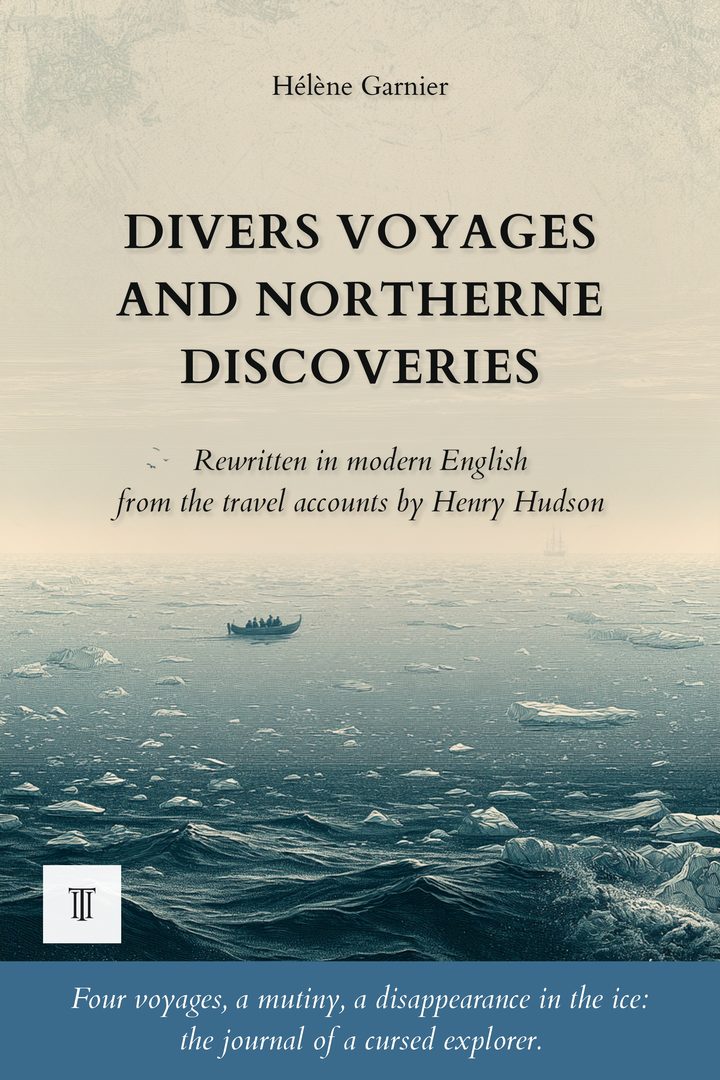
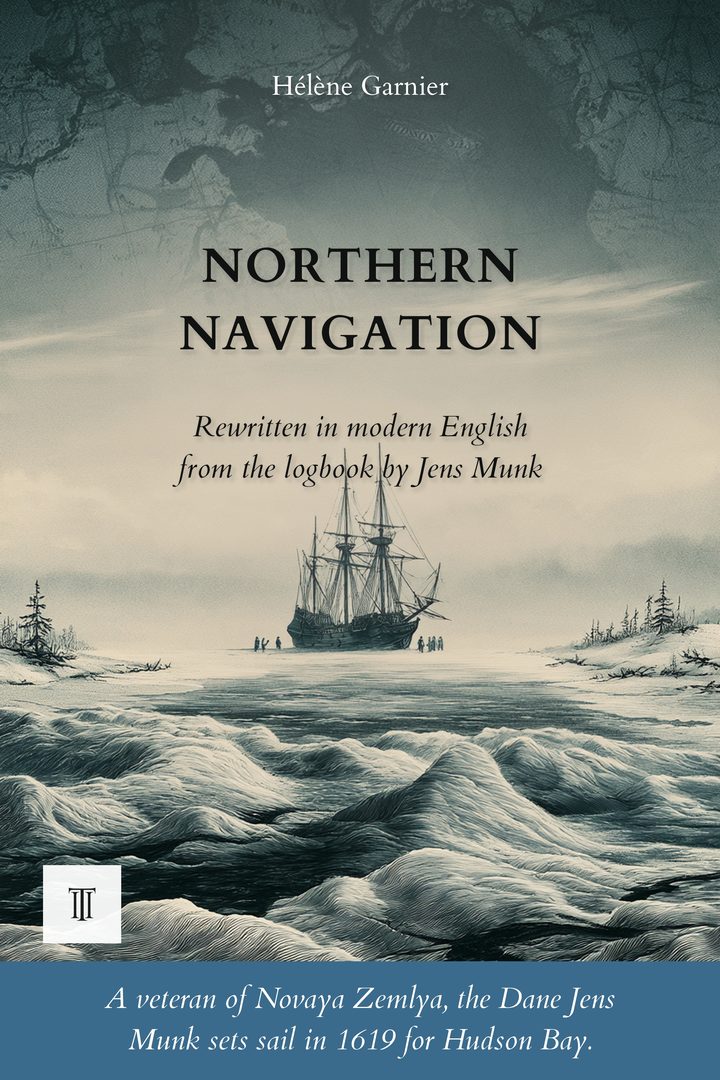

Further reading: accounts and works on the same theme
Accounts and works around this subject, in date order, to place our titles in context. Each links to a free online edition when one exists, or to our own page when the work is in our catalogue.
-
Thomas James, The Strange and Dangerous Voyage of Captaine Thomas James (1633)
In May 1631, Thomas James left Bristol aboard the Henrietta Maria to take up the quest where Hudson had left it. In the bay he met another seeker of the passage, Luke Foxe, who had sailed from London the same season, then headed south, into the bottom of the bay where Hudson had wintered and which today bears the name of James. He spent the winter on Charlton Island, deliberately sank his ship to save it from the ice, refloated it in the spring and returned to Bristol in October 1632. His Strange and Dangerous Voyage, published in 1633, tells of hunger, cold and prayer, and reaches the same conclusion as Hudson's journals: that way, no passage opens toward Asia.
Read a free edition → -
Luke Foxe, North-West Fox, or Fox from the North-West Passage (1635)
Twelve years after Munk, in 1631, Luke Foxe leaves London in the Charles, a small pinnace, passes by Orkney and enters Hudson Strait in June. He follows the west coast of the bay, finds at Port Nelson the traces of Thomas Button's wintering, meets his rival Thomas James by chance, then heads north into the basin that now bears his name. He returns in October having neither wintered nor lost a man. His book, published in 1635, mixes ship's journal with a history of earlier voyages: ideal reading for measuring what Munk had paid so dearly.
Read a free edition → -
Friedrich Martens, Spitzbergische oder Groenlandische Reise-Beschreibung (1675)
In the spring of 1671, the Hamburg barber-surgeon Friedrich Martens shipped aboard a whaler, the Jonas im Walfisch, bound for Spitsbergen. Sixty years earlier, the whales reported by Hudson in 1607 had drawn English and Dutch fleets into these bays; Martens found an established industry there, with its boats, its harpoons and its try-works. While the crew hunted, he observed: the ice breaking away from the glaciers, the polar bear, the walrus, the seabirds, and the scurvy grass, the same plant the survivors of the mutiny gathered on the islands of the bay. His Reise-Beschreibung, printed in Hamburg in 1675, was translated into Italian, Dutch and English.
Read a free edition → -
Nicolas Jérémie, Relation du détroit et de la baie d'Hudson (1694-1714)
Born near Quebec, Nicolas Jérémie arrives at Hudson Bay in 1694 with Iberville as interpreter and clerk at Fort Bourbon, on the west coast. Taken prisoner by the English, he comes back, serves again, then commands the post from 1708 to 1714, before handing it over to the English after the Treaty of Utrecht. His Relation, published in Amsterdam in 1720, describes the rivers, animals and peoples of the bay. In it one reads the name "Danish River," given to the Churchill in memory of Munk's expedition: a century later, the Danish wintering was still written into the geography of the place.
Read a free edition →