Our titles on this subject
Further reading: accounts and works on the same theme
Accounts and works around this subject, in date order, to place our titles in context. Each links to a free online edition when one exists, or to our own page when the work is in our catalogue.
-
Ibn Battuta, Voyages (c. 1355)
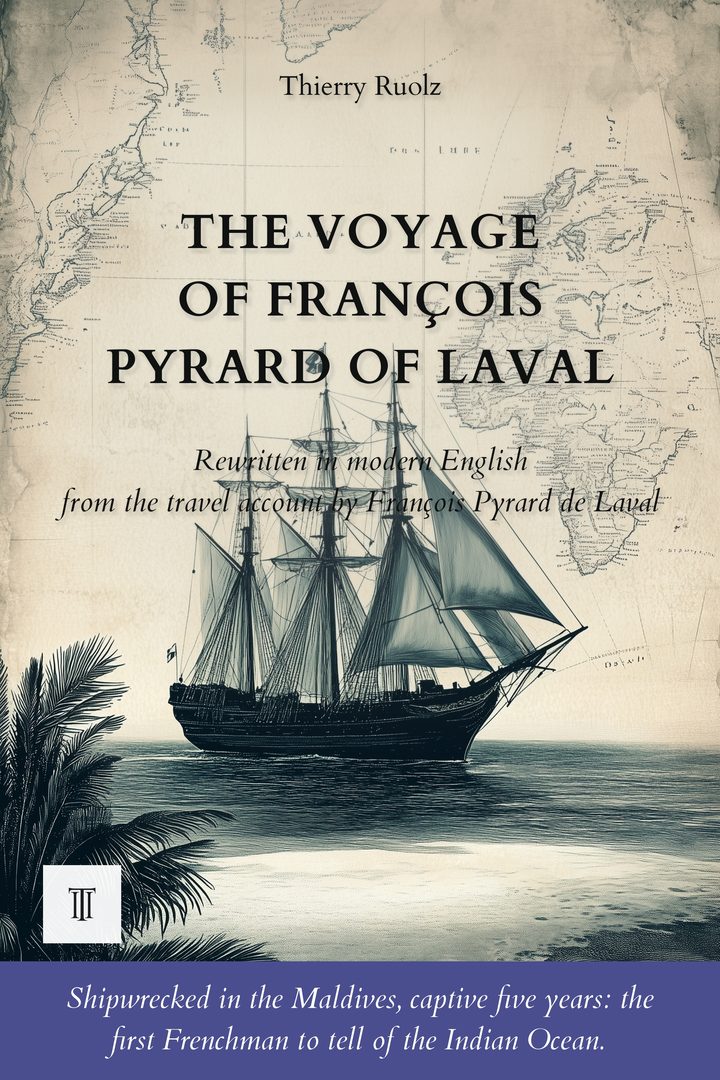
Long before Pyrard, in the fourteenth century, the great traveller from Tangier stayed in the Maldives, even served there as a judge and took a wife. To read his testimony is to discover the Muslim archipelago three centuries before the wreck of the Corbin, and to measure how much of what the man from Laval describes had already lasted for ages.
-
Amerigo Vespucci, Mundus Novus (1503)
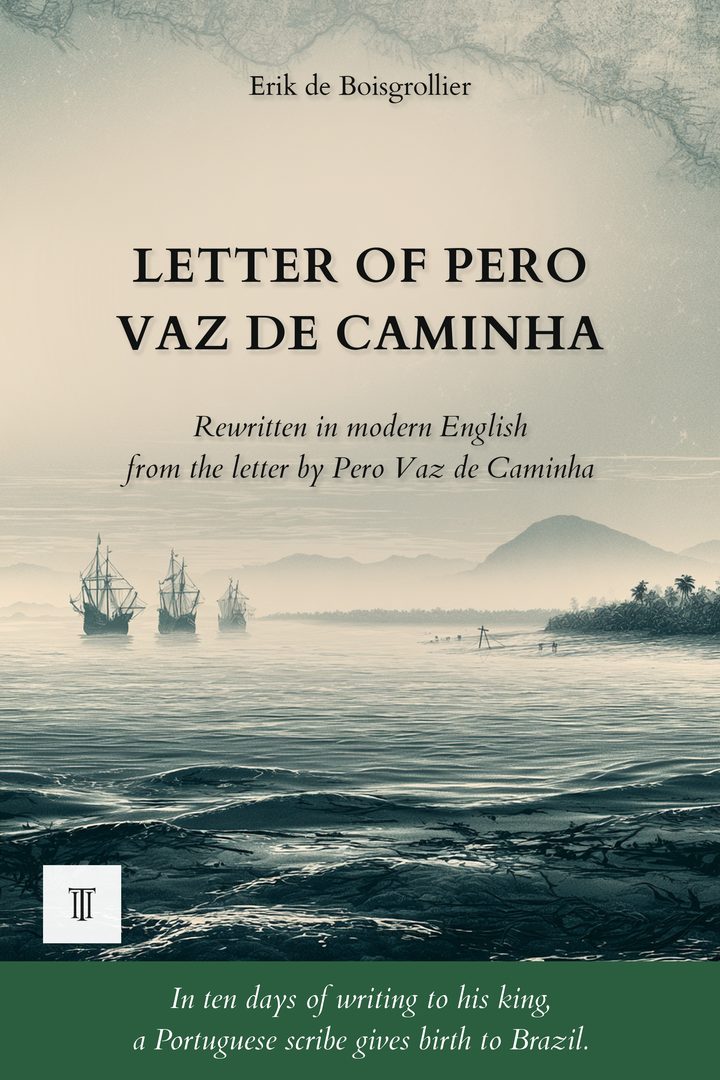
A year after Cabral's passage, a Portuguese fleet returned to explore the new land, and the Florentine Amerigo Vespucci was on board. He followed the Brazilian coast southward for hundreds of leagues, and the letter printed in 1503 under the title Mundus Novus spread across Europe the idea that this was a new world, neither an island nor a piece of Asia. His descriptions of the coastal peoples, cruder and more fanciful than Caminha's, made the text's fortune, and his first name ended up baptising the continent. Where Caminha describes for his king, Vespucci already makes of this land a story for all of Europe.
-
Binot Paulmier de Gonneville, Relation authentique du voyage du capitaine de Gonneville ès nouvelles terres des Indes (1505)
Setting out from Honfleur in 1503 for the Indies, the Norman ship L'Espoir was driven by the winds toward a coast of southern Brazil, where the crew stayed several months among Indians who welcomed them. On the return, in 1505, the captain made his declaration before the Admiralty: it is one of the very first French testimonies on Brazil. He brought back to Normandy Essomericq, a chief's son, who would never see his country again and would marry a relative of Gonneville. This short account extends Caminha's: a few years later, on another shore of the same land, the same mutual curiosity between sailors from Europe and men who knew nothing of them.
-
Hans Staden, Véritable histoire et description d'un pays habité par des hommes sauvages, nus, féroces et anthropophages (1557)
Half a century after Caminha, the Hessian gunner Hans Staden, who had come to serve the Portuguese in Brazil, fell around 1554 into the hands of the Tupinamba, their enemies, close in language and customs to the inhabitants of Porto Seguro. For months he awaited being eaten, witnessed feasts, wars and rites, and owed his survival only to his cunning and to a French ship. His account, printed at Marburg in 1557 with striking engravings, became a European success. The comparison with the letter of 1500 is dizzying: peoples of the same family, the same coast, but the laughing trust of the first days has given way to war.
-
Pero de Magalhães de Gândavo, História da Província Santa Cruz (1576)
A Portuguese humanist whose book opens with verses by Camões, Pero de Magalhães de Gândavo published in Lisbon in 1576 what is often held to be the first printed history of Brazil. Its title keeps the name of Santa Cruz, heir to the Vera Cruz that Caminha had recorded. Gândavo describes the captaincies, the sugar mills, the plants and animals, the peoples of the coast, and invites his compatriots to settle in a land he calls fertile and healthy. Three quarters of a century after the letter of 1500, wonder has become a settlement programme: the same land, now seen by those who want to live there.
-
Jean de Léry, Histoire d'un voyage faict en la terre du Brésil (1578)
A young Calvinist cobbler, Jean de Léry joined Villegagnon's French colony in Guanabara Bay in 1557. Having fallen out with the head of Antarctic France, he spent several months among the Tupinamba, sharing their meals, listening to their songs, learning words of their language. Published twenty years later, in 1578, his Histoire is one of the masterpieces of French travel writing, which Claude Lévi-Strauss called the ethnologist's breviary. One finds there, matured by hindsight and by the Wars of Religion, the same attention as in Caminha to painted bodies, feathers, dances and a nakedness without shame.
-
François Bernier, Voyage dans les États du Grand Mogol (1670-1671)
Physician and philosopher, Bernier lived nearly twelve years in seventeenth-century India and describes it with a scholar's eye. His account of castes, religions and administration extends and refines Pyrard's still tentative observations on the Brahmins and the Nayars, and shows how, within two generations, the European view of India gained in method what it sometimes lost in freshness.
-
Jean-Baptiste Tavernier, Les Six Voyages (1676)
Half a century after Pyrard, the gem merchant Tavernier travels through the India of diamonds and princely courts. Where Pyrard saw poor islands and island kings, Tavernier sees the Mughal empire at its height, the mines of Golconda, the splendour of audiences. The contrast measures the distance between the penniless castaway and the trader whom sovereigns receive: two Frances separated by fifty years of Eastern ambition.
-
Robert Knox, Relation de l'île de Ceylan (1681)
An English sailor held prisoner for nearly twenty years in Ceylon, close to the Maldives, Knox wrote in the following century a captivity narrative that strangely echoes Pyrard's: the same forced apprenticeship in a language and a people, the same patience, the same escape in the end. Two European captives on the waters of the Indian Ocean, a century apart, and the same transformation of prisoner into witness.
-
Amédée-François Frézier, Relation du voyage de la mer du Sud aux côtes du Chili et du Pérou (1716)
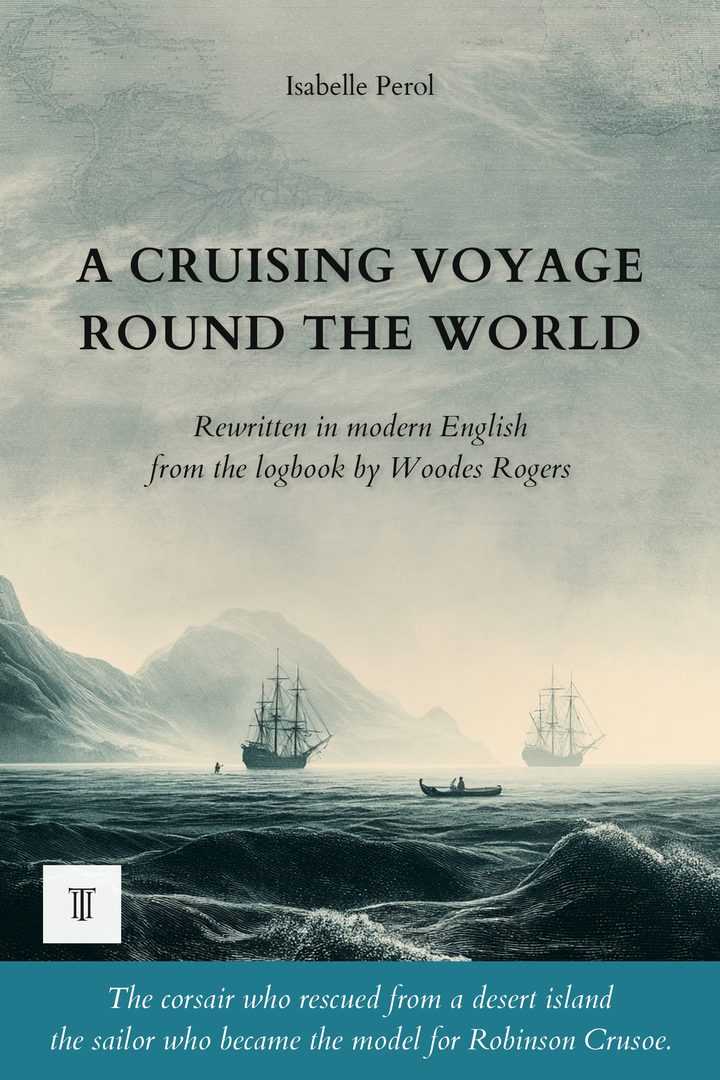
Three years after Rogers, the military engineer Frézier sets out for the South Sea disguised as a merchant captain. From 1712 to 1714, from Concepción to Valparaíso, from Callao to Arica, he secretly draws up plans of the ports, counts the Spanish guns and garrisons, and observes the mines and the crops. He brings back to France the Chilean strawberry plant, which will give us our garden strawberries. His account appears in Paris in 1716 and an English translation follows as early as 1717. It covers the coast that Rogers sails up, seen this time by an officer's eye, attentive to defences more than to booty. The book is Relation du voyage de la mer du Sud aux côtes du Chili et du Pérou.
-
Richard Walter, A Voyage Round the World by George Anson (1748)
Thirty years later, Commodore Anson's squadron almost retraces the route of the Duke. Setting out in 1740 and decimated by scurvy off Cape Horn, it recovers at Juan Fernández, where the sailors find goats with slit ears that they link to Selkirk. It plunders Paita, watches in vain for the galleon off Mexico, then in 1743 seizes the Covadonga near the Philippines. The narrative, published in 1748 under the name of the chaplain Richard Walter, becomes a great publishing success. It shows what naval war made of Rogers's privateering model. See A Voyage Round the World by George Anson.
Read a free edition → -
Louis-Antoine de Bougainville, Voyage autour du monde par la frégate du roi La Boudeuse et la flûte L'Étoile (1771)
Setting out in 1766 to hand the French settlement on the Falklands over to the Spanish, Bougainville passes through the Strait of Magellan, crosses the Pacific by way of Tahiti, Samoa, the New Hebrides and the Solomons, then reaches the Moluccas and Batavia before returning across the Indian Ocean. It is the first official French naval voyage round the world. His account, published in 1771, feeds the philosophers' debate on the noble savage. The comparison with Rogers is telling: the same seas, the same Dutch ports of call, but a voyage of state, of scholars and observation, where Rogers led an enterprise of prizes. The book is Voyage autour du monde par la frégate du roi La Boudeuse et la flûte L'Étoile.
Read a free edition → -
Le Gentil de la Galaisière, Voyage dans les mers de l'Inde (1779-1781)
An astronomer sent to observe the transit of Venus in the eighteenth century, Le Gentil failed in his calculations but, by chance, achieved a long crossing of the same waters Pyrard had known two centuries earlier. His account shows a Coromandel coast and islands now drawn into the great game of the European empires.
-
Maximilien de Wied-Neuwied, Voyage au Brésil dans les années 1815, 1816 et 1817 (1820-1821)
A naturalist trained at Göttingen, Prince Maximilian of Wied-Neuwied travelled up the eastern coast of Brazil between 1815 and 1817, from Rio de Janeiro to Bahia, through forests the colony had not yet cleared. He passed through Porto Seguro, very near the bay where Caminha had seen the cross planted three centuries earlier, and an engraved view of the town illustrates his book. He observed the Botocudo and the Pataxó at length, bringing back vocabularies, objects and portraits. Published in German in 1820 and 1821, then translated into French as early as 1822, his account offers a striking return to the very place of the discovery.
Read a free edition → -
Johann Baptist von Spix et Carl Friedrich Philipp von Martius, Reise in Brasilien (1823-1831)
Sent by the King of Bavaria in the wake of Archduchess Leopoldina, the future empress of Brazil, the zoologist Spix and the botanist Martius travel the country from 1817 to 1820. After Minas Gerais and its diamond mines, they reach the coast at Salvador, then set off again across the caatinga, where thirst and fever nearly kill them, study the Bendegó meteorite and finally ascend the Amazon. Their account, published from 1823 to 1831, is the great scholarly inventory of a country that the opening of the ports, decreed at Bahia in 1808, had just made accessible to foreigners. What Ver Huell looked at as a curious observer, they classify as naturalists.
Read a free edition → -
Maria Graham, Journal of a Voyage to Brazil (1824)
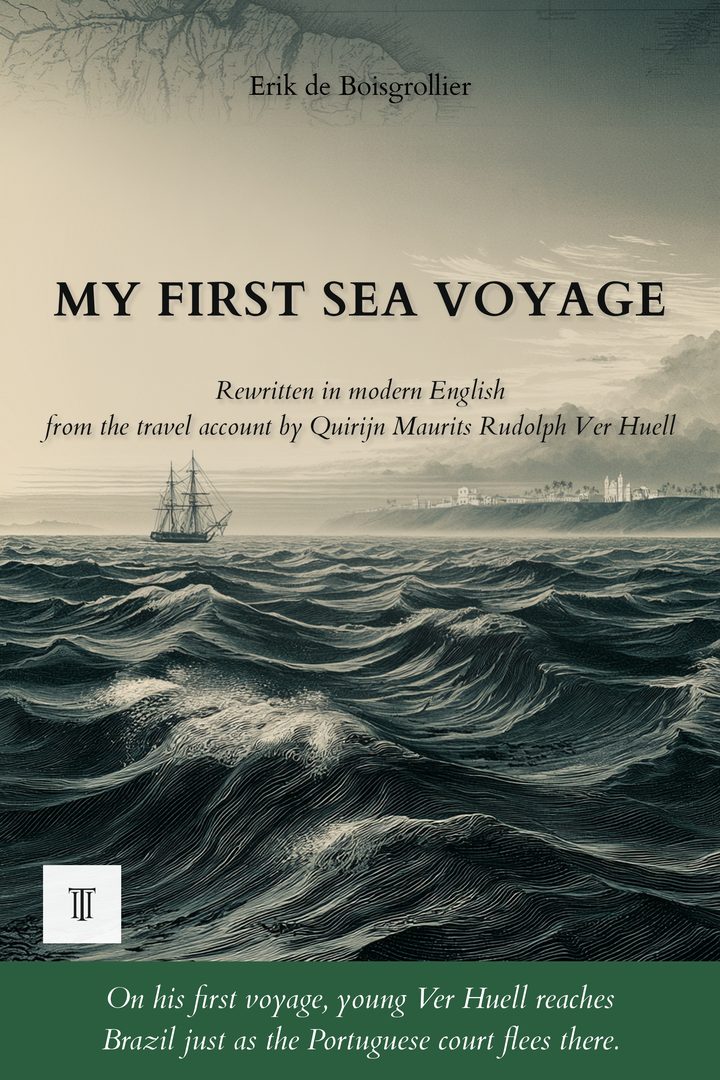
At the end of 1821, Maria Graham arrives at Bahia aboard the frigate Doris, commanded by her husband, as Brazil prepares to break with Lisbon. Her journal, published in 1824, describes the lower town, its markets, its churches, the sedan chairs and the slave market, which she says she cannot look at without shame and indignation; she also visits the island of Itaparica and its cane fields. English, educated, soon a widow, she sees the city with different eyes from the young Dutch officer, but the same sloping streets, the same cadeiras and the same violence of slavery run through both books, fourteen years apart.
Read a free edition → -
Charles Darwin, Journal of Researches (1839)
Aboard the Beagle from 1831 to 1836, Darwin in his turn skirts Brazil, touches the Falklands, rounds Cape Horn, stays in Chile and Peru, then spends five weeks in the Galápagos in September 1835, before returning by the Cape. Where Rogers sought fresh water and tortoises to feed his crews, the young naturalist notes the differences from island to island among the finches and the giant tortoises. His journal, published in 1839, changes the way these archipelagos are seen, which the Bristol privateers took for dry and useless rocks. See Journal of Researches.
Read a free edition → -
Charles Darwin, Voyage d'un naturaliste autour du monde (1839)
On 29 February 1832, the Beagle anchors off Salvador. Charles Darwin, twenty-three, enters a tropical forest for the first time and notes that the word delight is too weak to express what a naturalist feels. At Bahia he observes luminous insects, spiders, a puffer fish that swells with water; later in his book he will voice his anger against Brazilian slavery. This account, published in 1839, is also a book of youth: almost the same age as Ver Huell, the same first great departure, the same wonder of a draughtsman and collector before the nature of the Bay of All Saints, a quarter of a century apart.
Read a free edition → -
Herman Melville, Les Encantadas ou îles enchantées (1854)
In 1841 the whaler Acushnet sails past Albemarle Island, in the Galápagos, with a young sailor named Herman Melville aboard. Thirteen years later, under the pseudonym Salvator R. Tarnmoor, he publishes in Putnam's Monthly ten sketches of these islands of ash and lava, peopled by tortoises, hermits and former buccaneer lairs. He cites the old buccaneer accounts, such as Cowley's, by sailors who, before and after Rogers, came there for tortoises. The text, reprinted in 1856 in The Piazza Tales, turns into a moral landscape the archipelago that Rogers's journal describes as a hurried seaman. The sketches are The Encantadas, or Enchanted Isles.
Read a free edition → -
James Wetherell, Brazil. Stray Notes from Bahia (1860)
British vice-consul at Bahia for some fifteen years, James Wetherell died in 1858 without having published his notes; William Hadfield edited them in 1860. They are lively, precise fragments: the cadeiras carried on the shoulder by slaves, the ganhadores singing under their loads, whale meat sold at the market, the festivals, the dead child carried about in a chair decked with ribbons before being buried. Almost everything Ver Huell had discovered in 1808 is still there, barely changed, under the gaze of another foreigner settled in the city. The book shows how little Bahian society had moved in half a century.
Read a free edition →