Our titles on this subject
Further reading: accounts and works on the same theme
Accounts and works around this subject, in date order, to place our titles in context. Each links to a free online edition when one exists, or to our own page when the work is in our catalogue.
-
Crónica del Perú, Pedro de Cieza de León, 1553 (1553)
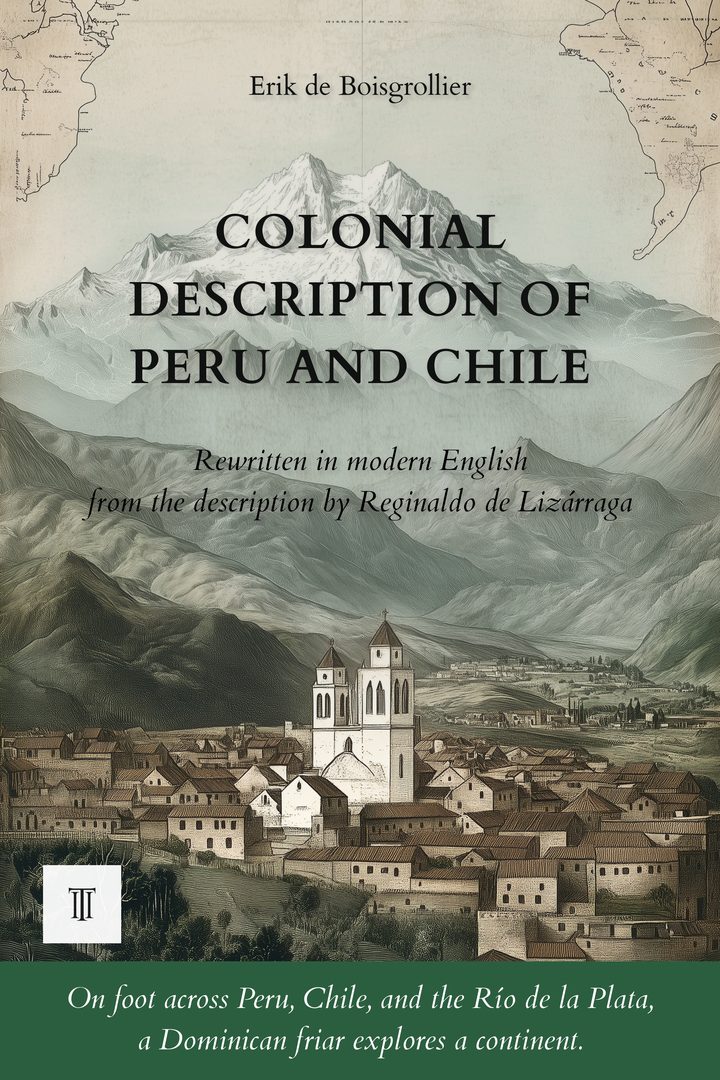
The soldier-chronicler traveled the same roads as Lizárraga, a generation earlier. He saw Cajamarca after Atahualpa, Cuzco after Pizarro, Potosí in its earliest days. His prose, simple and precise, is the great source for descriptions of Peru during the conquest. Lizárraga knows it and sometimes cites it without saying so. To read Cieza after Lizárraga is to go back a generation, to find the cities under their first coats of plaster, the Indians still close to the shock of conquest.
-
Willem Schouten et Jacob Le Maire, Journal ou description du merveilleux voyage de Guillaume Schouten (1618)
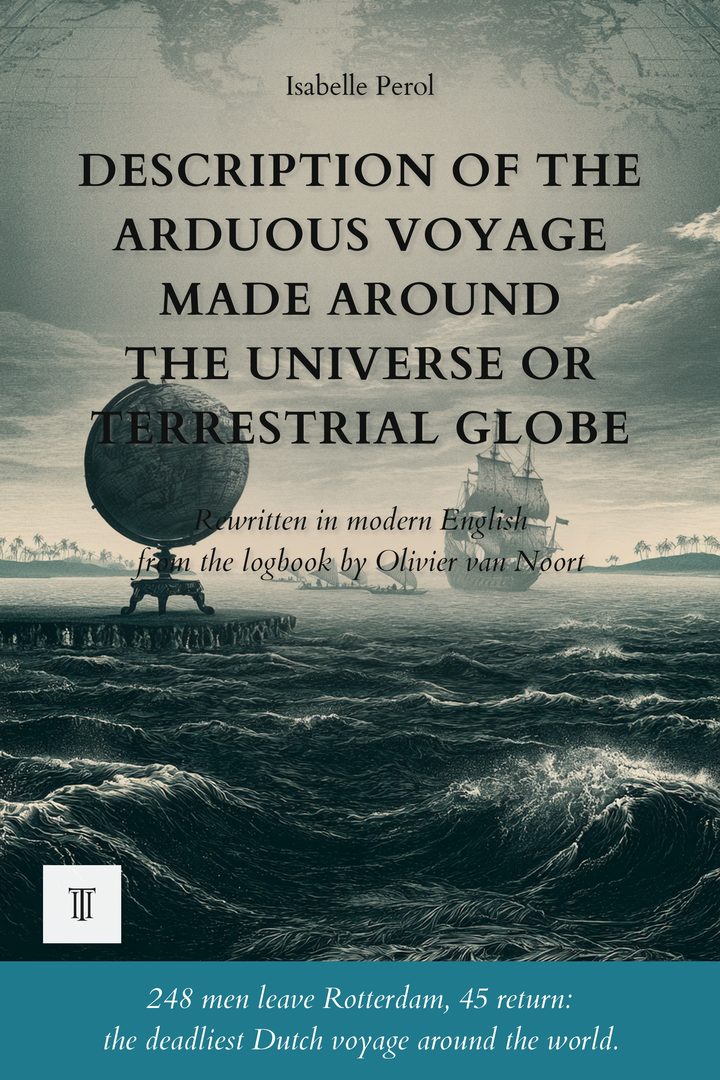
To escape the monopoly of the Company, which alone may use the Strait of Magellan, merchants of Hoorn seek another passage. In 1616, Jacob Le Maire and Willem Schouten discover the strait that bears the former's name, then round a cape they christen Hoorn. They then cross the Pacific by islands that Van Noort never saw, the Tuamotus, Tonga, New Ireland, before arriving at Java, where the Company confiscates their ship. Read after the journal of 1598, this account shows how quickly Holland learns the Pacific: within twenty years, the sea that had nearly swallowed Van Noort becomes a known road.
-
Joris van Spilbergen, Speculum Orientalis Occidentalisque Indiae Navigationum (1619)
Fifteen years after Van Noort, Joris van Spilbergen takes up his route on behalf of the East India Company. Setting out in 1614 with six ships, he passes through the Strait of Magellan, follows the coast of Chile, crushes a Spanish squadron off Peru in 1615, ransoms Paita, negotiates at Acapulco, then crosses the Pacific to the Philippines and the Moluccas. His account, published in 1619 with that of Le Maire and Schouten, reads like a successful version of the first: same itinerary, same enemies, same ports, but a better-armed state fleet, which makes the South Sea a regular theater of the Dutch war against Spain.
-
Jean-Baptiste Tavernier, Les Six Voyages (1676)
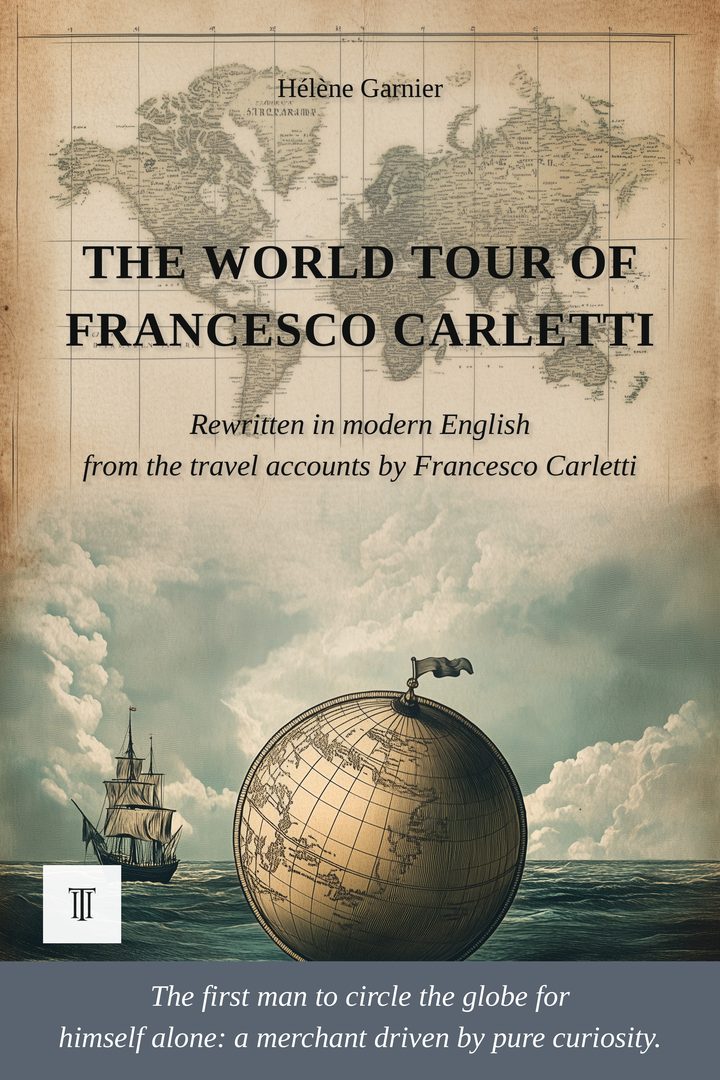
Half a century after Carletti, this dealer in precious stones travels in turn through Persia and India, from the diamond mines to the courts of great kings. In him we find the same trader's eye for gems, currencies, and routes as in the Florentine, but Asia has already changed: the Dutch and English whom Carletti saw only beginning to appear at Goa are now installed there as masters of trade.
-
Engelbert Kaempfer, Histoire naturelle, civile et ecclésiastique du Japon (1690-1692)
A physician for the Dutch East India Company, Kaempfer lived in Japan at the close of the seventeenth century, in a country now closed to foreigners and purged of Christians. His book shows what became of the Japan that Carletti had reached while it was still open, before the crosses of Nagasaki announced the great closing. The same archipelago, a century later, locked shut.
-
Gemelli Careri, Le Tour du monde (1699-1700)
At the close of the seventeenth century, this Neapolitan magistrate retraces, as a well-off tourist, the circuit of the globe that Carletti had accomplished as a ruined merchant. Manila, Acapulco, Mexico City: he follows almost the same route and publishes an account that will meet with immense success. Reading Gemelli after Carletti is to measure the distance travelled between perilous adventure and pleasure travel.
-
Amédée-François Frézier, Relation du voyage de la mer du Sud aux côtes du Chili et du Pérou (1716)
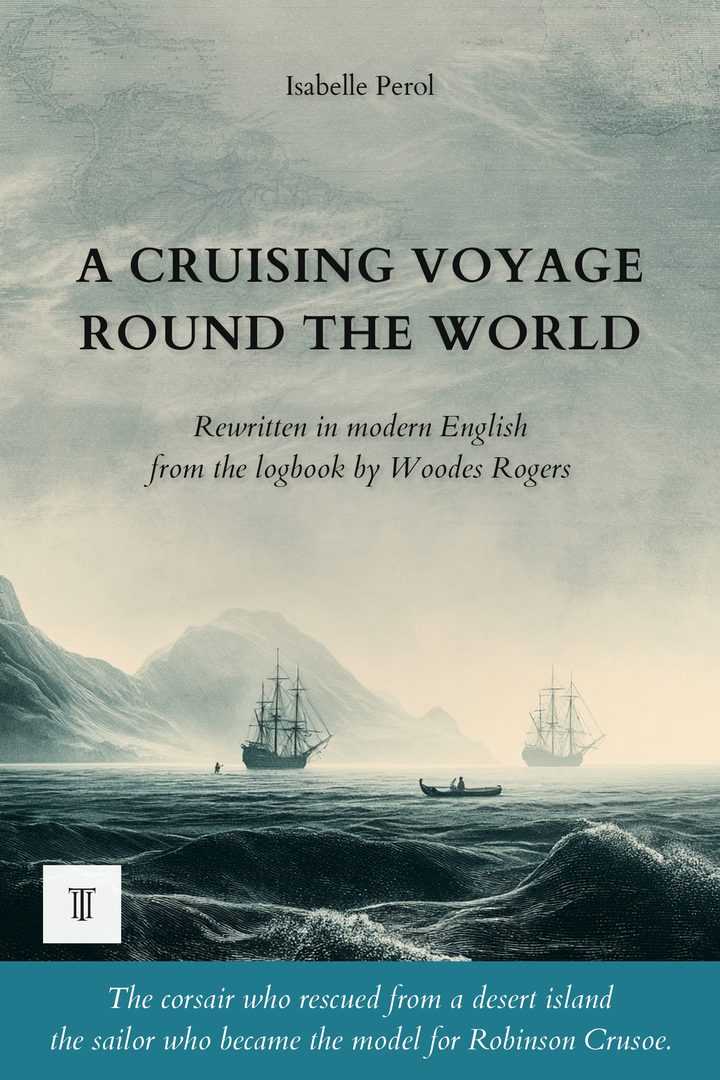
Three years after Rogers, the military engineer Frézier sets out for the South Sea disguised as a merchant captain. From 1712 to 1714, from Concepción to Valparaíso, from Callao to Arica, he secretly draws up plans of the ports, counts the Spanish guns and garrisons, and observes the mines and the crops. He brings back to France the Chilean strawberry plant, which will give us our garden strawberries. His account appears in Paris in 1716 and an English translation follows as early as 1717. It covers the coast that Rogers sails up, seen this time by an officer's eye, attentive to defences more than to booty. The book is Relation du voyage de la mer du Sud aux côtes du Chili et du Pérou.
-
Richard Walter, A Voyage Round the World in the Years 1740-1744 by George Anson (1748)
A century and a half later, an English squadron retraces Van Noort's course with the same ambition: to plunder the Spanish coast of the Pacific and intercept the gold of Manila. The official account of George Anson's expedition tells of Cape Horn in the storm, scurvy killing hundreds of men, the stopover at Juan Fernandez, the sack of Paita, the crossing to Guam, then the capture of the Manila galleon off the Philippines in 1743. A single ship returns, laden with silver. The resemblances to the journal of 1598 are striking: same sea, same enemies, same slaughter, but this time plunder equal to the losses.
Read a free edition → -
Richard Walter, A Voyage Round the World by George Anson (1748)
Thirty years later, Commodore Anson's squadron almost retraces the route of the Duke. Setting out in 1740 and decimated by scurvy off Cape Horn, it recovers at Juan Fernández, where the sailors find goats with slit ears that they link to Selkirk. It plunders Paita, watches in vain for the galleon off Mexico, then in 1743 seizes the Covadonga near the Philippines. The narrative, published in 1748 under the name of the chaplain Richard Walter, becomes a great publishing success. It shows what naval war made of Rogers's privateering model. See A Voyage Round the World by George Anson.
Read a free edition → -
Louis-Antoine de Bougainville, Voyage autour du monde par la frégate du roi La Boudeuse et la flûte L'Étoile (1771)
Setting out in 1766 to hand the French settlement on the Falklands over to the Spanish, Bougainville passes through the Strait of Magellan, crosses the Pacific by way of Tahiti, Samoa, the New Hebrides and the Solomons, then reaches the Moluccas and Batavia before returning across the Indian Ocean. It is the first official French naval voyage round the world. His account, published in 1771, feeds the philosophers' debate on the noble savage. The comparison with Rogers is telling: the same seas, the same Dutch ports of call, but a voyage of state, of scholars and observation, where Rogers led an enterprise of prizes. The book is Voyage autour du monde par la frégate du roi La Boudeuse et la flûte L'Étoile.
Read a free edition → -
Voyage aux régions équinoxiales du Nouveau Continent, Alexander von Humboldt, 1814–1825 (1814-1825)
The Prussian scholar retraces the Andean journey with the instruments of the Age of Enlightenment. Quito, Lima, Cajamarca, Chimborazo, the mercury of Huancavelica: the same places, seen through the eyes of the naturalist. Humboldt seldom cites Lizárraga, but he walks in his shadow, and the two books placed end to end offer a panorama spanning three centuries: colonial Peru still brand new in one, colonial Peru in its final stretch in the other.
-
Charles Darwin, Voyage d'un naturaliste autour du monde (1839)
Between 1832 and 1835 the Beagle follows almost the whole South American route of Van Noort. Darwin calls at Port Desire, the Port Desire where Captain Huydecoper was buried, goes up the Strait of Magellan, observes the Fuegians, then follows the coast of Chile from Chiloe to Valparaiso, feels the earthquake of 1835 at Valdivia and then discovers Concepcion in ruins. Where the Dutch journal saw only watering places, enemies and provisions to be taken, the naturalist reads marine terraces, fossils and birds. The same places, two centuries later, become the laboratory of an idea that will change biology.
Read a free edition → -
Charles Darwin, Journal of Researches (1839)
Aboard the Beagle from 1831 to 1836, Darwin in his turn skirts Brazil, touches the Falklands, rounds Cape Horn, stays in Chile and Peru, then spends five weeks in the Galápagos in September 1835, before returning by the Cape. Where Rogers sought fresh water and tortoises to feed his crews, the young naturalist notes the differences from island to island among the finches and the giant tortoises. His journal, published in 1839, changes the way these archipelagos are seen, which the Bristol privateers took for dry and useless rocks. See Journal of Researches.
Read a free edition → -
Souvenirs d'un voyage au Chili, Gabriel Lafond de Lurcy, 1843 (1843)
The French sailor frequented the ports of the southern Pacific coast in the years following independence. His pages on Valparaíso, on Callao, on the ruins of Arica take the measure of time passed: the same bays, the same winds, but the Spanish banners have vanished, and the Creole republics seek a new order amid the setting Lizárraga once inventoried.
-
Herman Melville, Les Encantadas ou îles enchantées (1854)
In 1841 the whaler Acushnet sails past Albemarle Island, in the Galápagos, with a young sailor named Herman Melville aboard. Thirteen years later, under the pseudonym Salvator R. Tarnmoor, he publishes in Putnam's Monthly ten sketches of these islands of ash and lava, peopled by tortoises, hermits and former buccaneer lairs. He cites the old buccaneer accounts, such as Cowley's, by sailors who, before and after Rogers, came there for tortoises. The text, reprinted in 1856 in The Piazza Tales, turns into a moral landscape the archipelago that Rogers's journal describes as a hurried seaman. The sketches are The Encantadas, or Enchanted Isles.
Read a free edition → -
Joshua Slocum, Sailing Alone Around the World (1900)
In 1895, a fifty-one-year-old American captain sets out alone, on an old eleven-metre sloop, the Spray, to sail around the world. Joshua Slocum passes the Strait of Magellan in early 1896, struggles for weeks against gusts that throw him back, and scatters tacks on his deck to guard against nocturnal visitors from Tierra del Fuego. He then crosses the Pacific to Australia and returns in 1898. His account, full of humor, is the exact opposite of Van Noort's journal: one man without a crew where four ships had lost almost all of theirs.
Read a free edition → -
Aux pays de l'argent, Jules Huret, 1911 (1911)
The reporter for Le Figaro crosses South America on the eve of the First World War. Buenos Aires, Córdoba, Potosí, La Paz, Lima: he visits the same places as Lizárraga, but with a train, a camera, a journalist's notebook. The Inca cities have become tourist attractions, the Potosí mine is nearly exhausted, and the colonial legacy shows through everywhere like bones beneath the sand.