 South Pole · Modernised and illustrated edition
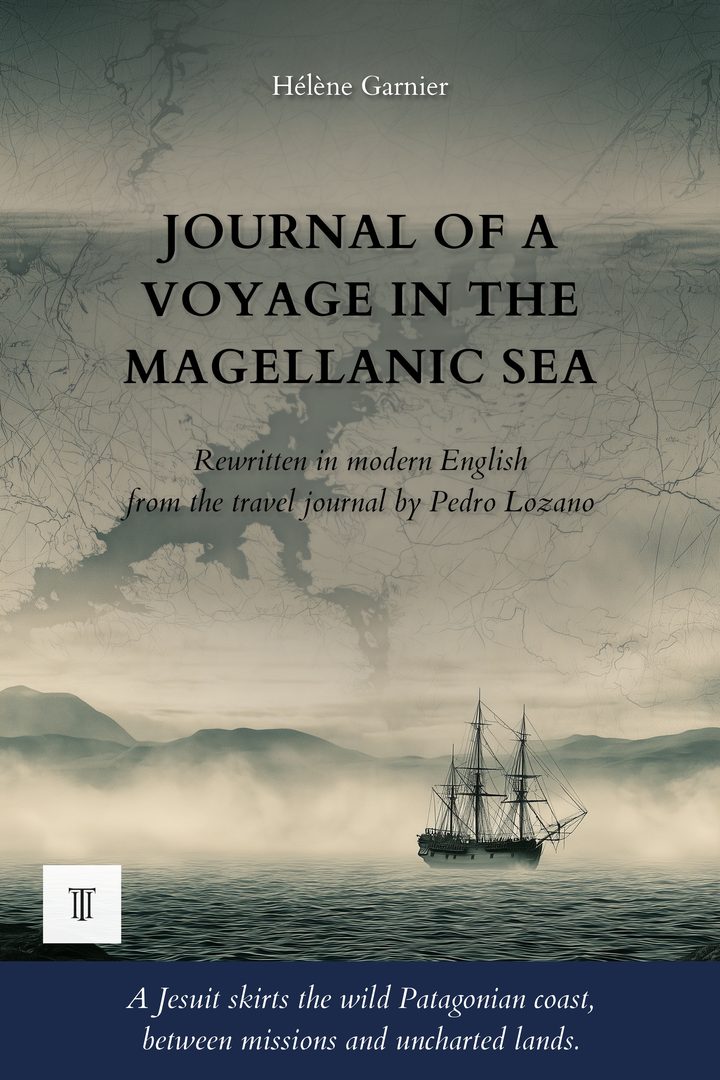
Journal of a Voyage in the Magellanic Sea
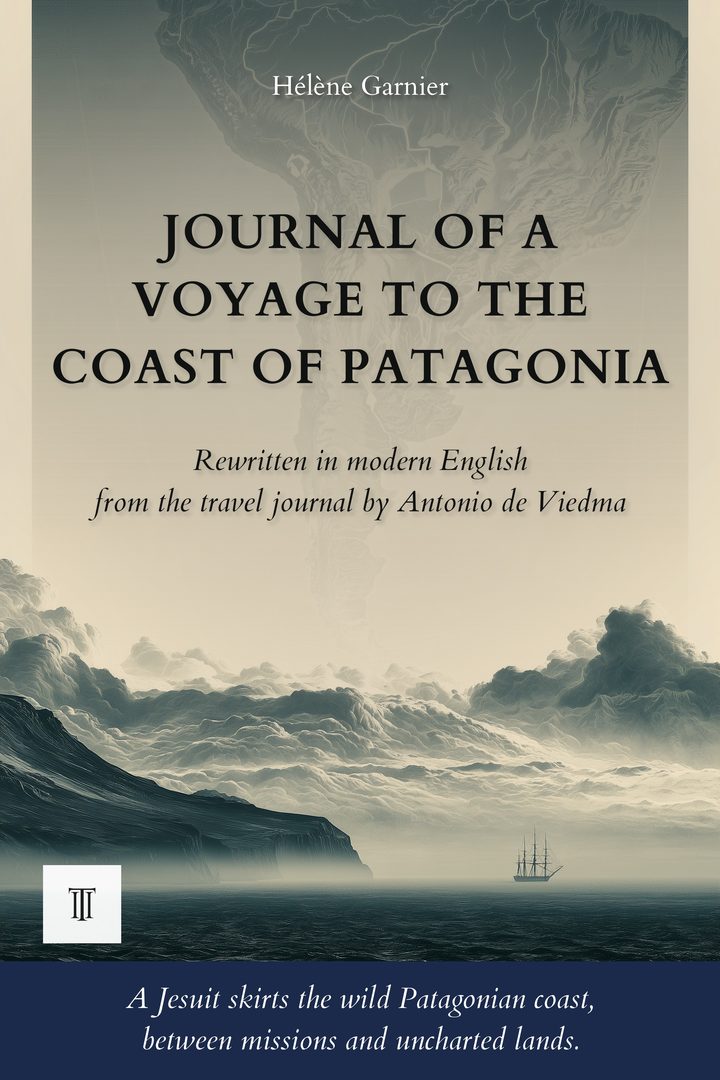
Modernized, illustrated English edition of Diario de un viaje a la costa de la mar Magallánica by Pedro Lozano (1745-1746).
A Jesuit skirts the wild Patagonian coast, between missions and uncharted lands.
Read more ↓- 122 pages
- Paperback
- English
- 18th century
Countries covered: Argentina · Uruguay
About this book
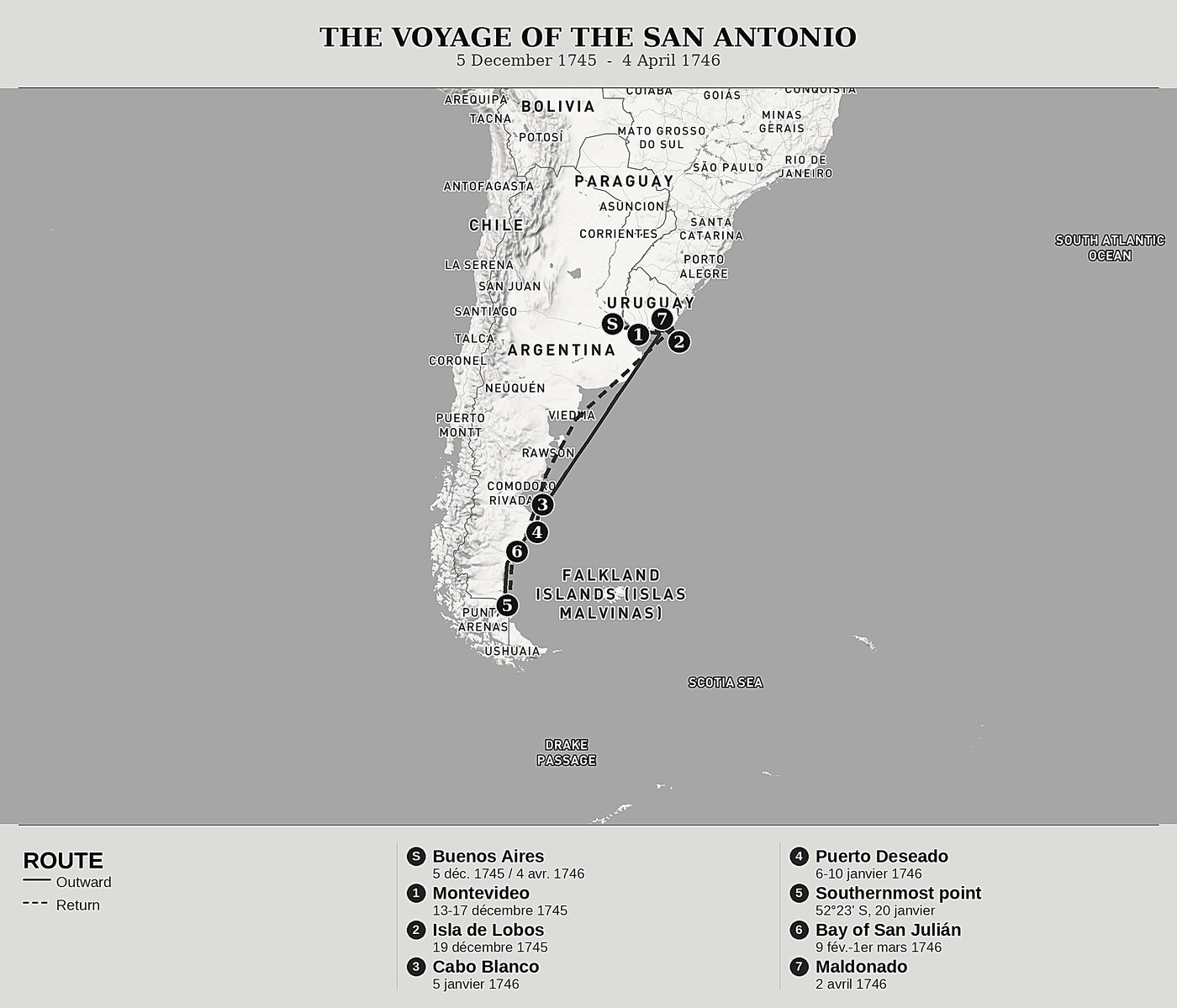
December 1745. By order of the Spanish Court, three Jesuits, a captain, two pilots and twenty-five soldiers embark at Buenos Aires on the small ship San Antonio. Their mission: to reconnoitre the unknown coast of Patagonia as far as the Strait of Magellan, and to choose a site there for founding a town in the face of the English threat.
For four months, between storms weathered under bare poles, tides of six fathoms and shores without water or wood, they confront a coast that foreign maps have peopled with eleven-foot giants, fabulous rivers and outsized oysters. A pilot injures his face in the tempest, a Guarani Indian dies on board, the ship nearly loses her masts in a hurricane. At San Julián, the bay of lies, they have to take off their shoes in the mud to see that the great river shown on every map ends in a sandbank.
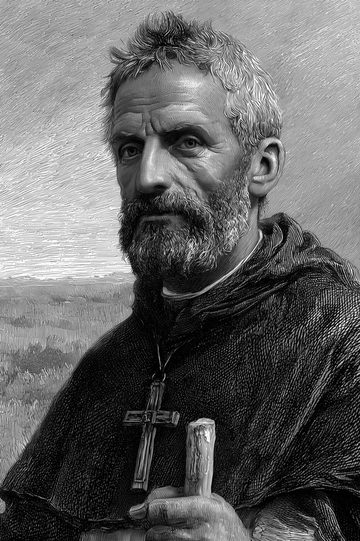
Father José Cardiel, crucifix at his neck and staff in hand, then sets off for eight days toward the west with thirty-four men, in search of Indians who remain nowhere to be found. Father José Quiroga, a former sailor turned cartographer of the expedition, measures latitudes and tides; Father Matías Strobl, superior of the mission, holds back and consults. Together they return with an uncompromising verdict: the coast of the Patagonians is a desert, the fables are fables, and Spain will found no southern town there.
Written in the third person by Father Pedro Lozano, historian of the province of Paraguay, who stayed at the college while his seafaring brethren sent him their notebooks, this journal is first of all a rutter intended for the Court of Madrid: latitudes, soundings, winds and sandbanks take up as much room in it as the men. Published by Charlevoix and then reprinted in Buenos Aires in 1836, it documents a precise moment in the imperial rivalry for the South Atlantic, four years after the passage of the English commodore George Anson, whose account had sown European maps with imaginary rivers and giants. Few eighteenth-century testimonies refute these fables with such geographical precision, soundings and latitudes to back them up.
A complete modern rewriting for today's reader, making this account accessible without betraying anything of the voyage. Twenty original illustrations and several maps of the voyage show the route, while a set of reference aids (glossary, chronology, index) and selected passages of the original text shed light on the reading.
Product details
- Publisher
- Itinerarium Éditions
- Series
- South Pole
- The author
- Pedro Lozano
- Date of the journey
- c. 1745
- Modern edition by
- Hélène Garnier
- Language
- English
- Format
- Paperback, 6 × 9 in (15.2 × 22.9 cm)
- Pages
- 122
- ISBN
- 978-2-489330-67-0
The author
Pedro Lozano
Pedro Lozano (1697-1752) was born in Madrid and entered the Jesuits before joining, young, the province of Paraguay, where he would spend most of his life. As official historian of his province, he compiled the chronicles, maps and journals of his missionary brethren rather than going to sea himself. Thus he wrote, from the notebooks of Fathers Cardiel and Quiroga, this journal of the reconnaissance of the Patagonian coast ordered by the Spanish Court in 1745. Having stayed at the college of Buenos Aires during the expedition, he delivers a sober and precise text, more a rutter than an adventure tale, published by Father Charlevoix and then reprinted in Buenos Aires in 1836.
All books by Pedro Lozano →The journey mapped
In the Same Place, Through the Centuries
-
Antonio Pigafetta, Magellan's Voyage (c. 1524) (c. 1524)
In the same bay of San Julián, in 1520, Magellan wintered for five months and faced a mutiny.
-
Charles Darwin, The Voyage of the Beagle (1839) (1839)
The young English naturalist anchored in 1834 off Puerto Deseado and San Julián.
-
Francisco Moreno, Viaje a la Patagonia austral (1879)
The young Argentine scholar explored southern Patagonia to assert national sovereignty against the Chilean claim.
-
Bruce Chatwin, In Patagonia (1977) (1977)
The English traveller crosses Patagonia in the footsteps of a piece of mylodon skin brought back by a forebear.
The modern editor

More in this series
See all →