Biography
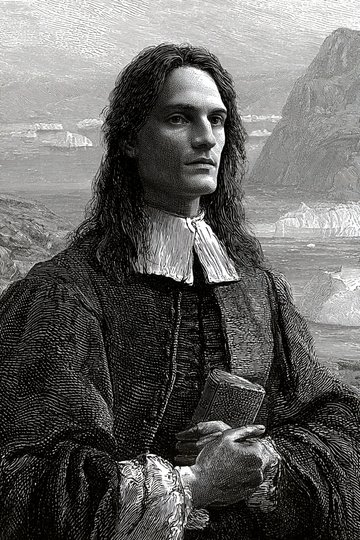
Hans Egede was born in January 1686 in northern Norway, then united with Denmark: the Dansk Biografisk Leksikon places his birth on 31 January at the farm of Harstad, in the parish of Trondenes, while the Store norske leksikon gives 21 January. His father, Poul Hansen Egede, was a sorenskriver, a district judge; his mother was named Kirsten Jensdatter Hind. Taught first by a maternal uncle, Peder Hind, then by the pastor Niels Schielderup, he entered the University of Copenhagen in 1704 and passed his theology examination as early as August 1705.
Ordained in Trondheim in April 1707, he was appointed chaplain at Vågan, in the Lofoten Islands, that same year. He married Gertrud Rasch, several years his senior, rather than his predecessor's widow as custom expected, and his hot temper earned him quarrels with his superior, then a fine and a reprimand. From 1710 he wrote to the bishops of Bergen and Trondheim, then to King Frederick IV, proposing a mission to Greenland, where he hoped to find the descendants of the Norse settlers. In 1715 he published a declaration defending this project; in 1718 he left his parish for Bergen, where he secured the creation of a trading company intended to finance the venture.
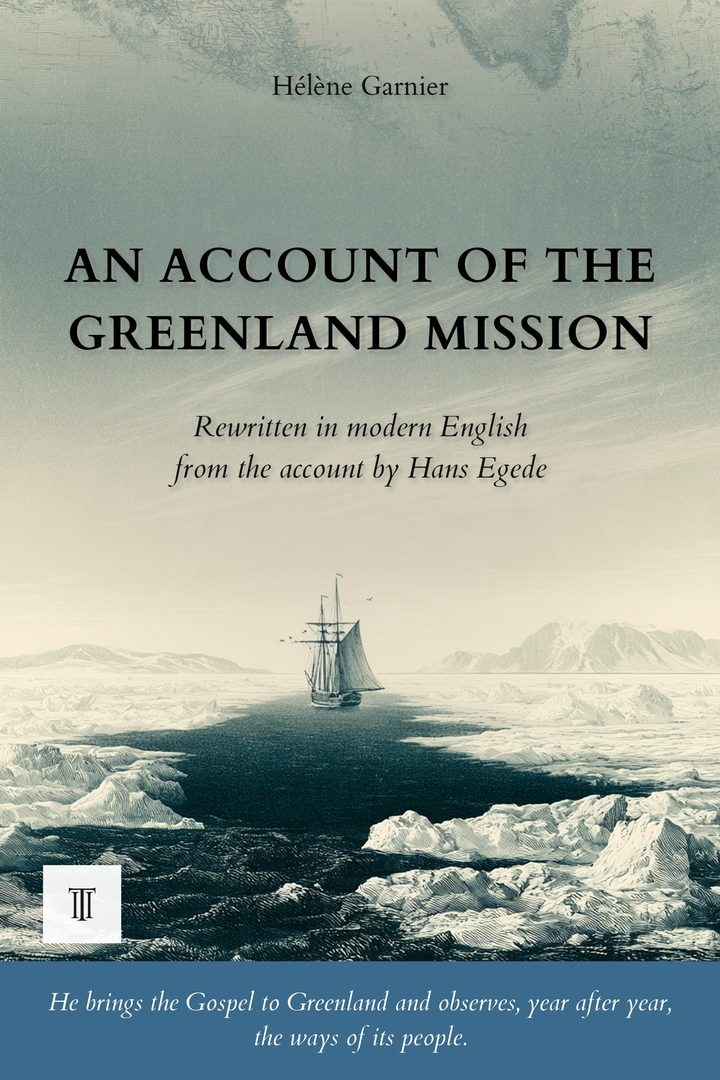
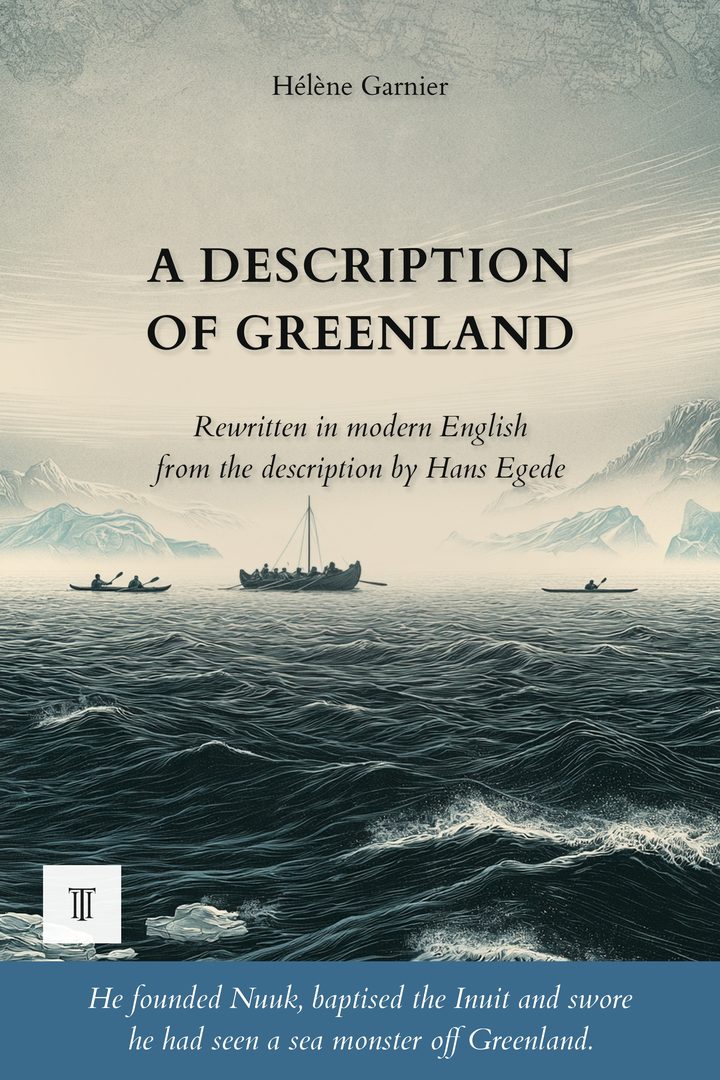
On 12 May 1721 he left Bergen with his wife, his children and some forty people, and reached the west coast of Greenland at the beginning of July. He found no Norsemen, only Inuit, whose language he learned in order to preach and translate. The colony, first set up on an island named the Island of Hope, was moved in 1728 to Godthåb, today's Nuuk. The smallpox epidemic of 1733-1734 decimated the population; Gertrud, worn out by nursing the sick, died in December 1735. Egede left the country for good the following summer. The book was born of these fifteen years: a first description appeared in Copenhagen in 1729, then a much enlarged version, Det gamle Grønlands nye Perlustration eller Naturel-Historie, in 1741. It is this version that the English edition published in London in 1745 under the title A Description of Greenland translates, and that edition is the source text of this volume.
Back in Copenhagen, he founded in 1737 a seminary to train missionaries and catechists, which he directed until 1747. He received the title of Bishop of Greenland in 1740 and declined the bishopric of Trondheim in 1743. He also published in 1738 an account of the beginnings of the mission, then a primer and a catechism in Greenlandic. His position was contested by the Moravian missionaries, who judged him spiritually unworthy, a quarrel that weighed on his departure. In 1739 he married again, to Mattea Trane Dau. His sons Poul and Niels carried on his work in Greenland.
In 1751 he retired to Stubbekøbing, on the island of Falster, to the home of his son-in-law; he died there of an epidemic on 5 November 1758 and was buried in Copenhagen, near his first wife, in the churchyard of St Nicholas' Church. His manuscripts, letters and journal notes are kept at the Royal Library in Copenhagen. Louis Bobé republished his accounts and the 1741 description in 1925. Honoured as the Apostle of Greenland, he is also regarded as the initiator of Danish colonisation: his statue in Nuuk was covered in paint in 2020.
His books at Itinerarium