Biography
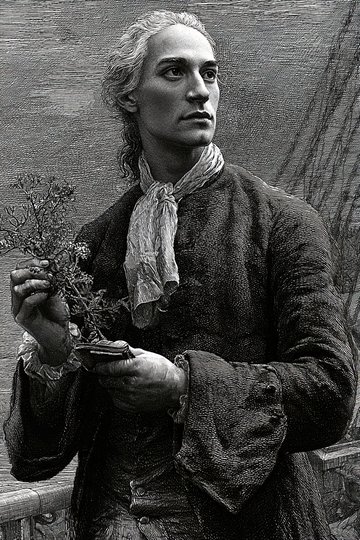
Georg Wilhelm Steller was born on 10 March 1709 in Windsheim, in Franconia, then a free imperial city. His father, Johann Jakob Stöhler, was cantor of the gymnasium and organist of the church there; the family lived modestly, and the name was first written Stöller or Stöhler. He began studies in Lutheran theology at Wittenberg, then turned to medicine and natural history, at Halle in particular, where he followed Friedrich Hoffmann's botany lectures. He passed his medical examination in 1734.
With no prospects in Germany, he left for Russia. He first served as a surgeon with the Russian troops before Danzig, then reached Saint Petersburg in 1734, almost penniless. Archbishop Feofan Prokopovich protected him; in 1737 he became adjunct of natural history at the Academy of Sciences. He married the widow of the naturalist Daniel Gottlieb Messerschmidt, from whom he recovered Siberian notes. The name then adapted to Russian usage and became Steller. Attached to the Great Northern Expedition, he crossed Siberia and arrived in Kamchatka in the autumn of 1740, where he worked alongside Stepan Krasheninnikov.
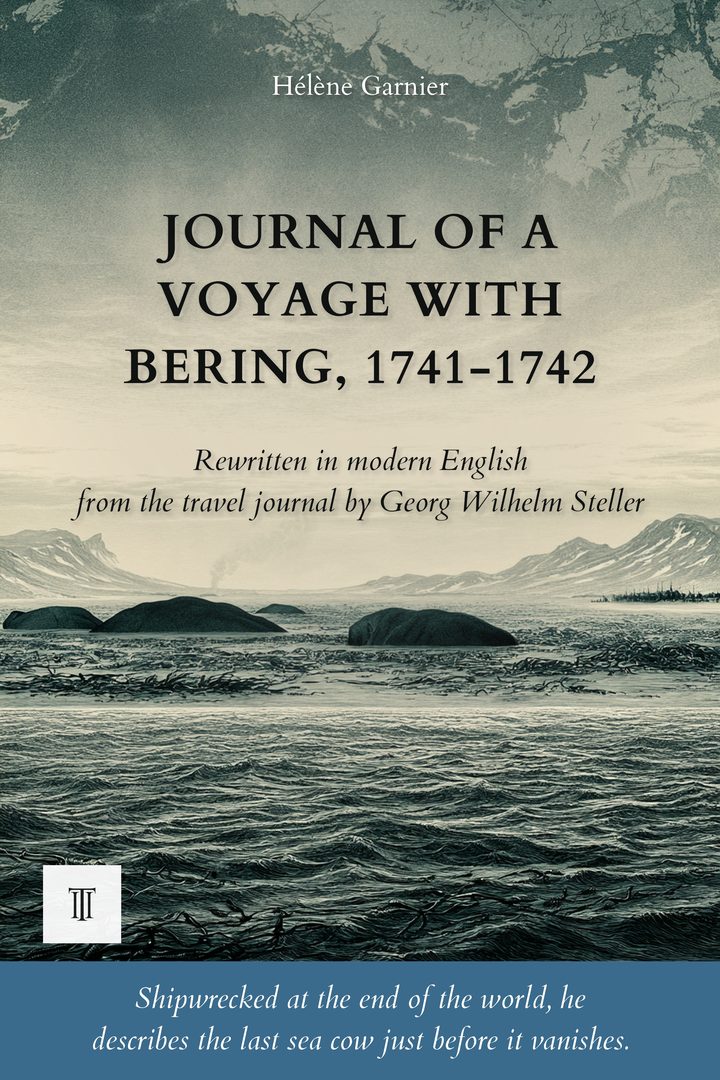
In 1741, Vitus Bering, lacking a physician, proposed that he sail on the St. Peter to look for America. Steller accepted. The ship touched the Alaskan coast in mid-July, and the naturalist obtained, not without difficulty, permission to go ashore for about ten hours on Kayak Island, where he recorded more than a hundred species of plants. The return turned to disaster: scurvy, storms, shipwreck on the island that would take Bering's name, where the commander died. Steller tended the sick, hunted, observed, and described the sea otter, the sea lion that now bears his name and the sea cow, which he alone saw alive. The survivors built a boat from the remains of the ship and reached Kamchatka in 1742. The journal of this crossing would be published by Pallas in 1793 under the title Reise von Kamtschatka nach Amerika mit dem Commandeur-Capitän Bering, in Saint Petersburg.
Steller remained two more years in Kamchatka. There he studied the Itelmens, learned their language with the help of an interpreter and took up their defense, which earned him enmity among the Russian administrators. Among his other writings, the Beschreibung von dem Lande Kamtschatka appeared in 1774 at Frankfurt and Leipzig, and his treatise on marine animals, De Bestiis Marinis, in 1751 in Latin, then in German in 1753.
Leaving Kamchatka in August 1744, he was arrested at Irkutsk in the spring of 1745, suspected of having stirred Siberian peoples against the authorities; the inquiry left him free. He took the road west again, but died of fever at Tyumen in November 1746, at thirty-seven. The date varies: 12 November by the Julian calendar, 23 November by the Gregorian, and 14 November in the English Wikipedia. His journals and documents, kept in Russian archives, were the subject of German critical editions by Wieland Hintzsche in the early 2000s. The journal of the crossing was translated into English (Journal of a Voyage with Bering, Stanford, 1988), and his German text of 1774 was reissued by Kasten and Dürr.