 The Old Orient · Modernised and illustrated edition
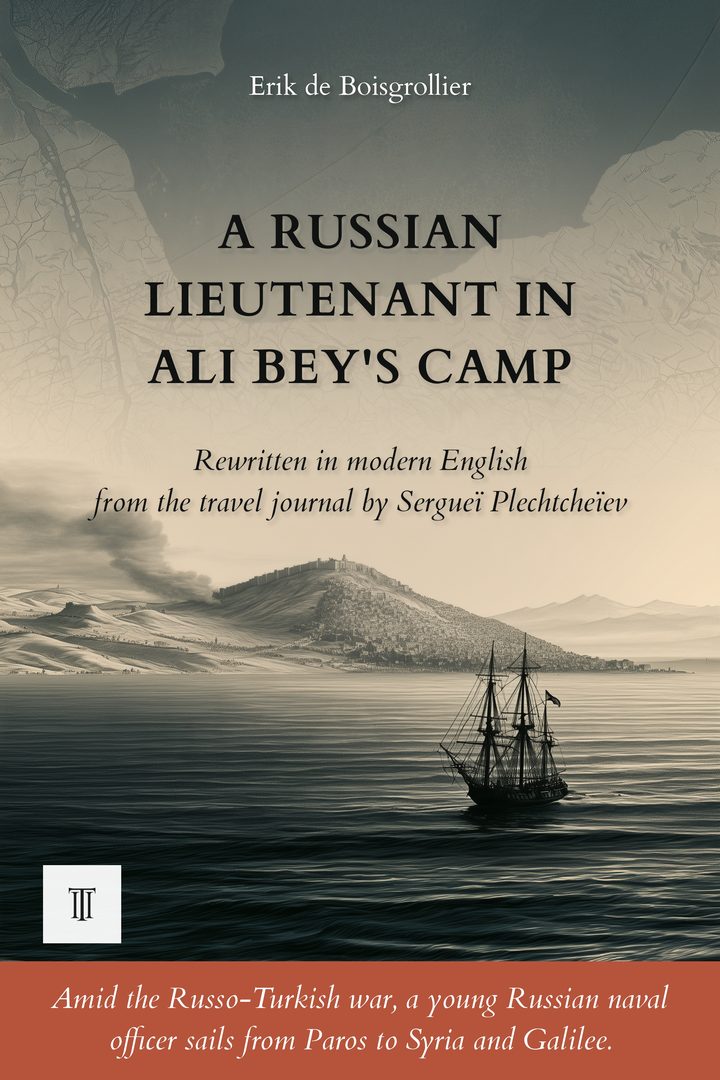
A Russian Lieutenant in Ali Bey's Camp
Modernized, illustrated English edition of Dnevnyia zapiski puteshestviia by Sergey Pleshcheyev (1772). 134 pages.
August 1772, in the midst of the Russo-Turkish war: a twenty-year-old Russian lieutenant joins Ali Bey's camp beneath the walls of Jaffa, then travels on to Galilee. Travel journal, 1773.
Read more ↓- 134 pages
- Paperback · Ebook (EPUB)
- English
- 18th century
About this book
August 1772, in the midst of the Russo-Turkish war. On Paros, base of the Russian fleet in the Archipelago, Sergey Pleshcheyev, a lieutenant of twenty, boards the Tartar with Zulfigar Bey, envoy of Ali Bey, the Mamluk driven out of Cairo who is now besieging Jaffa.
On board crowds a small cosmopolitan company: a Prussian Rittmeister, a French baron, a Greek monk from Cyprus, a Florentine physician, a Terek Cossack. A call at Acre, at the court of the old sheikh Zahir al-Umar, then Ali Bey's camp beneath the walls of Jaffa. The young officer offers his advice, reconnoiters the lines under fire, prepares incendiary projectiles and watches an assault break against the ramparts. He will lose a friend there.
Then come the fever and Galilee: Nazareth, Cana, the ruins of Sepphoris. On the way back, Acre holds its traps in store, along with its beatings and its amorous intrigues.
An officer of the Enlightenment, curious about everything, Pleshcheyev looks at the Ottoman East with rare freedom, from the barbers of the camp to the beys and sheikhs. At last he gathers the story of Ali Bey, the Abkhaz slave who became master of Egypt. How does a man brought to Cairo to be sold come to defy the Sultan?
The journal is the work of a firsthand witness. The European travelers of his day crossed the Holy Land as pilgrims or as consuls; Pleshcheyev, by contrast, dines in Ali Bey's tent, measures the entrenchments of Jaffa, observes the city of Acre, its trade, its communities and the army of the old sheikh Zahir al-Umar, then follows the pilgrims' road from Nazareth to Cana. Printed in Saint Petersburg in 1773, it takes the reader behind the scenes of a war that was also fought on the coasts of the Levant, amid the Russian fleet in the Archipelago, the ambitions of a former master of Egypt and the fragile balances of Galilee.
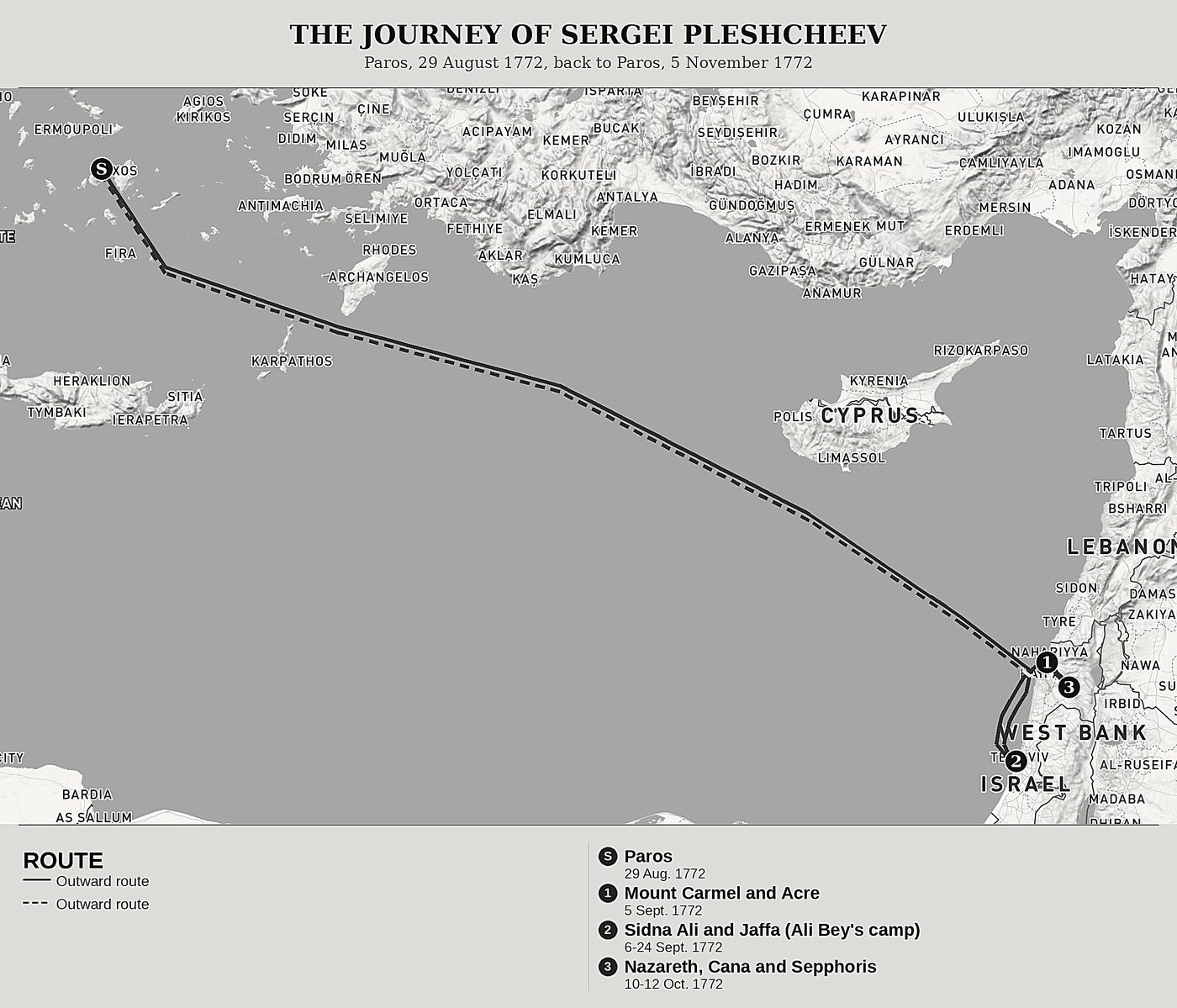
The crossing runs from Paros to the coast of Syria, with calls at Naxos, Mount Carmel, Acre and Sidna Ali, before the long stay in front of Jaffa, from 7 to 25 September 1772, and then the return by way of Acre and Galilee to Paros on 5 November. Customs, meals, musicians, markets, prayers, beatings and court ruses are noted with the same curiosity as the soundings of the Bay of Haifa or the plan of a mine. Today's reader finds here a rare document on Ottoman Palestine in the eighteenth century, written by a very young man who does not pretend to understand everything and looks very closely.
This is the first complete modern rewriting for today's reader, making the account readable without betraying anything of the journey. Twelve original illustrations and eight redrawn maps bring the itinerary into view, while a set of reference tools (glossary, chronology, index, editor's note, afterword, original text, suggestions for further reading) and selected excerpts from the original text enrich the reading.
Product details
- Publisher
- Itinerarium Éditions
- Series
- The Old Orient
- The author
- Sergey Pleshcheyev
- Date of the journey
- 1772-1773
- Modern edition by
- Erik de Boisgrollier
- Language
- English
- Format
- Paperback, 6 × 9 in (15.2 × 22.9 cm)
- Pages
- 134
- ISBN
- 978-2-489331-53-0
- Published
- October 2026
The author
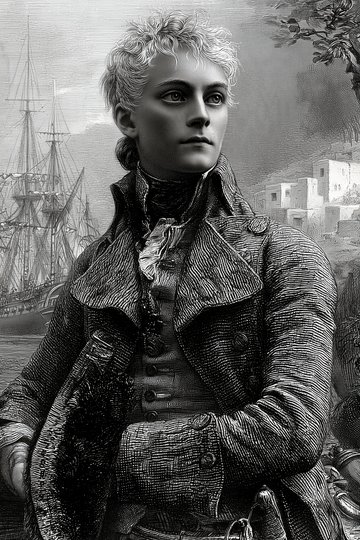
Sergey Pleshcheyev
Sergey Pleshcheyev (1752-1802), a Russian naval officer trained in the British fleet off North America, served in the Russian Archipelago squadron during the Russo-Turkish war. In 1772 he was sent to Ali Bey on the coast of Syria, and the following year he published the journal of that mission. Close to the future Paul I, a geographer and polyglot, he wrote a Survey of the Russian Empire that was reissued and translated several times. Made vice-admiral in 1797, he died in Montpellier in 1802.
All books by Sergey Pleshcheyev →Dnevnyia zapiski puteshestviia: Our editorial work
The text you have just read is a small book printed in Saint Petersburg in 1773, at the press of the Naval Cadet Corps, under a title that fits in a single sentence: Journal of a Voyage from the Island of Paros, in the Archipelago, Belonging to Russia, to Syria and the Memorable Places. It comes down to us in one unbroken stream: dated entries, without chapters or headings, followed by a History of Ali Bey that the author pushed to the end for lack of room in the journal. We have cut that stream into ten chapters: eight for the voyage, from the departure from Paros to the return, and two for the History of Ali Bey, the break falling where the war in Syria resumes. The chapter titles are ours. The dates of the journal remain where they occur in the narrative, just as the author gives them, in the Russian calendar that was his own (Old Style); converting them would have blurred the landmarks of a man who counts his days of fever. The few footnotes of the 1773 edition, in which Pleshcheyev explains a Turkish word or a custom, have been folded into the body of the narrative, at the point where the reader needs them.
Before / after
Всякой разъ, по окончаніи стола, Зюльфигаръ-Бей, наполня большой стаканъ Кипрскаго вина, пилъ за здоровье предводителя Россійскаго Флота и вставши громогласно говорилъ: Вивать Орловъ. Научился сему въ бытность его между Греками, въ островѣ Наксѣ, лежащемъ близь Пароса, гдѣ имѣлъ онъ пребываніе въ нарочно отведенномъ для него лучшемъ казенномъ домѣ. Я воздавъ благодареніе за такое учтивство, считалъ должностію подобнымъ образомъ пить за здоровье Алибея, а Г. Клингенау слѣдуя намъ, опорожнивалъ съ вина стаканъ: за здоровье Шеха-Дагера, союзника Алибеева. Пропіе сотрапезники наши тоже дѣлали, упоминая здоровье благодѣтелей, или любовницъ своихъ.
He had learned this from the Greeks on Naxos, very near Paros, where the finest house in the state had been placed at his disposal. I thanked him for this courtesy and held it a duty to answer by drinking likewise to the health of Ali Bey. Mr. Klingenau imitated us, raising his glass to Sheikh Zahir al-Umar (called Daher-Omar in the journal), Ali Bey’s ally. The other guests followed, and each drank to his benefactors or to his mistress.
The journey mapped
In the Same Place, Through the Centuries
-
Volney, Travels through Syria and Egypt (1787)
Ten years after Plechtcheïev, from 1783 to 1785, the young Volney stayed in Egypt and then in Syria, where he spent several months learning Arabic in a Lebanese monastery.
Read a free edition → -
Chateaubriand, Travels in Greece, Palestine, Egypt, and Barbary (1811)
In the autumn of 1806 Chateaubriand landed at Jaffa, the town before which Plechtcheïev had watched Ali Bey's assault fail, and rode up to Jerusalem under escort.
Read a free edition → -
Alphonse de Lamartine, A Pilgrimage to the Holy Land (1835)
In 1832 Lamartine settled with his family in Beirut and set out from there for the Holy Land with a small caravan.
Read a free edition → -
Mark Twain, The Innocents Abroad (1869)
In 1867 Mark Twain sailed from New York on the Quaker City, an organized cruise, a novelty at the time, with American pilgrims bound for Europe and the Holy Land.
Read a free edition →
The modern editor

More in this series
See all →