Biography
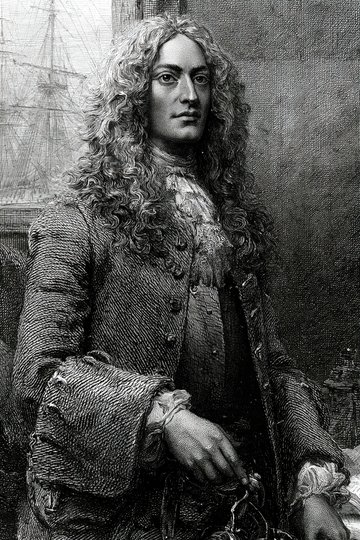
Woodes Rogers was born around 1679, probably at Poole, in Dorset: the entry in the biographies of the Falklands has him born there, while the English Wikipedia says only that he spent part of his childhood there. The eldest son of a merchant captain of the same name, who held shares in many ships, he grew up in a seafaring family. Between 1690 and 1696 the family settled in Bristol. In November 1697 he was apprenticed to the Bristol seaman John Yeamans and completed his time in November 1704. In January 1705 he married Sarah Whetstone, daughter of Admiral Sir William Whetstone.
When his father died at sea in 1706, he took over the family business. The War of the Spanish Succession had begun in 1702; several ships in which he had interests received letters of marque, but the Whetstone Galley was captured by the French. To make up his losses, Rogers turned to privateering. He would also take part in the slave trade all his life.
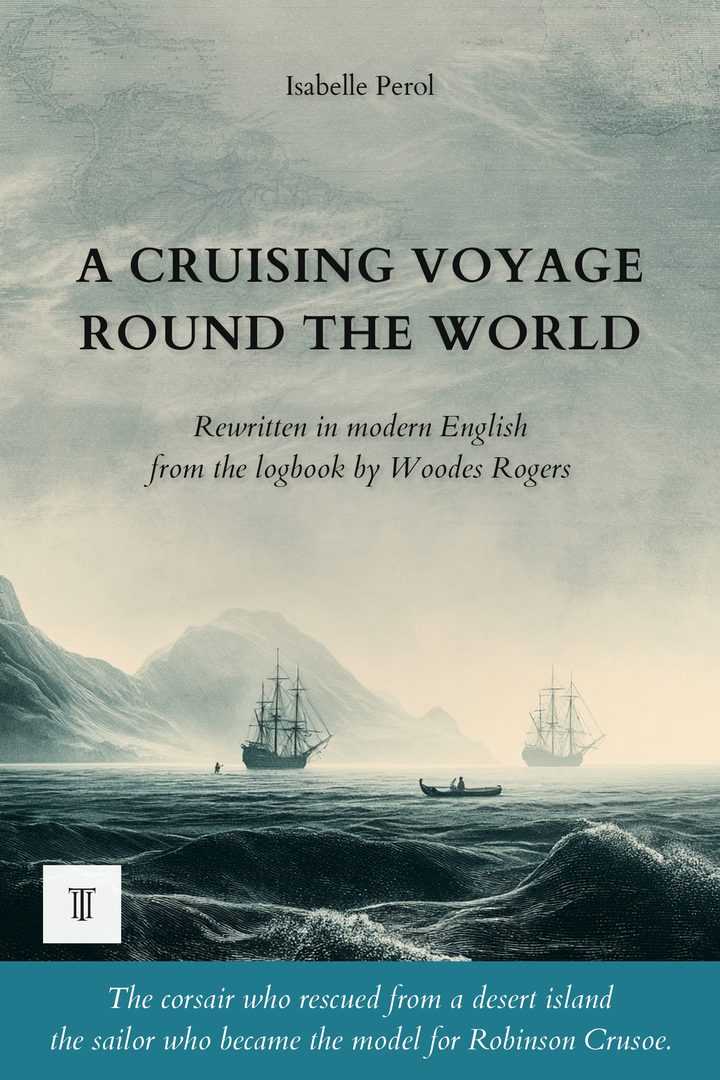
At the end of 1707, William Dampier proposed to him an expedition against the Spanish in the Pacific. Bristol merchants financed it, among them Thomas Goldney II and Thomas Dover, who presided over the council on board. The Duke, commanded by Rogers, and the Dutchess left Bristol in early August 1708 (on the 1st or the 2nd, depending on the source). On 1 February 1709, at Juan Fernández, the crew took Alexander Selkirk off the island. After Guayaquil, the capture of the Manila galleon, in which Rogers was wounded in the face, then Guam, Batavia and the Cape, the ships reached the Thames on 14 October 1711. Rogers published his journal in London, with Andrew Bell, in 1712, under the title A Cruising Voyage Round the World. The book sold well, largely thanks to the story of Selkirk, which Daniel Defoe would later transpose into Robinson Crusoe.
The return was less happy than the fame. Rogers had to sell his house in Bristol, more than two hundred crew members claimed their share of the profits, and he was declared bankrupt. From 1713 to 1715 he led an expedition to Madagascar, officially to buy slaves, with the idea of gathering intelligence on pirates and perhaps colonizing the island; the East India Company rejected the plan in 1715. Rogers then turned to the Bahamas. Appointed governor by George I on 6 January 1718, he arrived at New Providence on 24 July 1718, mixed pardons with severity (eight pirates hanged in December 1718) and repelled a Spanish raid in February 1720. His motto, "Piracy expelled, commerce restored", remained that of the Bahamas until independence in 1973.
Back in 1721, he was imprisoned for debt, then released. He is said to have informed the author of the General History of the Pyrates, published under the name of Charles Johnson, which revived his reputation. A pension was granted him in 1726, retroactive to 1721, and George II reappointed him governor on 22 October 1728. He died at Nassau on 15 July 1732, aged about 53, and was buried there. The sources consulted do not say where his papers are kept. Modern editions include that of G. E. Manwaring (Cassell, 1928) and that of Donald Jones (Bristol Historical Association, 1992); Graham A. Thomas devoted a biography to him in 2008.