Biography
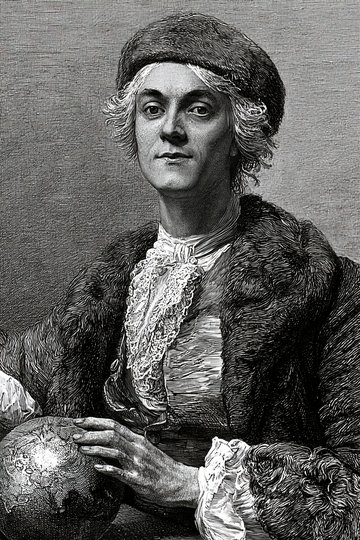
Pierre Louis Moreau de Maupertuis was born in Saint-Malo in 1698; his exact date of birth is not known, and sources retain his baptism, on 28 September 1698. His father, René Moreau de Maupertuis, a Saint-Malo shipowner and privateer, was ennobled by Louis XIV. A tutor, Nicolas Guisnée, taught him mathematics. Around the age of twenty he entered a cavalry corps, the grey musketeers according to the French Wikipedia entry, then left the army after a few years to settle in Paris and pursue a career in the sciences.
He entered the Academy of Sciences in 1723. He became known for work in mechanics and astronomy, and for observations on salamanders and scorpions. A stay in London in 1728 brought him into contact with Newton's thought; with the support of his Basel master Johann Bernoulli, he became one of the main defenders of Newtonian theory in France, against the Cartesians.
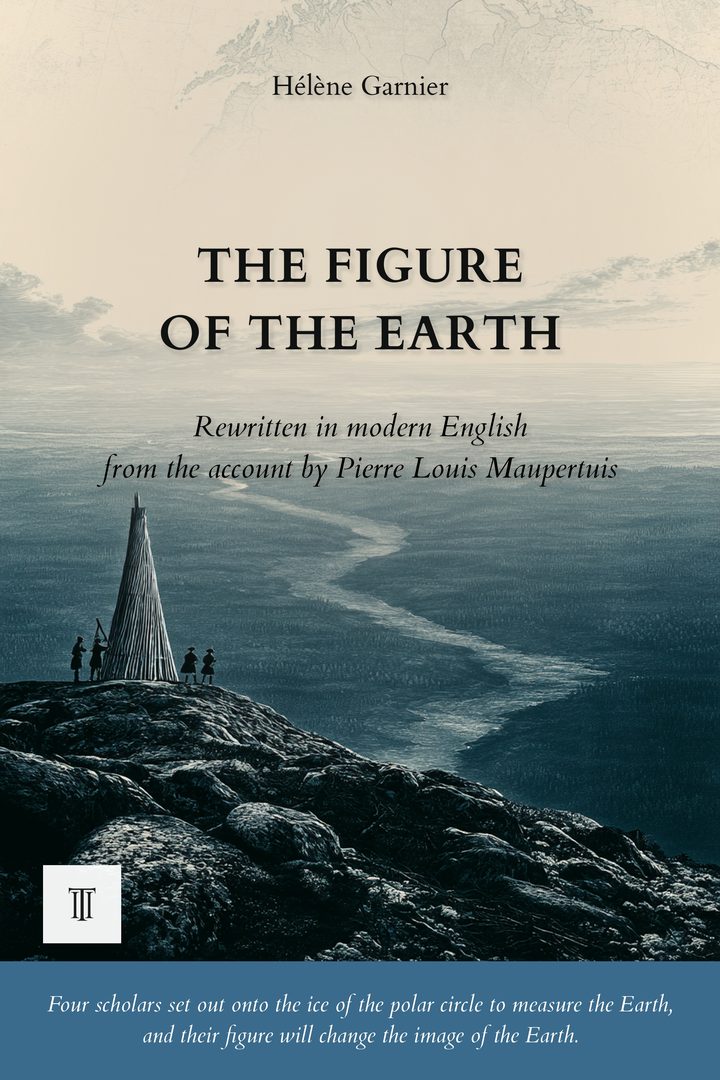
It was in that capacity that the Academy entrusted him with leading the expedition sent to the polar circle in 1736. With Clairaut, Camus, Le Monnier, Abbé Outhier and the Swede Celsius, he measured an arc of the meridian between Tornio and Kittis, in Swedish Lapland. The result, published in 1737, gave a polar degree longer than that of France, hence an Earth flattened at the poles, which settled the matter in Newton's favour against Jacques Cassini. Maupertuis drew from it the account entitled "La Figure de la Terre, déterminée par les observations de Messieurs de Maupertuis, Clairaut, Camus, Le Monnier, de l'Outhier et Celsius, faites par ordre du Roy au cercle polaire", printed in Paris in 1738. It brought him European celebrity, and Voltaire hailed him in verse.
In 1740, Frederick II invited him to Berlin. Taken prisoner by the Austrians at Mollwitz in 1741, he later returned to Berlin; he was received into the Académie française in 1743 and presided over the Prussian Academy, with Euler's help, from 1746 (some sources speak of his directing it from 1742, which probably reflects duties prior to the official presidency). He formulated the principle of least action in memoirs from 1741 to 1746. He also wrote on generation, with the "Vénus physique" (1745), the "Essai de philosophie morale" (1749), the "Essai de cosmologie" (1750), the "Système de la nature" (1751, under the pseudonym Doctor Baumann) and the "Essai sur la formation des corps organisés" (1754). The quarrel with Samuel König over the authorship of the principle of least action, in which Voltaire took König's side, clouded his last years.
Ill, he left Berlin and died in Basel on 27 July 1759, at the house of a son of Johann Bernoulli. La Condamine, his friend and universal legatee, sorted part of his papers. The Maupertuis collection (43 J) is held at the Academy of Sciences of the Institut de France, which acquired it in May 1990. His works were collected at Dresden in 1752, then at Lyon in 1756 and 1768. The Lapland expedition has been the subject of a recent study by Osmo Pekonen and Anouchka Vasak, "Maupertuis en Laponie" (2014).