Biography
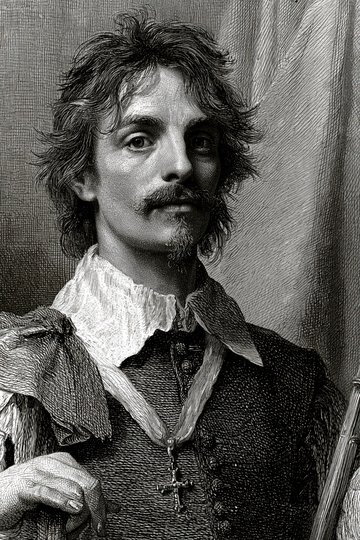
Almost all we know of Nicolas Bénard comes from what he tells us in his own book. A Parisian, he describes himself as "twenty years old, or thereabouts" when he leaves the capital on 20 September 1616: he was therefore born around 1596, but neither the exact date nor the place of his birth is documented, and nothing is known of his family or of the date of his death. A layman and a fervent Catholic, he sets out to fulfil a vow, to see Jerusalem, carrying a royal passport made out in his name.
With two Parisian companions, Resteau and Potier, he travels down the Rhône to Marseille and sails on 9 November 1616 aboard the Sainte-Marguerite. After a sixty-two-day crossing by way of Sardinia, Sicily, Malta and Cyprus, he lands at Sidon on 9 January 1617 and enters Jerusalem on 25 January. On 2 February, the feast of Candlemas, the Guardian of Mount Zion, the Franciscan Basilio da Caprarola, dubs him a Knight of the Holy Sepulchre. From then on he would carry that title at the head of his book.
The return journey lasts more than seven months: Sicily and Calabria, Naples, Rome, Loreto and Venice, then Milan, the Gotthard Pass, the Rhine, Holland and Flanders. He is back in Paris on 20 September 1617, one year to the day after leaving, and goes to give thanks at the church of the Holy Sepulchre in the rue Saint-Denis.
It is around this church that the rest of his known life unfolds. Between 1619 and 1621, Bénard is one of the former Jerusalem pilgrims who oppose the canons of the Holy Sepulchre in Paris: they demand that the hospital founded to receive pilgrims be restored, and that they be allowed to take part in the services of their confraternity. His book reproduces their plea, the rulings of the Parlement cited in its support, and the list of about a hundred travellers who signed it.
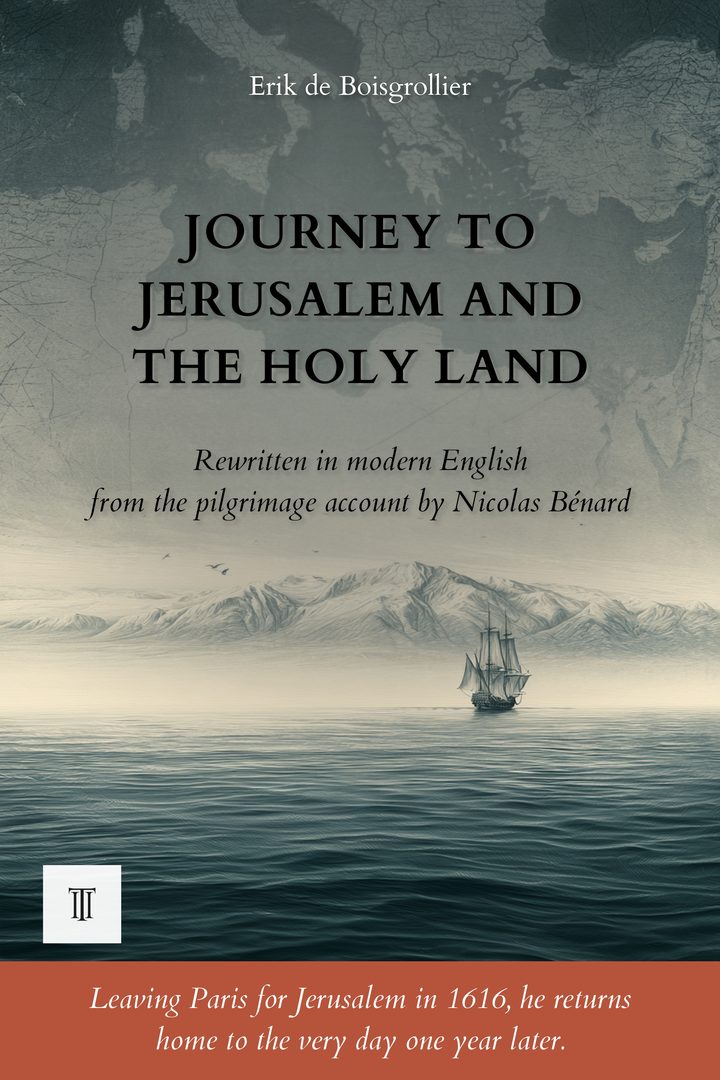
Le voyage de Hierusalem et autres lieux de la Terre Sainte (The Journey to Jerusalem and Other Places of the Holy Land) was published in Paris by Denis Moreau in 1621, dedicated to Charles de Gonzague de Clèves, Duke of Nevers and Rethel. It is a substantial volume of more than seven hundred pages in three books, part travel journal, part practical handbook and part legal plea. Bénard gives future pilgrims precise advice on the two possible routes, by Venice or by Marseille, on provisions, money and the dues to be paid to the Ottoman authorities, and ends with a short guide to distances in the Holy Land.
The book had only one early edition. Copies are held in particular at the Bibliothèque nationale de France, which has digitised it on Gallica, at the Real Biblioteca in Madrid and at the Gennadius Library in Athens. Historians of pilgrimage cite it as a witness to the Jerusalem journey in the early seventeenth century, between religious fervour and observation of the world.