Biography
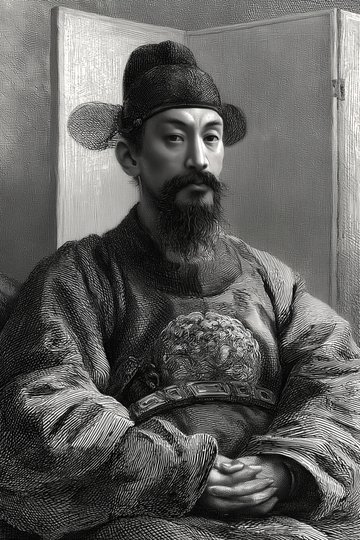
Min Jeong-jung was born in 1628, in the reign of Injo, into the Min clan of Yeoheung, one of the most prominent families of the lettered nobility of Joseon. His grandfather Min Gi had been Chief State Councillor under Seonjo, his father Min Gwang-hun a provincial governor. His elder brother was the scholar Min Si-jung and his younger brother Min Yu-jung, future father of Queen Inhyeon. Trained at the Seonggyungwan, the Confucian academy of the capital, he became a disciple of Song Si-yeol, the great master of the school of Zhu Xi, and came first in the civil examination of 1649, at the age of twenty-one.
His career was one of exemplary regularity. He served in the Crown Prince's Secretariat, the Office of the Censor-General, the Office of Royal Decrees and the Office of the Inspector-General, took part in compiling the Annals of King Injo and travelled through several provinces as a secret royal inspector (amhaeng eosa). Prefect of Dongnae, on the south coast, around 1658, he then became rector of the Seonggyungwan, governor of Hamgyeong, and then Inspector-General. In 1659 he dared to plead for the memory of Princess Gang, Injo's daughter-in-law, who had died in disgrace. Around 1670 he headed in turn the ministries of Finance, Personnel and Public Works.
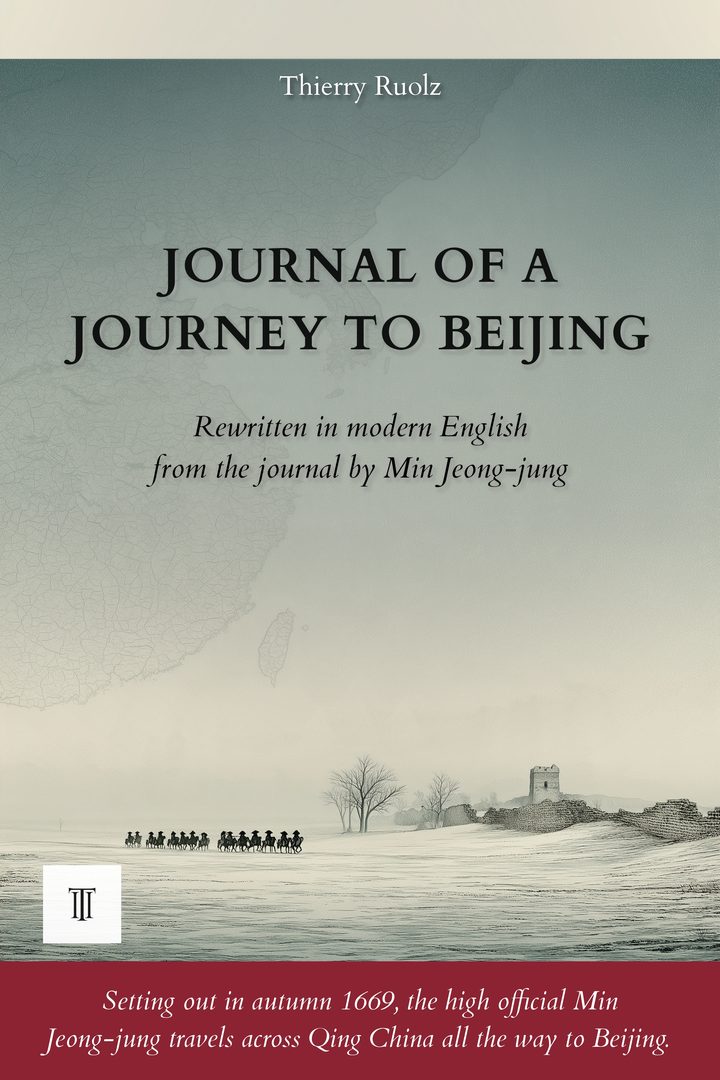
It was in the autumn of 1669, under King Hyeonjong, that he took charge of the annual winter solstice embassy, which carried the Korean tribute to the Qing court. Korean sources date this mission to 1670, the year of his return. From this journey came the Yeonhaeng ilgi (燕行日記, "Journal of the Journey to Yan"), followed by a separate record of what he had seen and heard, in which he set down his written conversations with Chinese scholars. The text appeared only after his death, in the collection of his works printed from woodblocks in 1734; the Encyclopedia of Korean Culture compares it to the Yeolha ilgi of Bak Ji-won, which it precedes by more than a century.
A member of the Westerners faction (Seoin), he lived through the ritual controversies that tore the court apart. Pushed aside by the Namin in 1675 and exiled to Jangheung in 1679, he returned to power with the reversal of 1680, became Third and then Second State Councillor, and proposed, without success, a reform of the household tax. When the Westerners split, he joined the Noron, the uncompromising wing of Song Si-yeol. A renowned calligrapher, he left stele inscriptions and the signboard of the main hall of Gaesimsa temple; he is also credited with the Nobong yeonjung seolhwa and the Imjin yumun.
The reversal of 1689 brought the Namin back and condemned him to exile at Byeokdong, under house arrest. He died there in 1692. Rehabilitated in 1694, he received the posthumous name Munchung; his tomb, moved from Yangju to Yeoju, is a protected site of the city. His nephew Min Jin-won gathered his writings in twelve books, printed in 1734 with a preface by Yi Jae; copies are held at the Kyujanggak library, the National Library of Korea and Korea University, and the carved woodblocks at the Yeongok seowon in Jangheung.