Biography
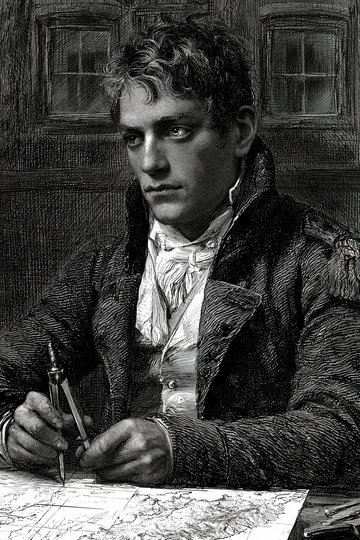
Matthew Flinders was born on 16 March 1774 at Donington, in Lincolnshire, the son of Matthew Flinders and Susannah Ward. Reading Robinson Crusoe is said to have awakened very early his taste for great discoveries. In 1789, at fifteen, he entered the Royal Navy, first aboard the Bellerophon under Captain Pasley, who recommended him to William Bligh. He thus learned the craft of the navigator and the observer of sky and coasts.
From 1791 to 1793 he served under Bligh on the Providence, on the breadfruit voyage between Tahiti and the West Indies. In 1794 he was present at the Glorious First of June, then in 1795 he sailed to New South Wales on the Reliance. With the surgeon George Bass, he explored the coasts near Sydney in small boats, among them the Tom Thumb. In 1798, in command of the sloop Norfolk, he established that a strait, Bass Strait, separates Van Diemen's Land from the mainland, then in 1799 he explored the Queensland coast, notably Moreton Bay.
Back in England, he obtained in January 1801 the command of the Investigator, with the support of Sir Joseph Banks, to survey all the coasts of New Holland. He married Ann Chappelle on 17 April 1801, but the Admiralty forbade wives on board: the ship left England on 18 July 1801 and the couple would not meet again for nine years. Flinders followed the south coast, from King George Sound to the Great Bight, met Nicolas Baudin at Encounter Bay in 1802, sailed around the continent and returned to Port Jackson in June 1803. This is the material of A Voyage to Terra Australis, whose narrative is presented here.
Leaving for England aboard the Cumberland, a ship in poor condition, he put in on 17 December 1803 at Isle de France (today Mauritius), where Governor Decaen detained him as war had resumed between France and Great Britain. He was released on parole in June 1810 and returned to England in October. As early as 1804 he proposed the name Australia for the continent, without being the first to use it. He devoted his last years to writing his narrative and engraving the accompanying atlas; his daughter Anne was born on 1 April 1812.
A Voyage to Terra Australis was published in London on 18 July 1814, with its atlas. Flinders, ill, died in London the next day, 19 July, aged forty, without having seen the finished work, and was buried on 23 July in the churchyard of St James's, Piccadilly. Governor Macquarie recommended the name Australia in 1817, and the Admiralty adopted it in 1824. His grave, found in January 2019 during excavations for a railway line near Euston, led to a reburial at Donington in 2024. Two of the three Investigator journals are held at the State Library of New South Wales, the third at the British National Archives, and his papers at the National Maritime Museum in London. The work was reprinted in 1964, and the Investigator journal was edited by the Hakluyt Society in 2015. His grandson was the Egyptologist Flinders Petrie.
His books at Itinerarium
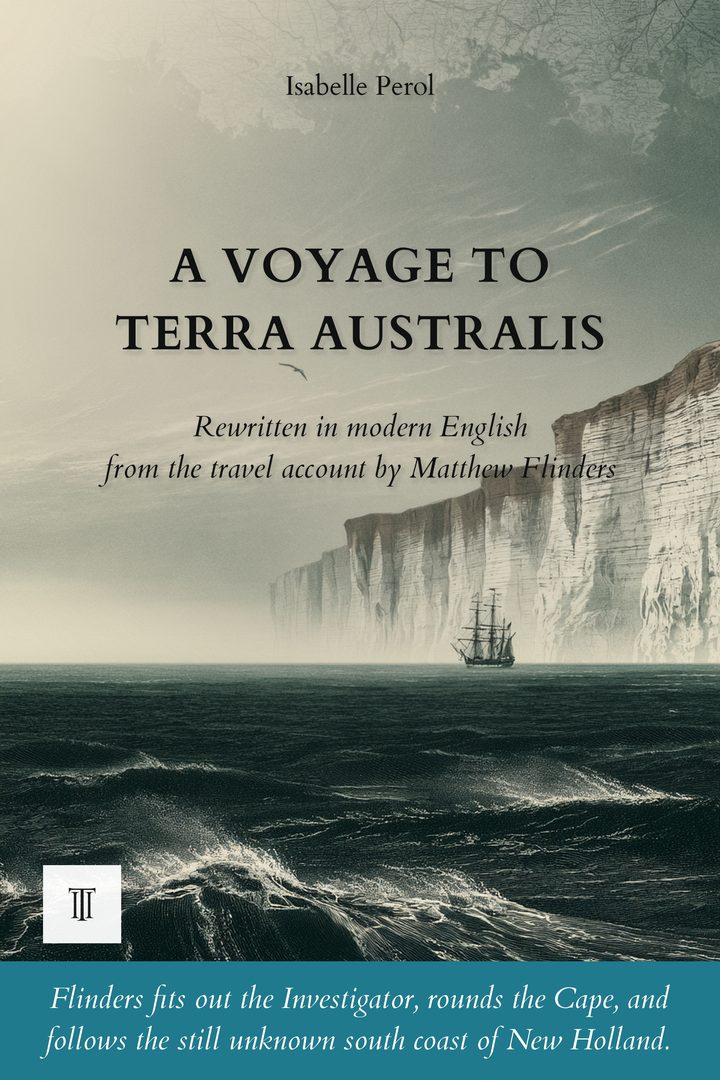
A Voyage to Terra Australis
Book - Modernized and illustrated English edition of “A Voyage to Terra Australis” (1801-1803), volume I, by Matthew Flinders.
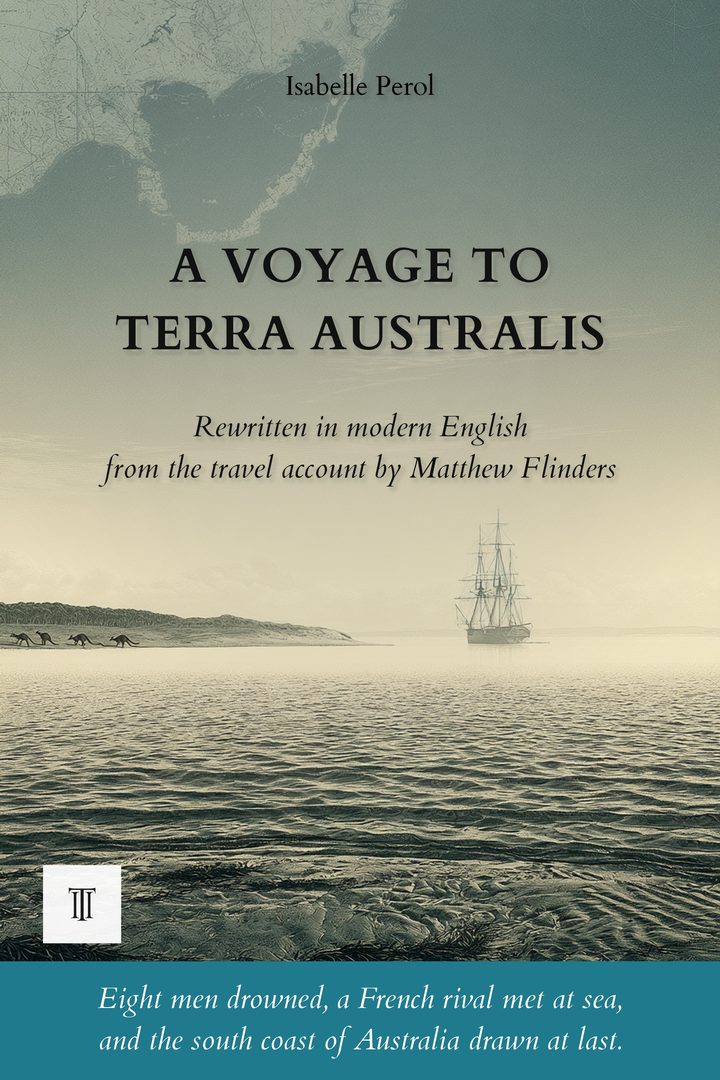
A Voyage to Terra Australis
Book - Modernized and illustrated English edition of “A Voyage to Terra Australis” (1802), volume II, by Matthew Flinders.
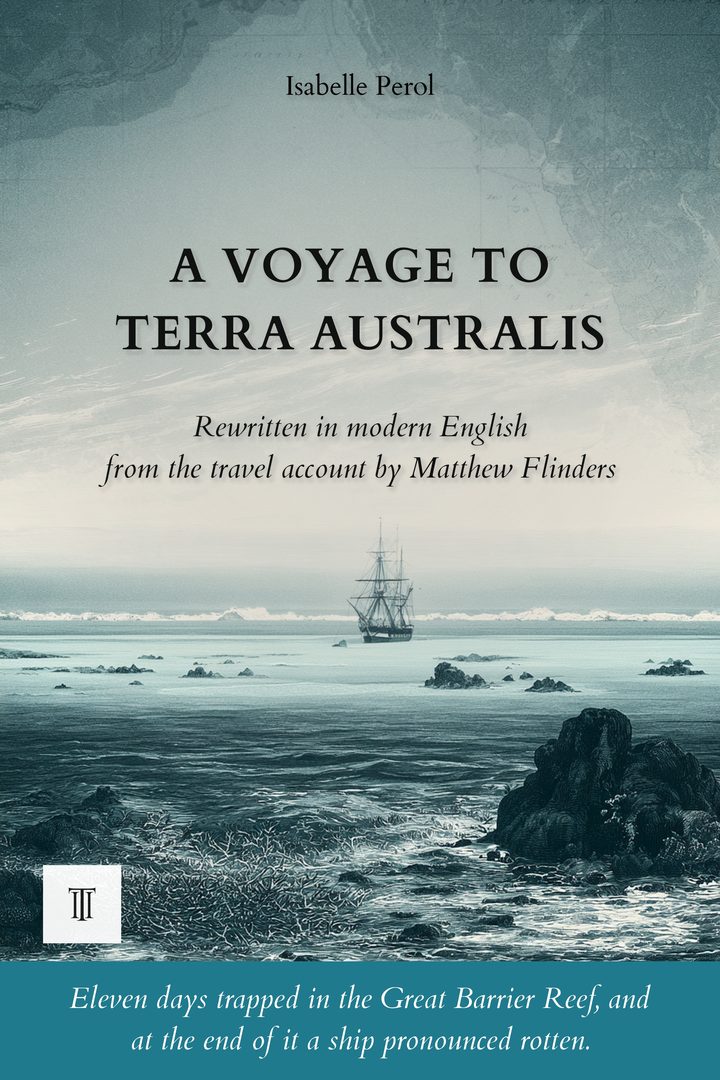
A Voyage to Terra Australis
Book - Modernized and illustrated English edition of “A Voyage to Terra Australis” (1802), volume III, by Matthew Flinders.
A Voyage to Terra Australis
Book - Modernized and illustrated English edition of “A Voyage to Terra Australis” (1802-1803), volume IV, by Matthew Flinders.
A Voyage to Terra Australis
Book - Modernized and illustrated English edition of “A Voyage to Terra Australis” (1803-1804), volume V, by Matthew Flinders.
A Voyage to Terra Australis
Book - Modernized and illustrated English edition of “A Voyage to Terra Australis” (1804-1810), volume VI, by Matthew Flinders.