Biography
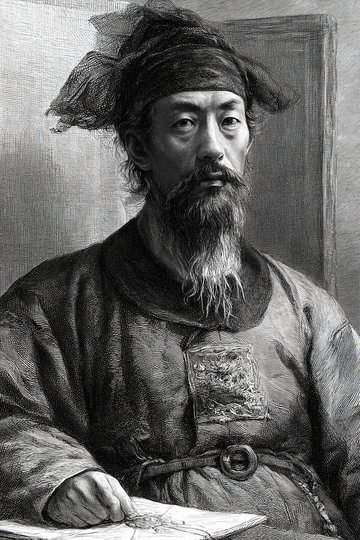
Kim Jong-jeong was born in 1722 in the kingdom of Joseon, into the Cheongpung clan, a line of scholar-officials that gave the court several ministers in the eighteenth century. His courtesy name was Baekgang, and he signed his writings with the pen name Ungye, "the stream of clouds". His father, Kim Chi-hu, had been chief censor, one of the most exposed remonstrance posts at court, and had served as magistrate of Jeongju, in the north-west of the country. He died around 1744, when his son was a little over twenty; Kim Jong-jeong kept a vivid memory of him, and his journal shows him in tears before the stele carved in his father's honour.
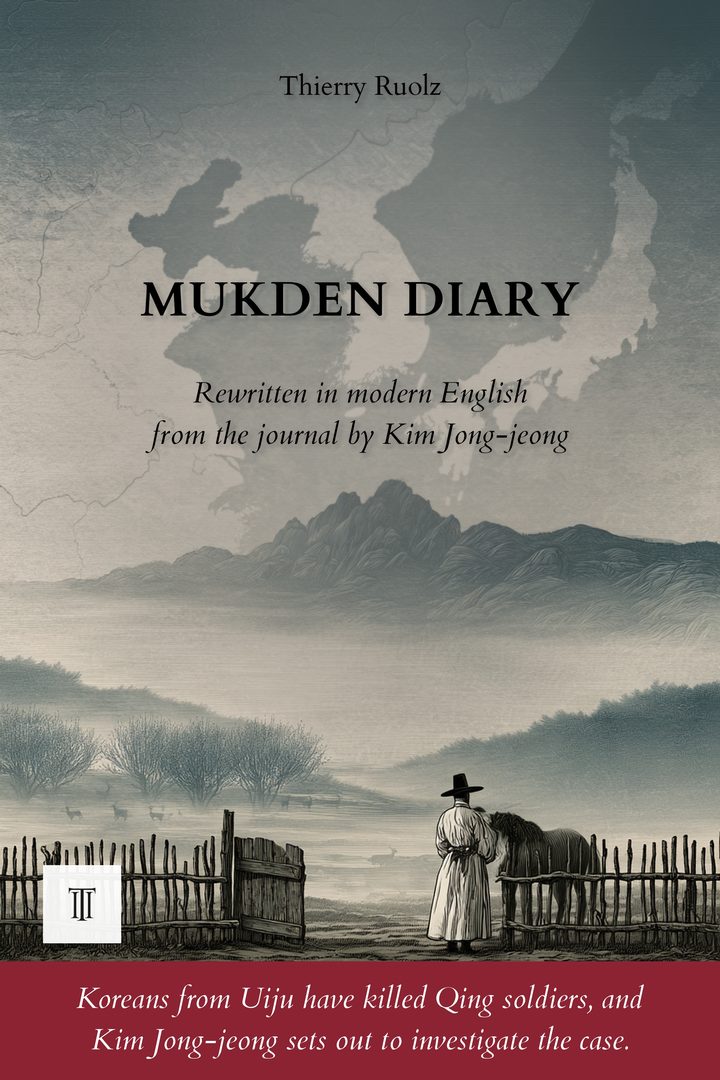
Having passed the first degree of the examinations in 1741, he succeeded in 1757 in the literary examination held at the palace under King Yeongjo, and entered the career of the censors, whose task was to point out the government's faults. In 1764 he was a ministry councillor of the third rank when a border affair broke out: people from Uiju, the Korean town facing Manchuria, had illegally crossed the Yalu and killed Qing soldiers. The king appointed him royal investigator and sent him, with the prisoners, to conduct a joint inquiry with the Manchu authorities.
The mission turned into a humiliation. In Shenyang, the old Qing capital, the Manchu officials shut him out of the proceedings, and the Korean investigator looked on, powerless, as the statements were rewritten. Back in Seoul at the end of July 1764, he was received in audience by Yeongjo, who reproached him for failing to defend the kingdom's dignity and dismissed him; an interpreter of the mission was exiled. The journal he kept during those months, the Simyang illok, is a first-hand account of the border inquiries between Korea and the Qing empire, and a valued source for the diplomatic and economic history of the region.
The disgrace did not last. Kim Jong-jeong resumed his career, received the title of Prince of Cheongcheon, an honour granted to deserving servants of the state, and became Minister of Personnel, one of the most influential posts in the government. He died in 1787; the court gave him the posthumous name Cheongheon.
His writings are collected in the Ungye mango, "Drafts of Ungye", a manuscript collection of thirty-two books in fifteen volumes held at the Kyujanggak, the former royal library, now part of Seoul National University. It contains more than four hundred poems, including those written during the 1764 mission, memorials to the throne, letters, funeral eulogies and epitaphs, as well as long reading notes on the Confucian classics, the Book of Documents, the Book of Odes, the Doctrine of the Mean and the Book of Rites, and a code of conduct for his family. The Simyang illok appears among the miscellaneous writings of the eighth book, in classical Chinese, the language of all scholarly prose in Joseon.