Biography
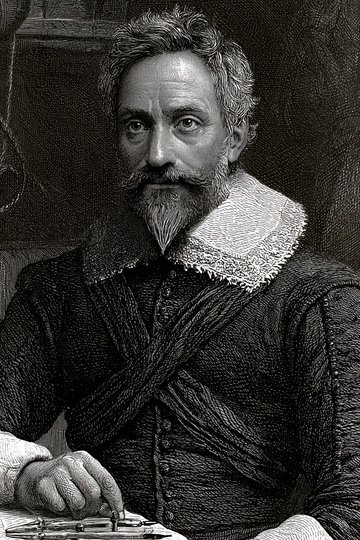
Jens Munk was born on 3 June 1579 at Barbu (also written Barbo), near Arendal, in a Norway then united with Denmark. He was the second son of Erik Nielsen Munk, a local lord whose harshness led to his dismissal in 1585 and imprisonment. According to the Wikipedia article, the boy, then eight years old, went to Aalborg with his mother, who kept house there for a relative of her husband. At twelve he went to sea; the same source takes him through Porto, then Bahia, in Brazil, before his return to Europe around 1599.
Back in Copenhagen, he found work as a ship's clerk. In 1609 and 1610 he led two expeditions toward the Barents Sea, which the Store norske leksikon presents as sealing campaigns heading for Novaya Zemlya. During the Kalmar War he was a captain in the Danish navy, and from 1613 he was employed by Christian IV. He is credited with introducing whaling to Denmark; in 1617 he recruited Basque harpooners for an expedition to Spitsbergen. In 1618 he was passed over for command of an expedition to the East Indies, for a reason that the source consulted calls poorly established.
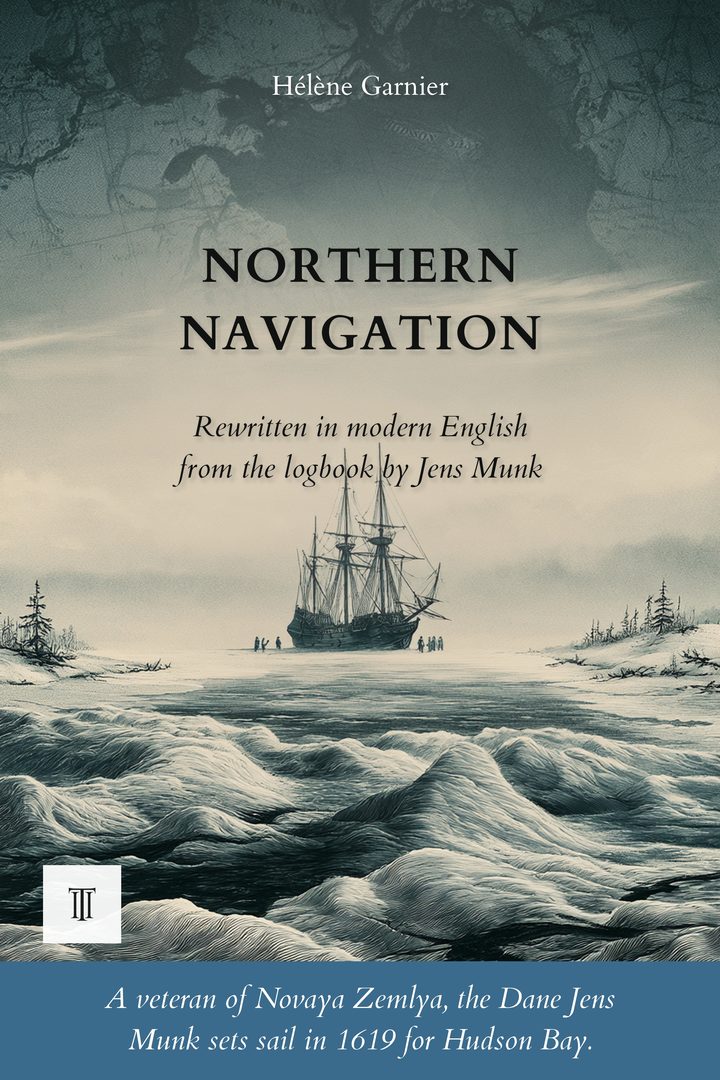
The voyage that made his name began on 9 May 1619. The king sent him to search for the Northwest Passage with the frigate Enhiørningen (the Unicorn) and the Lamprenen (the Lamprey). After Greenland and Davis Strait, he crossed Hudson Strait and reached the west coast of the bay in September, where he wintered at the mouth of the present-day Churchill River. Cold, hunger and scurvy killed almost the whole crew: according to the Dictionary of Canadian Biography, only three men remained in early June 1620. They brought the Lamprey back to Norway in September. Munk told the story of the expedition in Navigatio Septentrionalis, published in Copenhagen in 1624. The Dictionary notes that one cannot say with certainty that he was the first European on this site, as Thomas Button may have passed it in 1612 or 1613.
He married Katherine Adriansdatter; the couple had several children and divorced in 1623. After his return he planned to go back with settlers for the fur trade, but the plan was postponed, and he was too ill to leave again. He remained in the king's service: in 1623 he commanded ships in the North Atlantic; in 1624 he patrolled the North Sea against pirates; in 1625 he was named admiral and blockaded the mouth of the Weser during the Thirty Years' War. He also took part in the fighting of 1628 against Wallenstein's troops.
He died in Copenhagen in June 1628, at the age of forty-nine. The date varies by source: 24 June for Wikipedia, 28 June for the Store norske leksikon, while the Dictionary of Canadian Biography mentions only a burial on 3 July. Wikipedia says he probably died of wounds received in combat, but the Dictionary gives no cause. His autograph manuscript is kept in the University Library of Copenhagen. The journal was published in 1723, again by Peter Lauridsen in 1883, then in the English translation of C. C. A. Gosch (Hakluyt Society, 1897) and that of Walter Kenyon (Royal Ontario Museum, 1980).