Biography
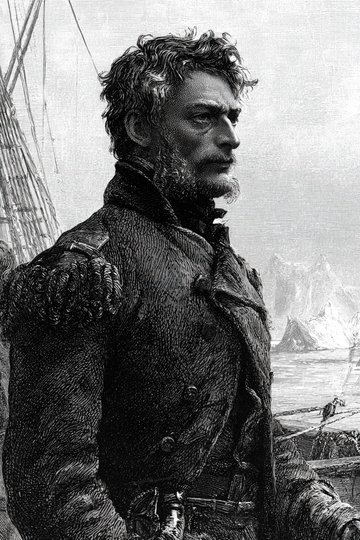
James Clark Ross was born on 15 April 1800, the third son of George Ross and Christian Clark. According to Wikipedia, it was at Finsbury Square, in London; the Dictionary of Canadian Biography leaves the place uncertain and suggests a possible birth in Scotland. His uncle, John Ross, a naval officer and Arctic explorer, played a decisive role: the boy entered the Royal Navy in April 1812, at the age of eleven, and served his first years under this uncle's direction during the last years of the Napoleonic Wars.
His training was completed at sea, in the northern ice. He took part in John Ross's expedition of 1818 in search of the North-West Passage, then in several voyages of William Edward Parry between 1819 and 1827, including the attempt on the North Pole in 1827. There he formed a lasting friendship with Francis Crozier and developed a taste for terrestrial magnetism and natural history. Appointed commander in 1827, he set out again with his uncle from 1829 to 1833; on 1 June 1831, a party under his orders located the North Magnetic Pole, on the Boothia Peninsula. He became a post-captain in 1834. From 1835 to about 1838, he carried out, with Edward Sabine and other scientists, a magnetic survey of the British Isles.
This reputation earned him, in 1839, the command of an expedition of "magnetic research and geographical discovery" in the southern seas. He sailed with the Erebus, while Crozier commanded the Terror. The two ships discovered Victoria Land, the Ross Sea and the great Ice Barrier, today the Ross Ice Shelf, and brought back the first serious magnetic maps of the region. They returned to England on 4 September 1843. Ross told the story of this voyage in A Voyage of Discovery and Research in the Southern and Antarctic Regions, during the Years 1839-43, published in London by John Murray in 1847. According to the Dictionary of Canadian Biography, he wrote the work during five years of family life at Aylesbury.
He received the gold medal of the Royal Geographical Society of London in 1842, then the great gold medal for exploration in 1843. He married Ann Coulman in October 1843 and accepted a knighthood in 1844; he was elected to the Royal Society in 1848. Released from a promise made to his wife never to leave again, he commanded the Enterprise and the Investigator in 1848-1849, sent in search of John Franklin. Blocked by the ice at Port Leopold, he found no trace of the missing men and wrongly judged Peel Sound impassable for them.
The couple had four children. Lady Ross died in 1857, and Ross died on 3 April 1862; Wikipedia places his death at Aston Abbotts, in Buckinghamshire, where he is buried, the Dictionary of Canadian Biography at Aylesbury. His papers, preserved from 1812 to 1860, are at the Scott Polar Research Institute of the University of Cambridge. His name remains attached to the Ross Sea, Ross Island and the Ross Ice Shelf, as well as to the Ross seal and Ross's gull.