Biography
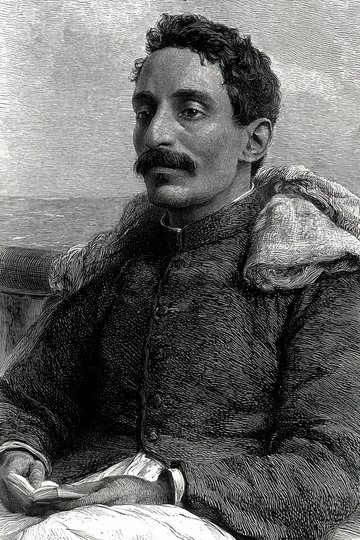
Indumadhab Mallick was born on 4 December 1869 in Guptipara, a village in the Hooghly district of Bengal. He belonged to a Baidya caste family, and his father was named Radhagobinda Mallick; according to the Bengali Wikipedia, the family's ancestral home was in Srikhanda, in the Bardhaman district. He pursued studies of unusual breadth: a master's degree in philosophy in 1891, one in physics in 1892 (the Bengali entry links biology to it), a law degree at the University of Calcutta in 1894, then a master's degree in botany in 1898, the first obtained by a student of Bangabasi College. The sources then give his doctorate in medicine as 1908 or 1909, depending on the entry.
His career began in teaching. From 1897, he was a lecturer at Bangabasi College in Calcutta, where he taught logic, philosophy, physics and chemistry. He left the institution in 1900 and first practiced as a lawyer, before turning to medicine. He was one of the first in India to practice autovaccination, and he worked to make the rules of hygiene, health and diet known to the public. He also collected precious manuscripts, and he is described as a social reformer.
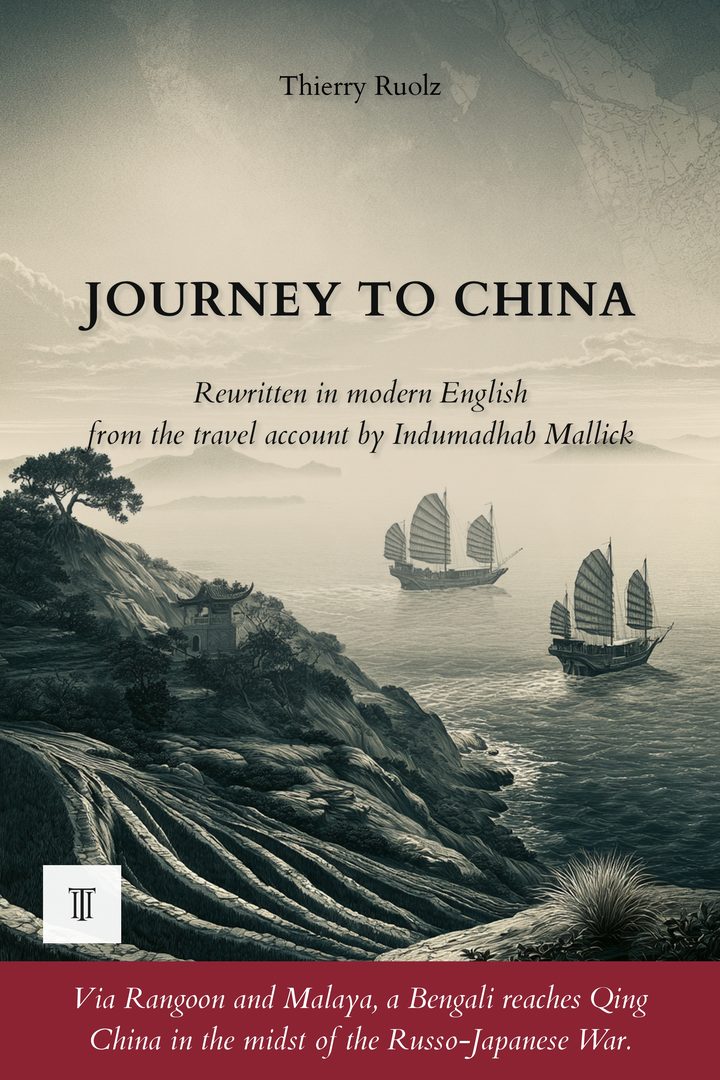
In 1904, he left for China, and most sources place the journey between 1904 and 1905. According to the researcher Narayan Sen, he left in February 1904, but the exact dates remain uncertain. He embarked at Calcutta and passed through Rangoon, in British Burma, then Penang and Port Swettenham, in British Malaya, Singapore and Hong Kong, to the Chinese coast. The journey coincided with the Russo-Japanese War. He drew from it the account Chin Bhraman ("Journey to China," in Bengali), published first in the Calcutta press and then in volume form in 1906. An article in the IIAS journal nevertheless dates the book to 1911, while its own bibliography gives 1906, and a reissue appeared in 2010 in Calcutta from Chhatim Books, edited by S. Sen.
Mallick was a man of networks and convictions. He privately supported the nationalist movement against British rule: when the revolutionary Ullaskar Dutta was gravely wounded at Deoghar while testing a bomb, he quietly treated him. He wrote a second travel account, on England, Bilat Bhraman, whose date the sources consulted do not give. In 1910, he devised a compartmented steam cooker that cooked rice, pulses and vegetables, and whose small size made it popular with bachelors and travelers. The appliance, sold under the name ICMIC cooker, became a commercial success.
He died in Calcutta on 8 May 1917, at the age of forty-seven. He left a son, Upendra Mallick, a poet and author for young readers, and he is the grandfather of the actor Ranjit Mallick. The sources consulted do not say where his papers are kept. His travel books, long forgotten outside the Bengali world, are today read as a rare view of East Asia by an Indian of the British Empire.