Biography
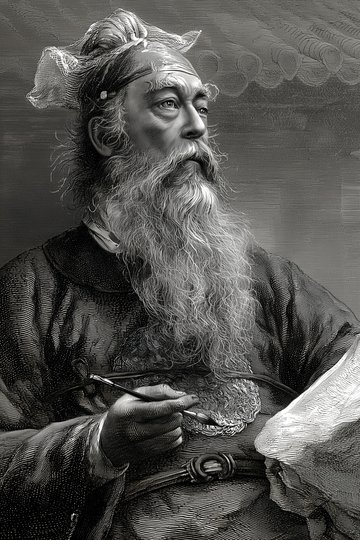
Gwon Beol was born in 1478 into a scholarly family of the Gwon clan of Andong, in the south-east of the kingdom of Joseon. His pen name, Chungjae, is the one under which his descendants and readers still know him. He passed the provincial examinations in 1496 and the higher civil service examination in 1507, entering official life just as the court emerged from the troubled years of King Yeonsangun.
He first made his name as a censor. In 1513, at the Office of the Inspector General, he firmly opposed the favours granted to an informer, and from then on he carried a reputation for integrity. He rose through the ranks: vice-minister of Rites in 1519, then magistrate of Samcheok on the east coast.
That same year, 1519, the Gimyo purge struck the reforming scholars gathered around Jo Gwang-jo. Close to the moderates who had tried to reconcile the factions, Gwon Beol was dismissed. He withdrew to his village of Yugok, in Bonghwa, and stayed there for nearly fifteen years, reading, receiving friends, cultivating what would later be called the wisdom of retirement. The Cheongamjeong pavilion, built near his home, is today a protected site.
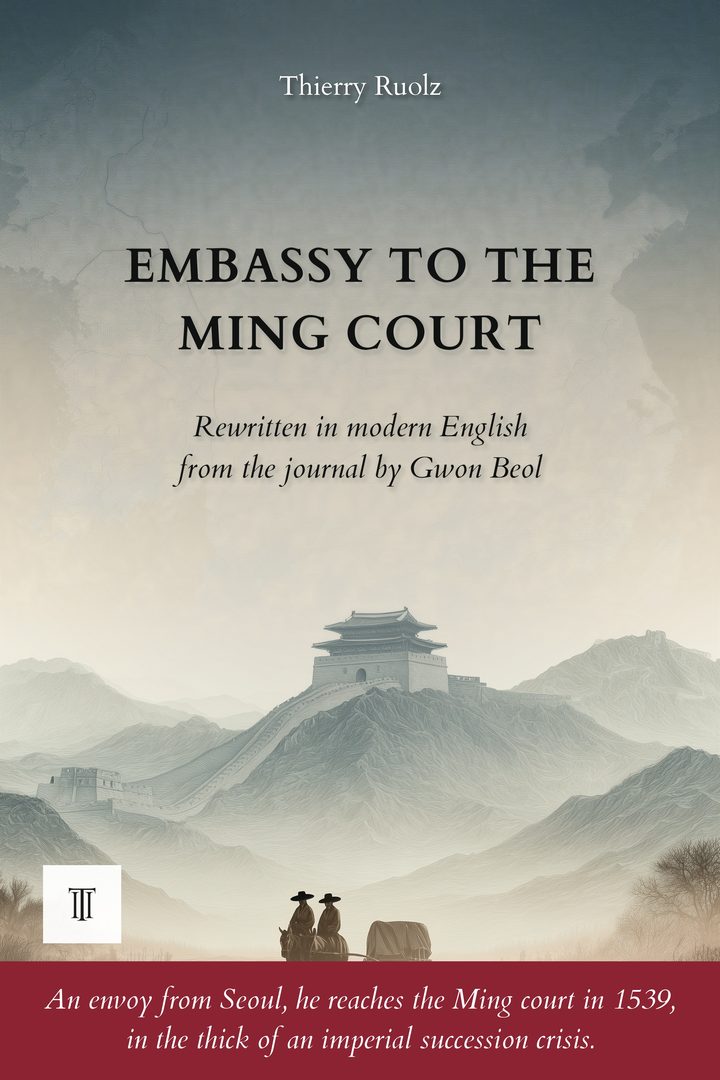
Recalled in 1533, he resumed a brilliant career: magistrate of Miryang, deputy governor of the capital, governor of Gyeongsang province. In 1539 he left for Beijing with the embassy charged with a matter that had soured relations between Seoul and the Ming court for more than a century: official Chinese texts named the founder of the dynasty, Yi Seong-gye, as the son of a man who had been his enemy. He returned in the second month of 1540 and kept on this journey the diary presented here. The correction would only be obtained decades later, and it was for this service that the court honoured him again in 1591.
In 1545, when the young King Myeongjong came to the throne, a new purge tore the court apart. Gwon Beol tried to plead for the ministers under accusation, but his remonstrances were softened by his colleagues before they were submitted. Two years later an insulting placard against the queen regent was found at the Yangjae post station; the affair became the pretext for a new wave of sentences. Gwon Beol was exiled, first to the south, then ever further north, as far as Sakju near the Chinese border. He died there in 1548.
Rehabilitated in 1567, he received posthumously the highest offices of the State Council, up to that of Chief State Councillor in 1591, and the posthumous name Chungjeong, "loyal and upright". Since 1588 the shrine of the Samgye academy has honoured him. His writings are collected in the Chungjae jip, and his service diaries form one of the richest official's journals of his century. He is said never to have parted with the Geunsarok, the anthology of Neo-Confucian thought that he read again and again.