Biography
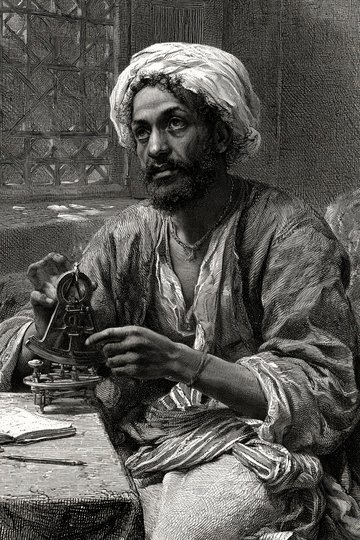
Carsten Niebuhr was born on 17 March 1733 at Lüdingworth, in the Hadeln region, today part of Cuxhaven. He came from a family of well-off farmers long established there; his father died in 1749. He received his first schooling in the Latin schools of the region, then set out to become a surveyor. He entered the University of Göttingen, where he studied mathematics, cartography and navigational astronomy, notably under Tobias Mayer. Sources differ on the exact date of his arrival (around 1757) and on the Latin school he attended (Altenbruch or Otterndorf).
In 1760 he entered Danish service as a lieutenant engineer. The orientalist Johann David Michaelis, who sought to test biblical accounts against the reality of the Near East, recommended him for a royal expedition to Arabia. Niebuhr became its cartographer. After his return he was made captain engineer in 1768, then settled in 1778 at Meldorf, in southern Holstein, where he served as district clerk (Landschreiber) and received the title of councillor of justice.
The expedition left Copenhagen in 1761 with five men. It passed through Constantinople, Egypt, Sinai and the Red Sea, then reached Yemen. Von Haven, Forsskål, Baurenfeind, Berggren and Cramer died of illness between 1763 and 1764, and Niebuhr was left alone. He reached Bombay, then the Persian Gulf, Shiraz and Persepolis, where he copied cuneiform inscriptions that Georg Friedrich Grotefend would later use. He returned by way of Mesopotamia, Aleppo, Cyprus and Palestine, and reached Copenhagen again in November 1767. The text of the "Bemerkungen zu Aleppo und auf der Reise von dieser Stadt nach Zypern" takes up the 1766 stage; it appeared in 1787 in the Deutsches Museum, a journal in which Niebuhr published several articles.
Niebuhr made his journey known through the Beschreibung von Arabien (Copenhagen, 1772), then through the Reisebeschreibung nach Arabien und andern umliegenden Ländern, whose first two volumes appeared in 1774 and 1778. The third, devoted to Syria and Palestine, was published only in 1837, posthumously. He also edited the works of his companion Forsskål (1775-1776). In 1773 he married, in Copenhagen, Christiane Sophie Blumenberg, daughter of a royal physician; their son would be the historian Barthold Georg Niebuhr. He associated with the poet Heinrich Christian Boie and, in Copenhagen, Friedrich Münter. His maps of Yemen and the Red Sea remained references for a long time. French and Dutch translations appeared in his lifetime, and an abridged English version in Edinburgh in 1792.
Honored by several academies, including that of Sweden (1776) and the Académie des inscriptions et belles-lettres (1802, as a foreign correspondent), he received the title of state councillor (1806 or 1808 depending on the source) and the Order of the Dannebrog in 1809. He died at Meldorf on 26 April 1815 and lies in the town's cathedral. Part of his travel manuscripts is kept in the university library of Göttingen; his measuring instruments are displayed in the Dithmarschen regional museum at Meldorf. Modern works include the proceedings of the conference directed by Stephan Conermann and Josef Wiesehöfer (2002) and Lawrence J. Baack's Undying Curiosity (2014).