Biography
Carl Linnaeus was born on 23 May 1707 at Råshult, in the parish of Stenbrohult in Småland, in southern Sweden. His father, Nils Linnaeus, was a Lutheran pastor and amateur botanist; his mother was Christina Brodersonia. He attended school in Växjö from 1717, entered the University of Lund in 1727, then moved the following year to Uppsala, where he studied medicine, a discipline in which botany then held an important place. By 1730 he was giving botany lessons himself.
His scientific career began with field missions. In 1732, the Royal Society of Sciences of Uppsala funded his exploration of Lapland, which lasted about five months and gave him the material for the Flora Lapponica, published in 1737. In 1734 he led an expedition to Dalarna with students. In 1735 he left for the Netherlands, where he obtained his medical doctorate in a matter of days at Harderwijk, on 24 June. There he published the first edition of the Systema Naturae, then worked as a physician and curator of George Clifford's garden at Hartekamp, which produced the Hortus Cliffortianus in 1738.
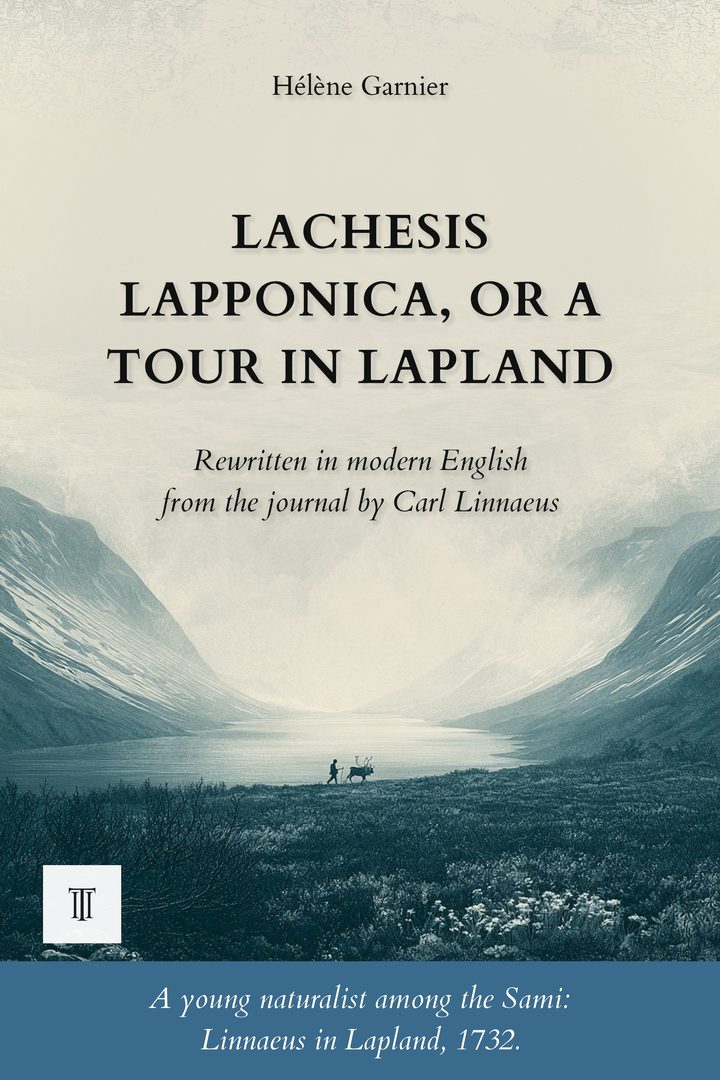
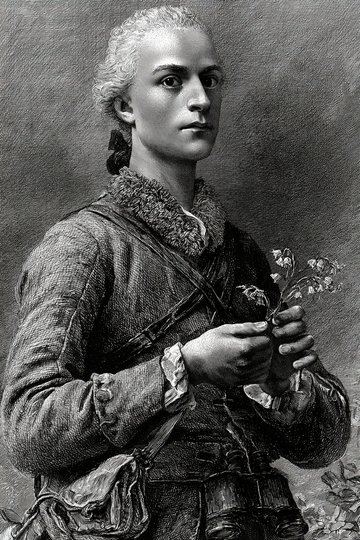
The journey of 1732 holds a place apart in this life. The young student, aged twenty-four, left Uppsala alone on 12 May, followed the coast of the Gulf of Bothnia, reached the mountains of Lapland, lived among the Sami, then returned through Finland on 10 October. From it he drew a travel journal, which remained in manuscript during its author's lifetime. It was first published in London in 1811, in an English translation by James Edward Smith, under the title Lachesis Lapponica, or a Tour in Lapland.
Back in Sweden in 1738, Linné married Sara Elisabeth Moræa in 1739 and practised as a physician in Stockholm. In 1741 he obtained the chair of medicine at Uppsala, then that of botany, which he held until his death. He became physician to the royal family in 1747 and a knight of the Order of the Polar Star in 1753. That same year saw the publication of Species Plantarum, the starting point of modern botanical nomenclature, which describes more than 7,300 species. He called his most promising students his "apostles" and sent them to collect around the world. His classification of man among the primates shocked theologians of his day, and his classifications of peoples are criticized today.
Ennobled in 1761, he took the name Carl von Linné in 1762. He owned estates near Uppsala, including Hammarby, and died in Uppsala on 10 January 1778 after several strokes. He is buried in the city's cathedral. After the death of his son in 1783, his widow sold the library, the manuscripts and the collections, more than 14,000 plants and 3,000 insects, to the young James Edward Smith, who founded the Linnean Society of London in 1788. It still preserves them today. The Lapland journal is among the many modern editions of his travels, including one in French under the title Voyage en Laponie.