Biography
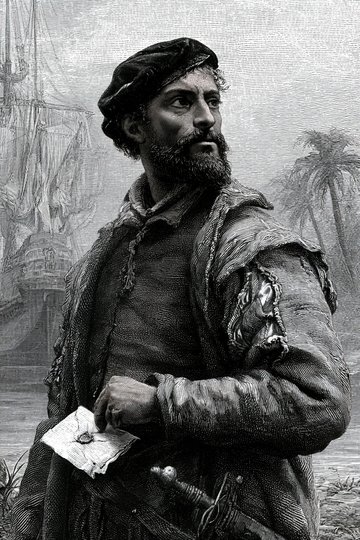
Álvar Núñez Cabeza de Vaca was born in Jerez de la Frontera around 1490; documents found in 1947 by the historian Sancho de Sopranis suggest 1492 or 1495, while the Encyclopaedia Britannica gives "around 1490". He was the son of Francisco de Vera and of Teresa Cabeza de Vaca, whose name he bore, and the grandson of Pedro de Vera, conqueror of the Canary Islands. Orphaned young, he was raised by an aunt, Beatriz de Figueroa, in a family of modest means.
In 1511 he enlisted in the troops of the Holy League in Italy, fought at Ravenna in 1512 and served as standard-bearer at Gaeta. Back in Spain, he entered the service of the ducal house of Medina Sidonia in Seville in 1513. During the revolt of the Comunidades, he helped to retake the Alcázar of Seville in 1520 and said he had been present at Tordesillas and then at Villalar, in 1521, as well as in Navarre against the French; these last services are known only from his own statements.
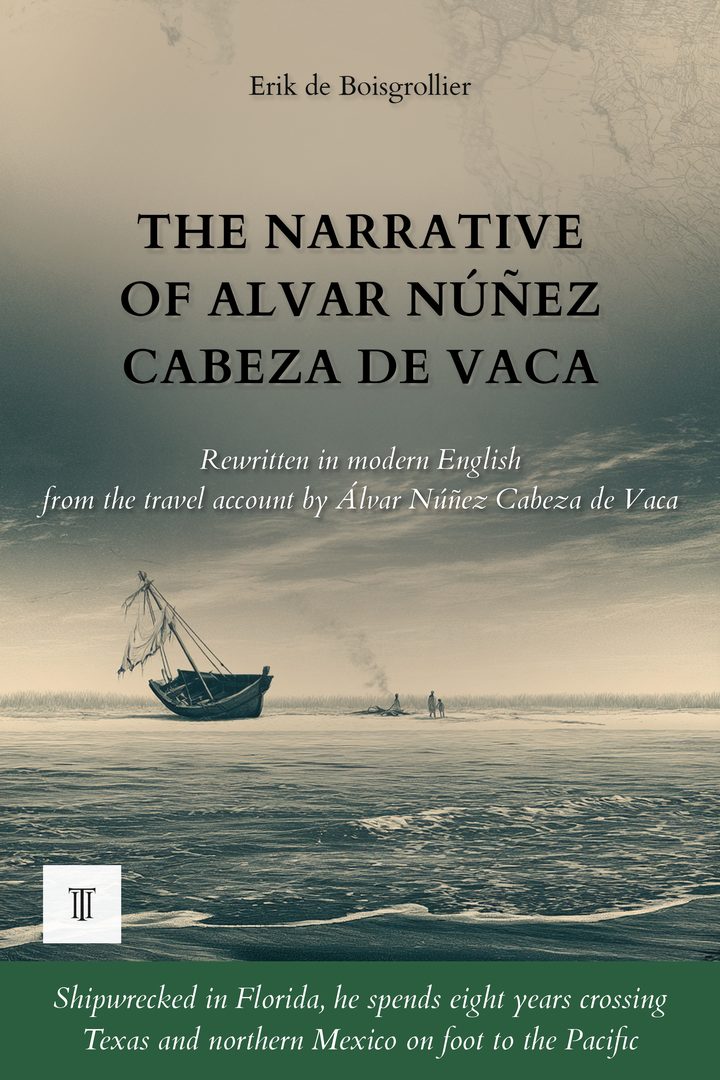
On 17 June 1527 he left Sanlúcar de Barrameda as treasurer of the expedition of Pánfilo de Narváez, charged with conquering Florida. After the landing near Tampa Bay in 1528, the failure of the march towards Apalache and the departure on makeshift boats, he was shipwrecked in November 1528 on an island he named Malhado, probably Galveston. There he lived through years of slavery and trade among the Indians, then crossed the continent as a healer with Andrés Dorantes, Alonso del Castillo and Estevanico, as far as Mexico City, reached on 23 July 1536. Back in Lisbon on 9 August 1537, he published in Zamora in 1542 La relación que dio Álvar Núñez Cabeça de Vaca, since known as Naufragios.
On 18 May 1540 the Crown entrusted him with the governorship of the Río de la Plata. He landed on the island of Santa Catarina in 1541 and reached Asunción overland in March 1542, passing by the Iguaçu Falls, which his Comentarios describe. He campaigned against the Guaycurús, but his expeditions towards Peru failed; a faction led by the contador Felipe de Cáceres arrested him on 25 April 1544 and sent him back to Spain in 1545, while Domingo Martínez de Irala took over the government. In 1555 a new edition of his account appeared in Valladolid, together with the Comentarios written by his secretary Pedro Hernández on the Paraguayan years.
On 20 March 1551 the Council of the Indies sentenced him to the loss of his offices and to five years of service in Oran, a penalty lifted in 1552. A royal decree of 1556 granted him relief for his illness; he was dead by 1559 at the latest, in Valladolid according to the Inca Garcilaso, in Jerez according to Rolena Adorno and Patrick Charles Pautz, in Seville according to the Britannica. His figure inspired the painter Tom Lea, the novelist Abel Posse and the film Cabeza de Vaca by Nicolás Echevarría (1991).