Biography
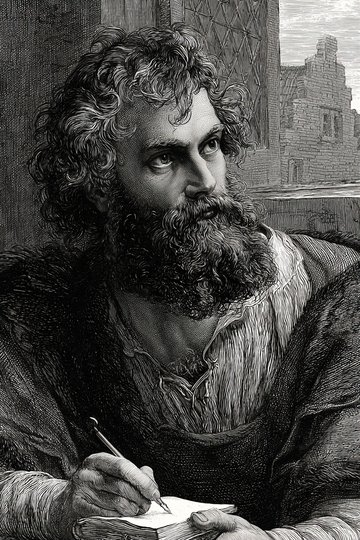
Albrecht Dürer was born in Nuremberg on 21 May 1471. His father, a goldsmith of the same name, had come to settle there in 1455 from Ajtós, near Gyula, in Hungary. The young Albrecht first learned the trade in his father's workshop, where practice with the burin prepared him for engraving. On 30 November 1486 he entered the workshop of the painter Michael Wolgemut, with whom he remained for three years. His godfather, Anton Koberger, had become a printer and publisher in the very year of his birth.
Back in Nuremberg, he married Agnes Frey on 7 July 1494. The couple had no surviving children, and the image of an unhappy marriage rests mainly on the letters of Dürer and of his friend Pirckheimer, which calls for caution. A first stay in Italy around 1494 and 1495 is disputed: the family chronicle does not mention it and several scholars reject it. He did, however, build a career as a painter, draughtsman and engraver. From 1512, Emperor Maximilian I became his great patron, and his entry into imperial service is attested as early as 1511.
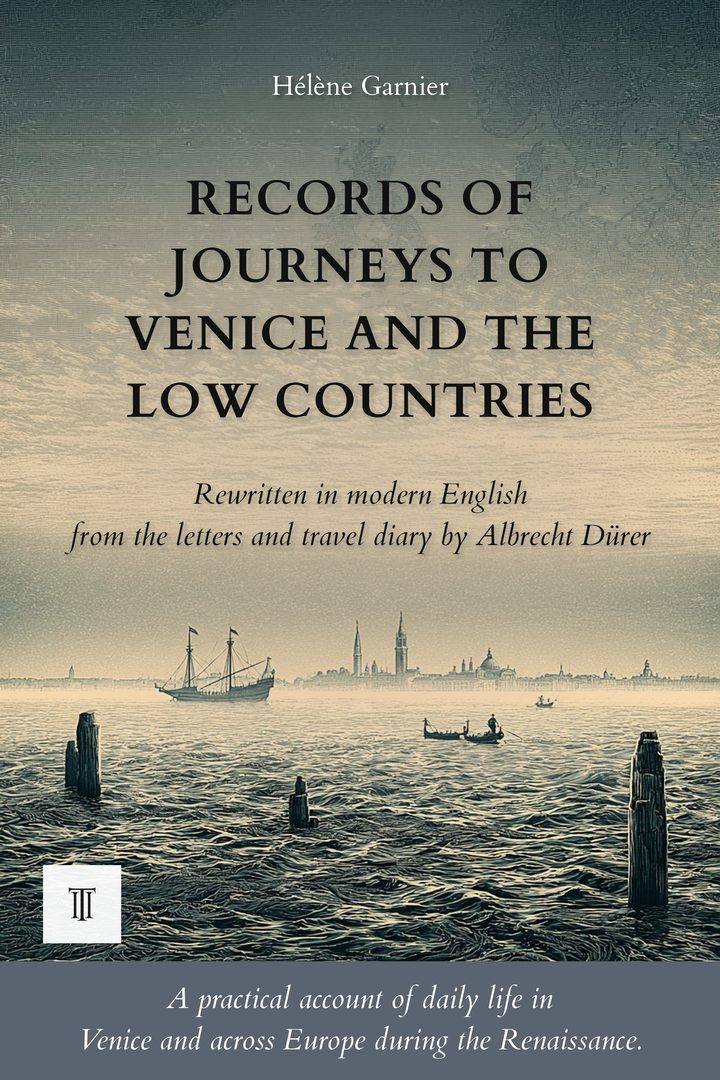
The Venice journey, by contrast, is well documented. Dürer was there in 1505 according to some accounts, then certainly from the beginning of 1506, and stayed until the spring of 1507. There he painted for the colony of German merchants the Feast of the Rosary, intended for the church of San Bartolomeo, and there he admired Giovanni Bellini. He wrote to his friend the humanist patrician Willibald Pirckheimer, whom he had met in 1495, lively letters that form the first half of the book, published here under its original title, Briefe aus Venedig. From July 1520 to July 1521, he then travelled to the Low Countries with his wife and their maid. There he kept a day-by-day record of his expenses, his portraits and the prints sold or given away, under the title Tagebuch der Reise in die Niederlande. He attended the coronation of Charles V at Aachen, sought to have his imperial pension renewed, met Erasmus, whose portrait he drew, and saw the regent Margaret of Austria refuse a portrait of Maximilian.
His circle included merchants, humanists and painters, and his religious thought remains debated. He read Luther from 1520 and wished to portray him, but it is not known whether he ever left the Catholic Church. In 1525 he published an Instruction on the Art of Measurement, the first mathematical treatise in German intended for adults, then a work on the fortification of cities in 1527. The Treatise on the Proportions of the Human Body appeared after his death.
Dürer died in Nuremberg on 6 April 1528, aged 56, and lies in the Johannisfriedhof. His estate was valued at 6,874 florins. The cause of his death remains uncertain: pleurisy, perhaps linked to pneumonia, has been suggested, without possible confirmation. The Venice letters and the Dutch diary are read today in modern editions, including that of Roger Fry, published in 1913 in English under the title Records of Journeys to Venice and the Low Countries. The place where the manuscripts are kept could not be established in the sources consulted.