Biography
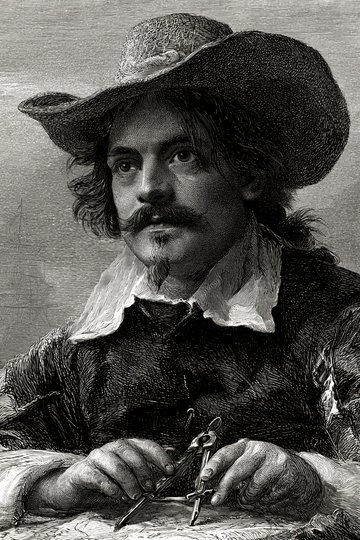
Abel Janszoon Tasman was probably born in 1602 or 1603 in Lutjegast, a village in the province of Groningen, in the United Provinces. Very little is known of his youth, except that he could read and write when he signed on as a sailor. The first reliable traces of his life date from the early 1630s. A first wife, Claesgie Heyndrix, gave him a daughter, Claesjen. Widowed, he remarried in Amsterdam to Jannetje Tjaers, aged twenty-one: the Dictionary of New Zealand Biography probably places the wedding on 11 January 1632, other sources on 27 December 1631.
In 1633 he sailed from Texel for Batavia in the service of the East India Company. By 1634 he commanded the Mocha and cruised the Moluccas. Back in Amsterdam in 1637, he signed a new ten-year contract the following year and took his wife to Batavia. In 1639 he seconded Matthijs Quast on an expedition to the North Pacific in search of legendary islands reputed to be rich, which touched Formosa and the trading post of Deshima in Japan without finding what it sought. Trading voyages to Japan and Cambodia followed.
On 14 August 1642, on the orders of the governor-general Antonio van Diemen, he left Batavia with the Heemskerck and the Zeehaen to look for the unknown Southland. After a stopover at Mauritius, on 24 November he sighted the coast he named Van Diemen's Land, our Tasmania, then on 13 December New Zealand, where four of his men were killed in the bay he called Murderers' Bay. He then reached Tonga and Fiji, sailed along New Guinea and returned to Batavia on 15 June 1643. From this voyage came his journal, the Journael ofte beschrijvinge door mij Abel Jansz Tasman, van een reijse gedaen van de Stadt Batavia in Oostindien, tot de ontdeckinge van het onbekende Zuijtlandt, which remained in manuscript until its complete publication in Amsterdam in 1898.
The Company, having found neither riches nor a trade route, sent him out again in 1644 to look for a passage to the south: he charted a large part of the north coast of Australia but missed the Torres Strait, and the directors concluded that a more persistent explorer would be needed in future. Appointed to the Council of Justice of Batavia on 2 November 1644, in 1648 he commanded a fleet of eight ships sent towards Manila to intercept Spanish silver, without success. During this campaign he had a sailor hanged without trial; back in Batavia in January 1649, he was convicted, suspended and made to compensate the family. His rank was restored to him on 5 January 1651.
Having left the service around 1653, he lived in Batavia as a landowner and part-owner of a small cargo vessel. In his will of April 1657 he described himself as ill but not bedridden and left twenty-five guilders to the poor of Lutjegast. He died in Batavia on 10 October 1659. The signed journal of 1642 is kept in the Nationaal Archief in The Hague; another copy, the Huydecoper journal, is held by the Mitchell Library of the State Library of New South Wales in Sydney. Tasmania, the Tasman Sea and Abel Tasman National Park, in New Zealand, bear his name.