Biography
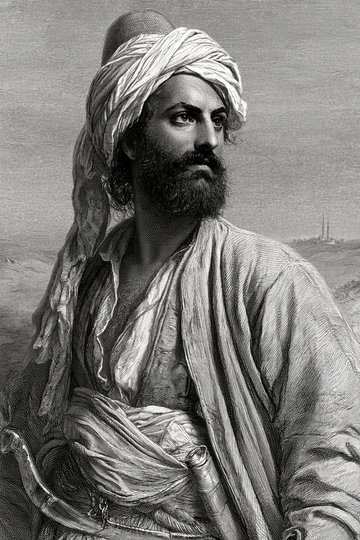
Ludovico di Varthema (or de Varthema, Lodovico) calls himself a Bolognese, and tradition places his birth around 1470. The exact dates of his birth remain unknown, however, and according to the Dizionario Biografico degli Italiani, no family of that name has been found in Bologna. His father, according to the Itinerario itself, was a physician. Almost everything we know about him comes from his own account, which calls for caution. His training is poorly documented: he was an adult in 1500, had solid experience of arms and knew Rome well. Service with the Duke of Urbino is only a hypothesis without proof.
His career before the great departure thus largely escapes the sources. It can be read between the lines of the account: a man of war, curious, of modest means, drawn to novelty and to the glory promised by the discovery of distant countries. After his return, he appears as an intimate of Cardinal Raffaele Riario, who calls him "familiaris noster delectissimus" in the privilege granted to the book in 1510.
The journey begins around 1500 or 1502, depending on the reading, from Venice. He reaches Egypt, then Syria. At Damascus, he enlists in the Mamluk garrison under the name Yunus, which allows him to accompany the pilgrimage caravan to Medina and Mecca in the spring of 1503. Arrested next at Aden as a spy, he travels through Yemen, then passes into Persia and India, and goes on, by his own account, to Ceylon, Malacca, Sumatra, Java, Borneo and the Spice Islands. Some scholars, among them Barozzi, doubt that he reached Banda and the Moluccas. Having gone over to the Portuguese at Cannanore, he was knighted after the assault on Ponnani in 1507. He left India on 6 December 1507, rounded the Cape of Good Hope and arrived in Lisbon in July 1508, where King Manuel I confirmed his title. The Itinerario de Ludovico de Varthema Bolognese appeared in Rome in 1510, from the presses of Étienne Guillery and Ercole Nani. It then went through very many reprints and translations, notably a Latin version published in Milan in 1511.
His network remained chiefly Roman and Venetian. On 6 November 1508, according to the registers cited by Sanuto, the Venetian Collegio received him and paid him 25 ducats. His reliability divides readers: Richard Burton judges his description of the pilgrimage accurate, Carsten Niebuhr confirms that of Yemen, while Garcia da Orta, Lafitau, Tiele or Schefer suspect him of lying in part. He is in any case credited with some of the first European descriptions of nutmeg and clove. He left no other known writing.
The place and date of his death are unknown. A privilege of 10 June 1517 already speaks of him as dead, without heirs. The only known manuscript of the Itinerario is held in the Biblioteca nazionale in Florence (Landau-Finaly collection, no. 9) and is said to have belonged to Vittoria Colonna. Among modern editions, those of George Percy Badger (Hakluyt Society, 1863, translated by John Winter Jones), Charles Schefer (Paris, 1888), Paolo Giudici (Milan, 1928), Enrico Musacchio (Bologna, 1991) and Paul Teyssier (Paris, 2004) stand out.