Biography
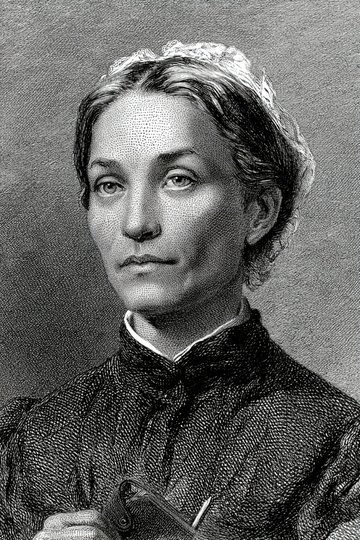
Ida Laura Reyer was born in Vienna on 14 October 1797, the third child of a well-off family of merchants and textile entrepreneurs. Her father, Aloys Reyer, died when she was nine. Raised at first like her brothers, she was then brought by her mother toward a more conventional role. A tutor, the poet Emil Trimmel, had her read travel narratives; he asked for her hand and had to leave the house. In 1820 she married Mark Anton Pfeiffer, a lawyer from Lemberg (now Lviv), considerably older than she. The couple settled in Galicia, where the husband lost his clientele after attacking corrupt officials. Ida knew hardship there; she left Lemberg in 1833 and settled in Vienna with her two sons, whose education she managed alone.
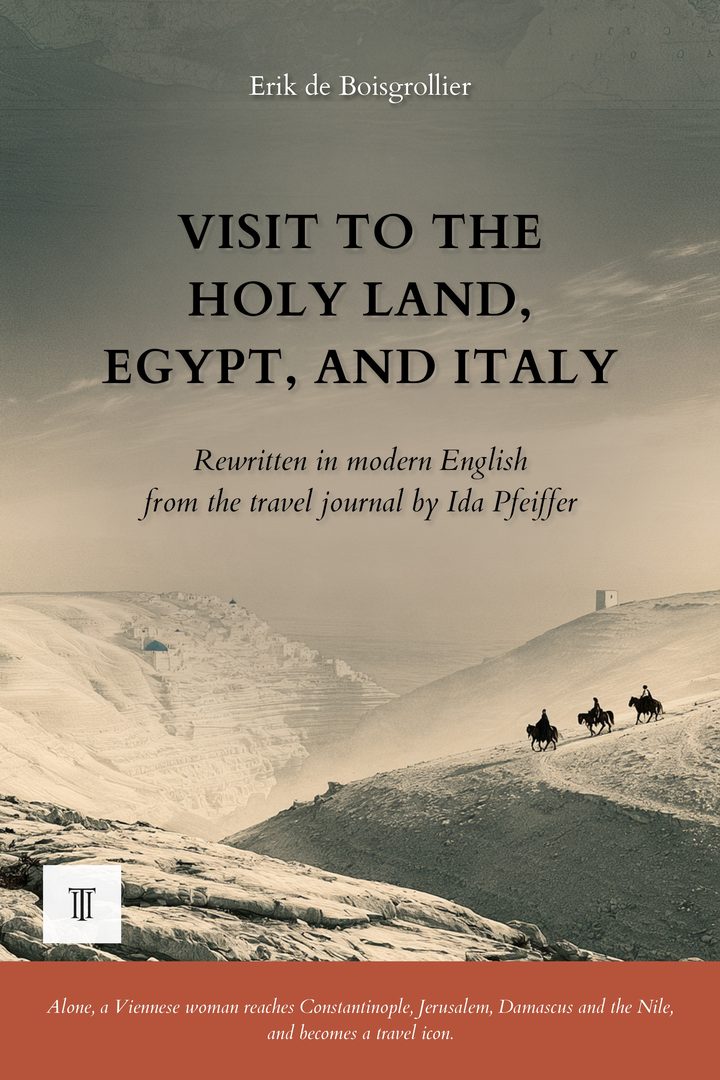
When her sons had grown up, she fulfilled a childhood dream. On 22 March 1842, at forty-four, she set off alone for the Holy Land, by way of Constantinople, Beirut, Jerusalem, Damascus, Egypt and Italy, and returned at the end of the year. From her journal she made her first book, Reise einer Wienerin in das heilige Land, published in Vienna without the author's name; sources give 1843 or 1844 for this first edition. Its success encouraged her: she visited Iceland and Scandinavia in 1845, a book published in Pest in 1846.
Two journeys round the world followed. The first (1846-1848) took her to Brazil, Chile, Tahiti, China, India and Persia; the second (1851-1855) to southern Africa, Indonesia (she crossed part of Borneo and visited Sumatra), then California, Ecuador and Peru, the United States and Canada. She brought back Eine Frauenfahrt um die Welt (1850) and Meine zweite Weltreise (1856), published by Carl Gerold in Vienna and quickly translated, notably into French by Hachette.
She travelled at her own expense, with few means, and financed her departures by selling plants, insects, shells and ethnographic objects to museums and naturalists in Vienna and elsewhere. Several species bear her name. The geographical societies of Berlin and Paris admitted her as an honorary member, and the King of Prussia awarded her a medal for science and art in 1856. Her last journey (1856-1858), to Mauritius and Madagascar, ended badly: caught up in a plot against Queen Ranavalona, she was expelled from the island, fell ill and returned to Europe exhausted.
She died in Vienna in October 1858, on the 27th according to most notices (the Wien Geschichte Wiki also mentions September in its text). The symptoms of the malaria contracted during her travels are generally blamed. Her sons published her Madagascar account posthumously in 1861. Buried first in the St. Marx cemetery, she was moved in 1892 to the Zentralfriedhof, the first woman to receive an honorary grave there. More than four thousand pieces from her collections are kept at the Natural History Museum in Vienna, and the Wienbibliothek holds about twenty of her letters. A street in Vienna bears her name, and her accounts are regularly reissued in German.