Biography
Almost nothing is known of Henry Hudson's origins. Historians place his birth between 1560 and 1570, perhaps in London, and a kinship has been suggested, without decisive proof, with other Hudsons connected to the Muscovy Company, the London company that traded with Russia. According to The Canadian Encyclopedia, he married a woman named Katherine, with whom he had three sons, Oliver, John and Richard, and the family lived in the parish of St Katharine, near the Tower of London. The Dictionary of Canadian Biography notes that he emerges in the sources in 1607, already in the prime of life and with a reputation beyond England.
His known career comes down to four campaigns. In 1607, the Muscovy Company sent him aboard the Hopewell to seek a route to China by way of the Pole: he followed the coast of Greenland, reached the waters of Spitsbergen beyond the 80th parallel and turned back, blocked by the ice. In 1608, on the same ship, he attempted the Northeast Passage and could not get beyond Novaya Zemlya. In 1609, the Dutch East India Company entrusted him with the Halve Maen; when the crew refused to continue through the ice north of Norway, he sailed for America, explored the coast and went up the river that now bears his name as far as the neighbourhood of Albany. On his return, detained at Dartmouth, he was forbidden by the Privy Council to serve a foreign power.
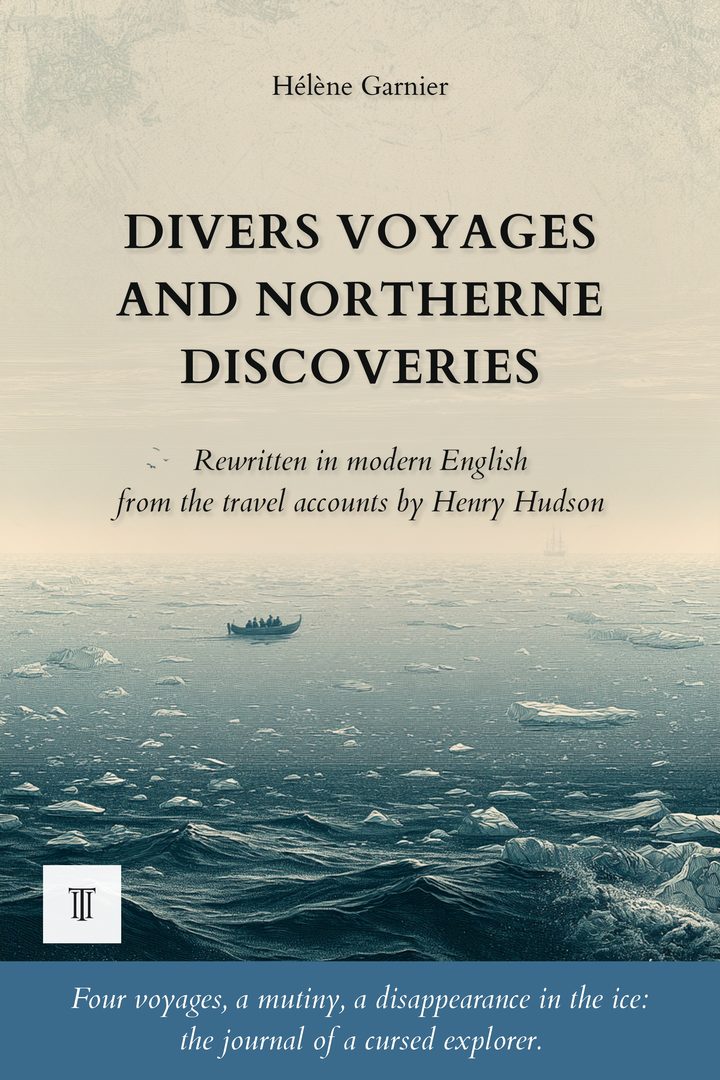
The last voyage left London on 17 April 1610 aboard the Discovery, financed by Sir Thomas Smith, Sir Dudley Digges, Sir John Wolstenholme and other merchants. Hudson passed through the strait and entered the bay, both of which bear his name, wintered in the south, probably near the Rupert River, then saw the crew, led by Henry Greene and William Wilson with Robert Juet, rise against him in June 1611. The accounts of these voyages, the journals of Hudson and Juet, the narrative of Abacuk Pricket and the notes of Thomas Wydowse, were gathered by Samuel Purchas in Hakluytus Posthumus, or Purchas his Pilgrimes, in London in 1625, under the title Divers Voyages and Northerne Discoveries of that worthy irrecoverable Discoverer, Master Henry Hudson. As early as 1612, the Amsterdam publisher Hessel Gerritsz had printed the first reports of his discoveries, with the first map of the bay.
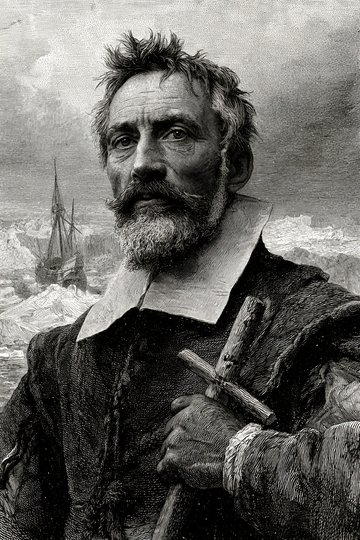
Hudson worked in the service of rival merchant networks, English and Dutch, and no writings of his are known other than his sea journals. No authentic portrait survives: the images in circulation were all made after his death. His 1609 voyage opened the way to the Dutch fur trade and to New Netherland.
Set adrift in a shallop with his son John, the carpenter Philip Staffe and a few sick or loyal men, Hudson vanished without a trace; the search made by Thomas Button in 1612 was fruitless. Only eight men brought the Discovery back as far as Ireland. Tried for murder by the Admiralty Court in 1618, the survivors were acquitted. The documents recounting his career were collected by G. M. Asher for the Hakluyt Society in 1860 (Henry Hudson the Navigator). The river, the strait and the bay that bear the name Hudson keep his memory alive.