Biography
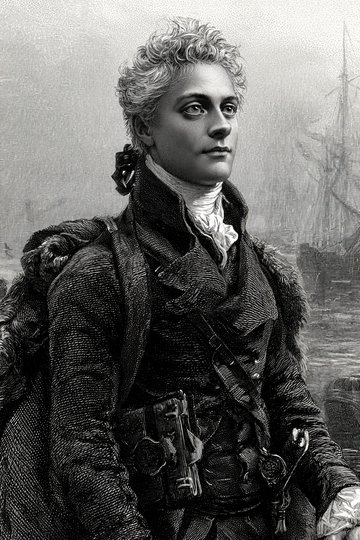
Jean-Baptiste Barthélemy de Lesseps was born in Sète on 27 January 1766, at the home of his maternal grandparents. His father, Martin de Lesseps, was a French consular agent posted to Hamburg and then Saint Petersburg; his mother was Anna Caizergues. The boy grew up with his father in those two cities and, at twelve, was said to speak Russian, German, Spanish and French. He spent five years of study at the Jesuit college in Versailles, then returned to Saint Petersburg in 1783.
He was appointed vice-consul at Kronstadt, succeeding his father. In 1785 the French ambassador sent him to Versailles with dispatches. La Pérouse, who was looking for an interpreter for the calls on Russian territory, asked for him for his expedition, and Lesseps kept his rank of vice-consul. He embarked on the Astrolabe, commanded by Fleuriot de Langle. The frigates left Brest on 1 August 1785.
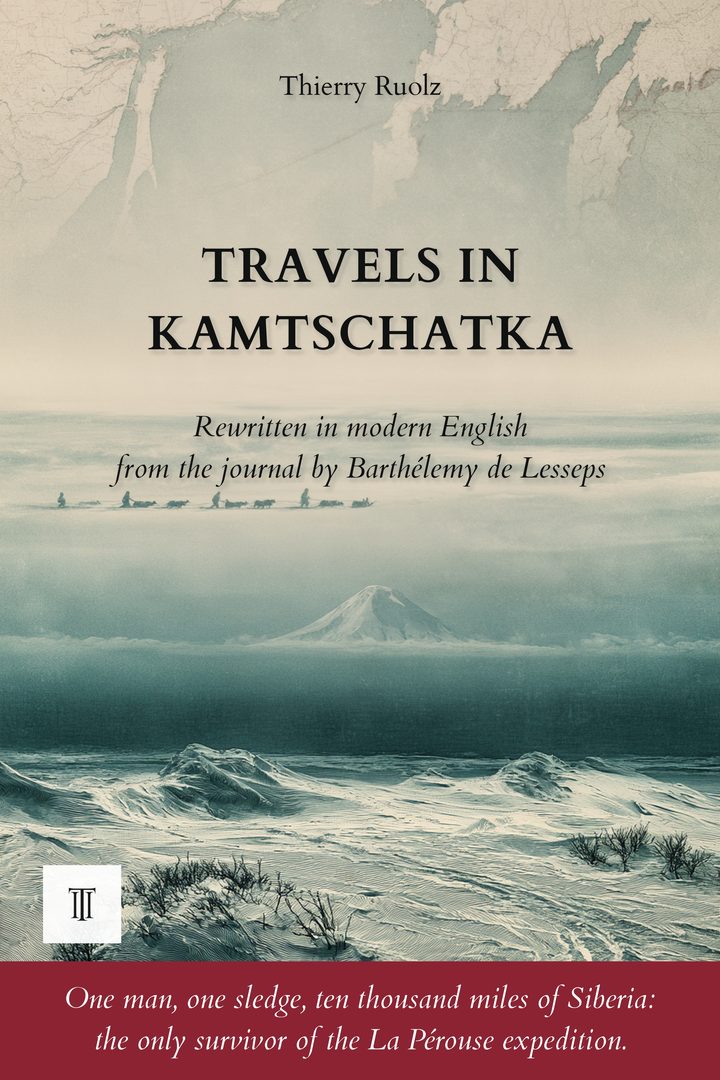
At Kamchatka, La Pérouse charged him with carrying the expedition's journals and charts back to France overland. He left Petropavlovsk in the autumn of 1787 (on 7 October according to English-language Wikipedia, on the 17th according to the Linda Hall Library), reached Okhotsk in May 1788, then Irkutsk, Saint Petersburg (22 September 1788) and Paris, where he arrived on 17 October 1788. He was twenty-two. The two frigates vanished after leaving Botany Bay, and he remained one of the few members of the expedition to return to Europe. His account appeared in Paris, at the Imprimerie royale, in 1790, in two octavo volumes, under the title Journal historique du voyage de M. de Lesseps. An English translation, Travels in Kamtschatka, came out in London the same year.
The Revolution prevented him from taking up his post at Kronstadt. He was appointed consul general at Saint Petersburg in 1792, in place of his father, but the war with Russia delayed his installation until 1801. On 16 September 1793 he married, at Versailles, Rose Catherine Cécile Lucie Ruffin, daughter of Pierre Ruffin, secretary of the French legation at Constantinople. In 1794 he became his father-in-law's deputy in that city. After the Egyptian expedition, rising hostility toward the French led to his imprisonment with his family in the Seven Towers; they were freed in August 1801. He then organised the consulate general at Saint Petersburg. After Austerlitz he joined Talleyrand in Poland, then the rupture of 1812 brought him back to France by way of Moscow, where he was for a time intendant in Napoleon's service, before reaching Paris in early 1813. He was the uncle of Ferdinand de Lesseps, the future promoter of the Suez Canal.
Under the Restoration he was appointed consul general at Lisbon, a post he held until his death in that city. The exact date is given differently: 6 April 1834 according to the Deutsche Biographie, 6 or 26 April according to English-language Wikipedia. The sources consulted mention no personal archive. His Journal is one of the few direct accounts of the crossing of eastern Siberia in the late eighteenth century; it was taken up in Le messager de Lapérouse (Catherine Marion and Grégoire Foussé, Pôles d'images, 2004), and studied by Guy Vassal in La Boussole (2006) and by Élisabeth Rivoire in Mission en Sibérie (2020).