Biography
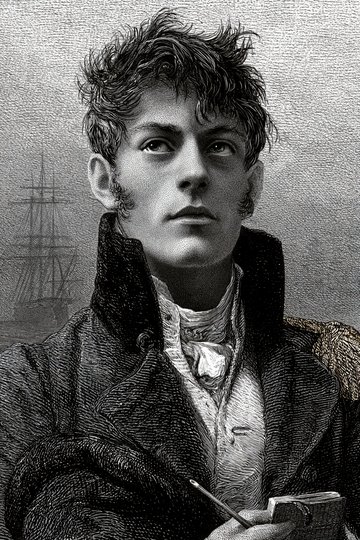
Quirijn Maurits Rudolph Ver Huell was born on 11 September 1787 at Zutphen, according to the Dutch biographical encyclopedia reproduced by the DBNL and according to Wikipedia, which gives as his parents Everhart Alexander Ver Huell, burgomaster of Doesburg, and Anna Aleida Staring. He was the nephew of Admiral Carel Hendrik Ver Huell, a leading figure of the Batavian navy. He entered sea service around the age of fifteen, in 1802, as a cadet, first aboard the ship Hersteller.
His career followed the successive regimes of his country. In July 1805 he took part in the crossing from Dunkirk to Ambleteuse, which earned him promotion. An officer of the navy of the Kingdom of Holland, he passed after 1810 into the French imperial navy as aide-de-camp to his uncle, then joined the restored Dutch navy in 1813. From 1815 to 1819 he served in the East Indies: he was at Banda in 1817, took part in the suppression of the Saparua and Ambon revolt, then lost the ship Admiraal Evertsen near Diego Garcia in 1819. Acquitted by the court martial, he received no further command at sea. He then worked at the Rotterdam arsenal, became a captain in 1826, director of the navy in the department of the Meuse in 1839, and retired in 1850 with the rank of rear admiral.
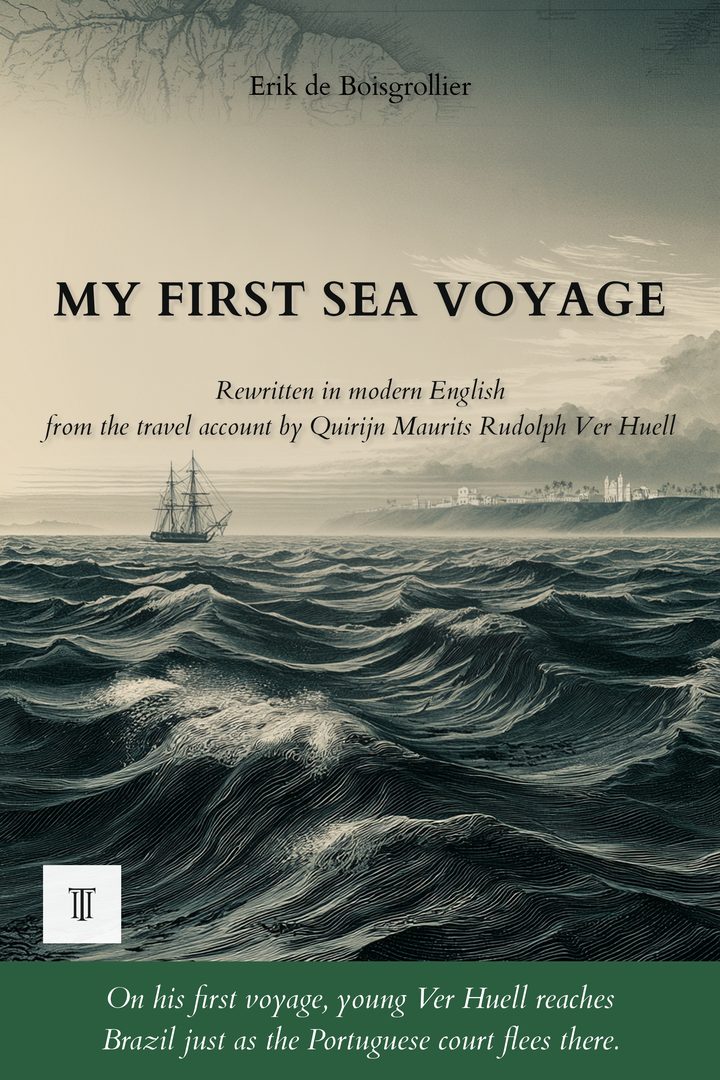
His first great voyage was that of 1807. Embarked at twenty aboard the naval brig Vlieg, bound for Java, he was forced by the pursuit of an English squadron to take refuge at Salvador da Bahia, where he remained a prisoner for nearly three years before returning to Europe by way of England. Thirty-five years later he drew from it his youthful memoirs, published at Rotterdam in 1842 under the title Mijne eerste zeereis (the bibliography also gives it as Mijn eerste zeereizen), by Wijt en Zoon, according to the book's record.
Ver Huell was also a draughtsman and an amateur of natural history. He illustrated botanical works by Miquel, de Vriese and others, as well as Martius's Flora Brasiliensis, and in 1842 published a manual for butterfly collectors. The plant genus Verhuellia (Piperaceae) was named in his honour. He left an account of his voyage to the Indies (Herinneringen van eene reis naar de Oost-Indiën, 1835-1836), a guide for young officers (De leidsman op het pad der eer, 1840), a historical novel, Christina Martha (1837), and a life of his uncle, published in 1874 after his death. At Rotterdam he frequented artists' societies, was among the founders of the yacht club of 1841 and received several distinctions, including the Military Order of William.
Retired to Arnhem, he died there on 10 May 1860. The botanical drawings he never published are kept at the Leiden herbarium, and his insect collection was bequeathed to the Leiden natural history museum, today Naturalis. The model room he had assembled at Rotterdam is at the origin of the city's maritime museum, in 1874. His memoirs of the Indies were reissued in 2008 by the Linschoten-Vereeniging (volume 107), and his novel in 2013.