Biography
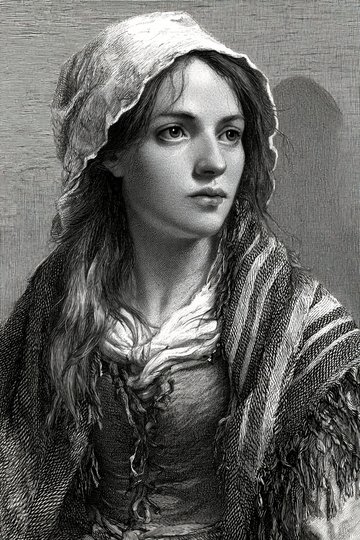
Maria ter Meetelen was baptized in Amsterdam on 20 June 1704, the third child of a modest Catholic family. Her father, Caspar, a confectioner's servant, came from Warendorf, Germany; her mother, Lucretia van der Heijden, from Zwolle, died around 1717. According to her own account, she had to fend for herself from the age of thirteen and probably grew up as a street child. No training is known: everything we know of these years comes from her autobiography.
At twenty-one she traveled through France and Spain dressed as a man. At Vitoria she enlisted in a regiment of dragoons, until her identity was discovered. Around 1726 or 1727 she arrived in Madrid, this time dressed as a nun. In October 1728 she married there Claes van der Meer, a ship's captain from Alkmaar. According to the entry in the Digitaal Vrouwenlexicon van Nederland, she followed no regular trade before her captivity.
In 1731 the ship bringing her back toward the United Provinces was taken by a corsair from Salé. The Vrouwenlexicon places this off Portugal. Claes died about six weeks after the arrival at Meknes. Sultan Abdallah then demanded that she renounce her faith; she evaded by claiming to be pregnant, then in September 1731 married Pieter Janszn. Iede, a boatswain from Medemblik. The couple ran a tavern that prospered. The lexicon counts eight children, six of whom died young; the English Wikipedia entry mentions only two, who were ransomed with them.
Most of the Dutch captives were freed in 1743, and the Iede family was among them. Maria settled in Medemblik and in 1748 published at Hoorn her account, titled Wonderbaarlyke en merkwaardige gevallen van een twaalf jarige slaverny. It was reissued in the 1750s under the title De vrouwelyke soldaat, but no copy of this edition is known today. Her letters written from Morocco between 1731 and 1743 to the Dutch consuls in southern Spain survive in the National Archives in The Hague, in the States General holdings on Barbary and Spain.
A Catholic in a Calvinist republic, she presents her resistance to conversion as the thread of her story. In 1750 she learned of Pieter's death in the Indies. The following year, in 1751, she asked the burgomasters of Medemblik for a certificate of good conduct so she could leave for the Cape of Good Hope. This is the last trace of her: the place and date of her death remain unknown.
Her testimony, one of the rare female narratives of captivity in Barbary, was rediscovered in the twentieth century. H. Hardenberg gives a version in Tussen zeerovers en christenslaven (1950). G.H. and G.W. Bousquet translated it into French in Paris in 1956, and an Arabic translation appeared in Morocco in 1996. Historians see it as a valuable source on the court of Meknes and on the daily life of European slaves.